
 2026.10.01
 Industry News
A fence contractor orders 5,000 linear metres of polypropylene slats. The first container lands with strips running 0.4 mm over nominal. They will not pass through the wire mesh. Two installers spend four days reaming every panel with a hand file, and that single dimensional drift costs more than the slats themselves. Selecting a custom 3D fence slats manufactory is, in practice, a decision about who controls that number before the die is cut, and who can prove it with data rather than a brochure.
Content
A genuine custom 3D fence slats manufactory controls four variables before a purchase order exists: profile cross-section tolerance, polymer grade, UV stabiliser loading, and embossing depth. Every one of them determines whether the strip survives a decade outdoors between minus 20 C and plus 60 C.
Tolerance is the only one you can safely write into a contract. An extruded strip held to plus or minus 0.3 mm sounds respectable until it meets a 3D panel whose wire pitch itself varies by plus or minus 0.1 mm. The two stack, worst case, into 0.4 mm, which exceeds the insertion clearance of most slat profiles.
Polymer grade is the second lever. Virgin homopolymer PP and a recycled blend extrude through the same die and look identical on day one. Three years of UV exposure later, their tensile retention differs by 15 to 20 percentage points, and the slat that started at 1.5 mm thickness is now brittle enough to crack under a hedge trimmer.
UV stabiliser loading is third, and it is the parameter that almost never appears on a datasheet unless a buyer asks for it directly. Embossing depth is fourth. It affects gloss retention and the friction coefficient between slat and wire, which quietly decides how fast an installation crew can work.
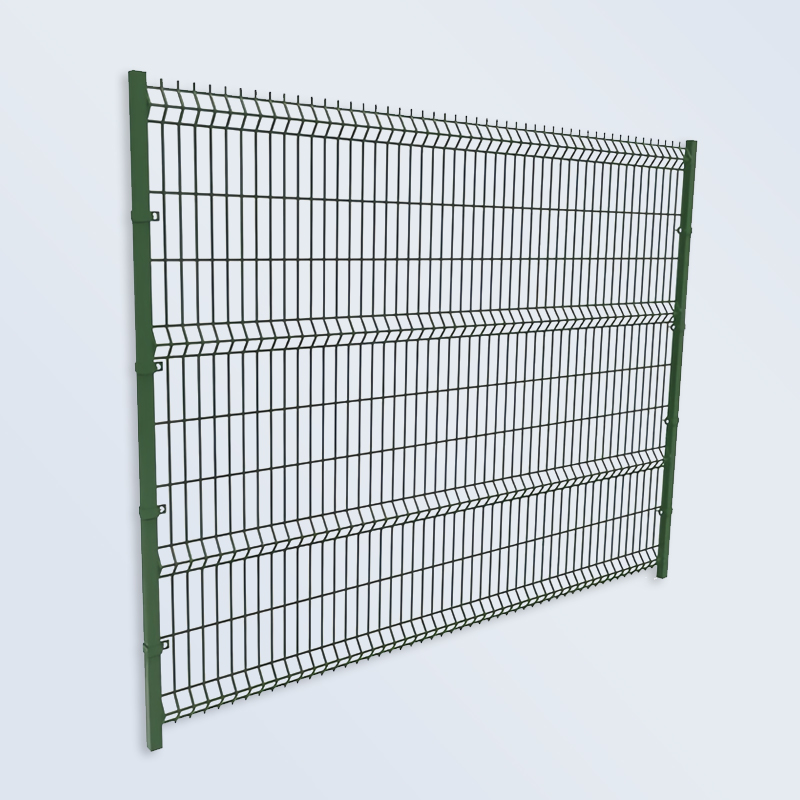
A slat must be 0.3 mm to 0.8 mm narrower than the panel aperture it threads through, at the installation temperature, or the job turns from weaving into rework. This is the single most common specification error in 3D fence procurement, and it is entirely avoidable with one drawing review.
| Slat width | Slat thickness | Panel wire pitch | Typical application |
| 15 mm | 1.0 mm | 50 x 200 mm | Light residential screening |
| 20 mm | 1.2 mm | 50 x 200 mm | Standard garden 3D panels |
| 25 mm | 1.5 mm | 55 x 200 mm | Commercial and municipal fencing |
| 30 mm | 1.8 mm | 76 x 200 mm | High-privacy perimeter systems |
Two rules govern this table. First, aperture minus slat width should never fall below 0.3 mm, because installers work outdoors in gloves and cannot feel a 0.1 mm interference. Second, thickness drives stiffness, not privacy. Going from 1.2 mm to 1.5 mm on a 25 mm wide slat raises bending stiffness by roughly 60 percent, which matters on panels over 1.8 m tall where wind deflection becomes visible.
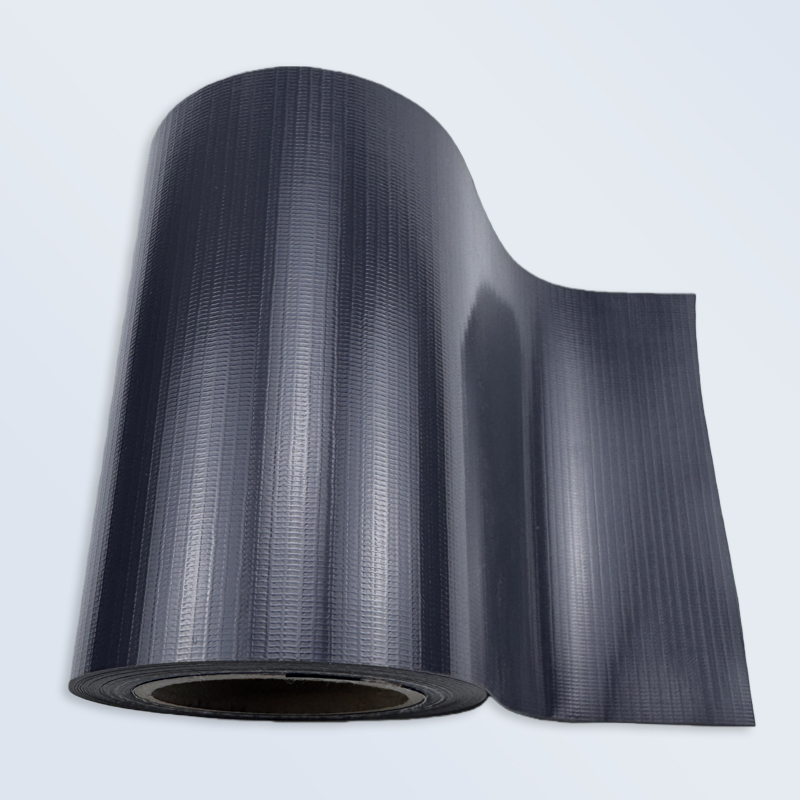
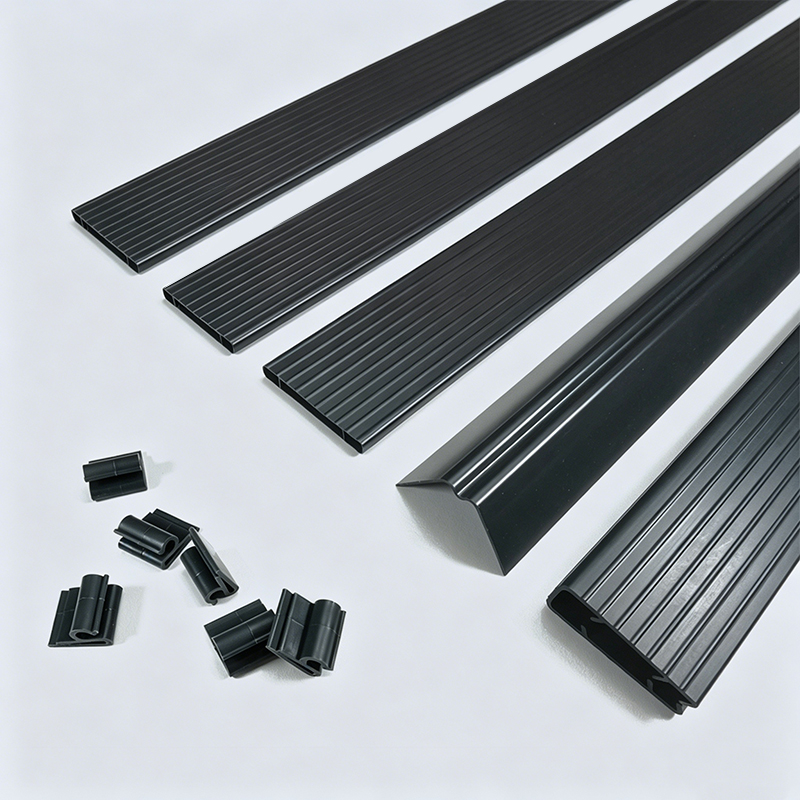
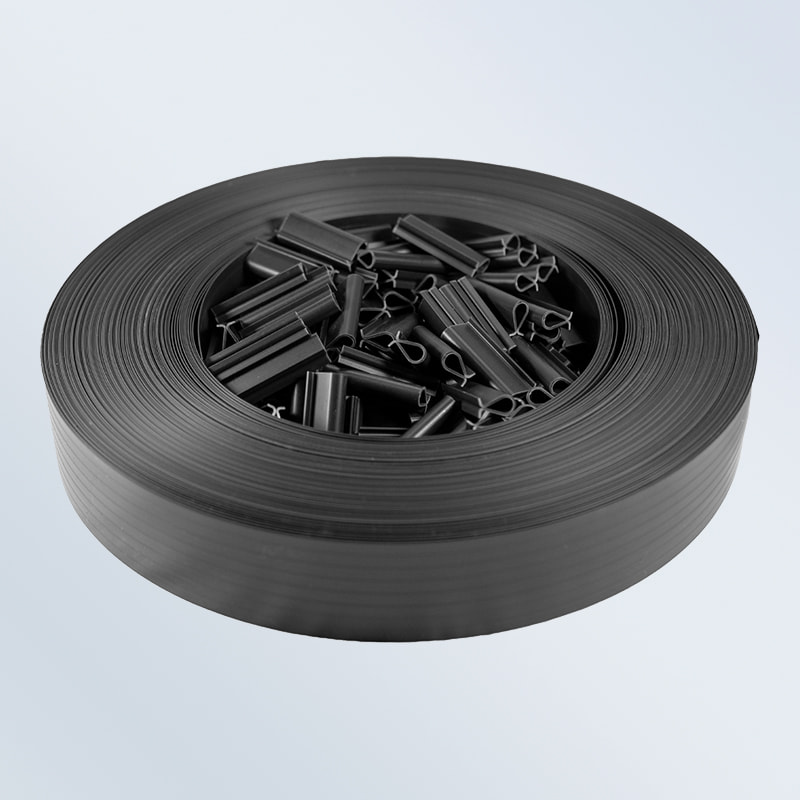
 DAYOU Virgin PVC 3D Fence Slat KitView this PVC privacy slat kit when comparing heat-related sizing, fire rating, finish, and wood-substitute appearance against PP alternatives.View Product →
PP is the correct default for residential 3D fencing; PVC wins only when the project needs a harder surface finish, a better fire rating, or a wood-substitute appearance. The deciding evidence is dimensional behaviour under heat, not price.
The reason sits in the thermal expansion coefficient. PP moves about 0.10 mm per metre per degree C, while rigid PVC sits near 0.06. A two-metre PP slat therefore grows roughly 5 mm between a cold-morning installation and peak summer sun. That is why PP slats must be designed 0.5 mm to 0.8 mm under the aperture rather than as a snug fit, and why the sizing question deserves more attention than the material question in most procurement meetings. The same sizing logic is documented in this practical breakdown of 3D fence slats PP vs PVC sizing and the installation.
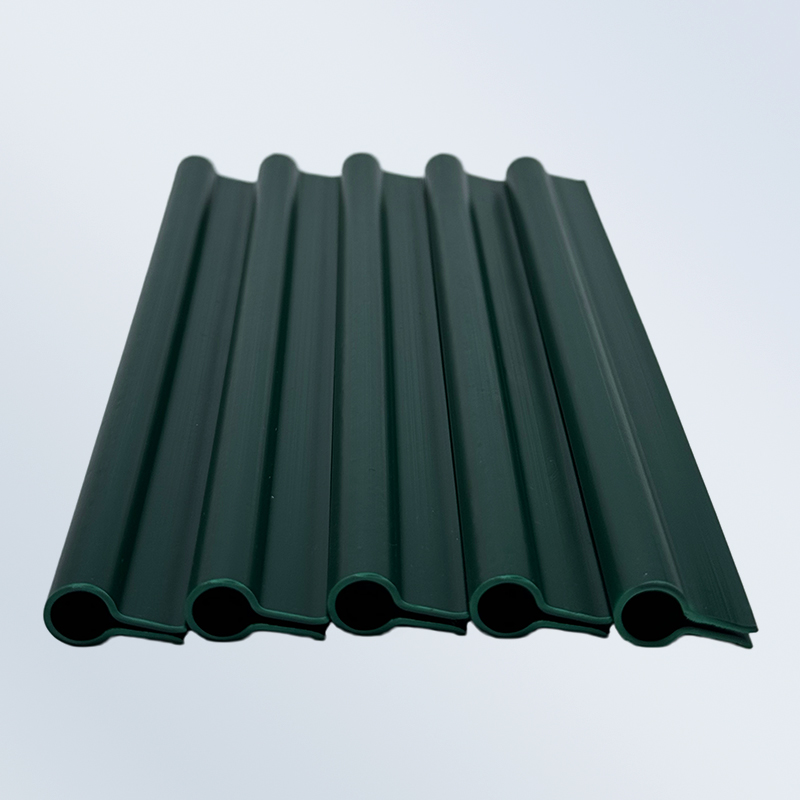
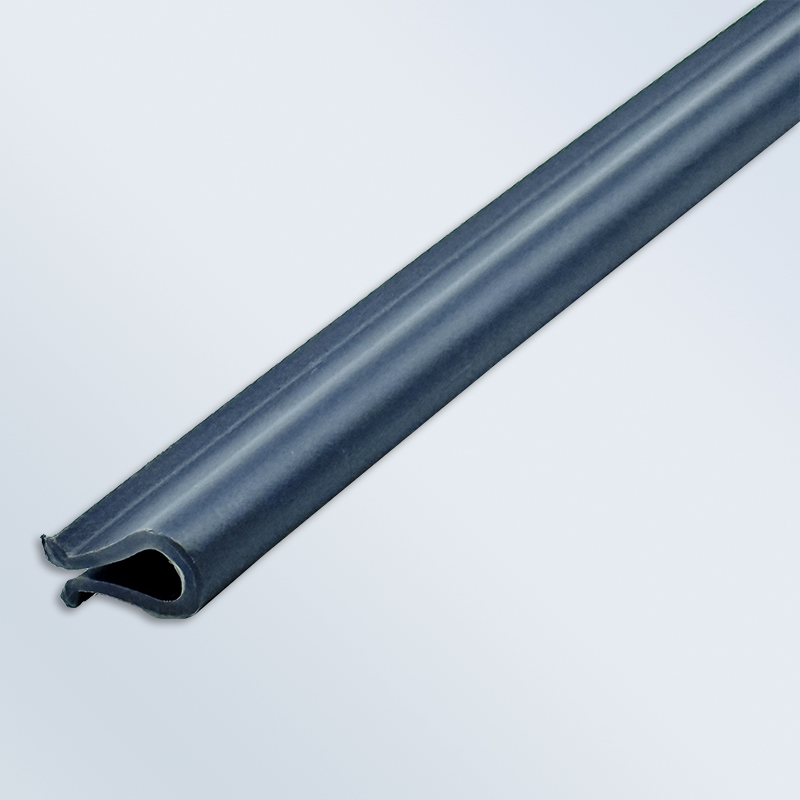
 DAYOU Polypropylene Privacy Strip for 3D Fence PanelsReview this PP strip for 3D mesh fencing when thermal expansion makes undersized slat sizing and privacy performance more important than material choice.View Product →
Audit any custom 3D fence slats manufactory in five steps, and refuse to skip the third one. Each step produces a document you can attach to a purchase order, which converts a supplier conversation into an enforceable specification.
The stabiliser package, not the polymer name, decides how long a slat lasts outdoors. Two formulations can share an identical resin code and differ by a factor of three in service life.
Hindered amine light stabilisers at 0.3 to 0.5 percent by weight, combined with 2 to 4 percent rutile titanium dioxide, are the working baseline for a pigmented 3D fence slat expected to hold colour past eight years. Dropping the HALS below 0.2 percent halves the useful life without changing the slat's appearance on delivery day.
endblockCarbon black behaves differently. At 2 percent loading it blocks UV more efficiently than titanium dioxide and costs less, but it forces the slat into a black or near-black palette. That is the correct trade for agricultural and highway applications, where colour matching is irrelevant.
A third additive family matters at the die rather than in the field. Process aids and calcium carbonate fillers improve output rate, and fillers above 15 percent start to reduce impact strength measurably. A supplier that quotes an unusually low price is usually adjusting this number, not the polymer grade.
Roughly 60 to 70 percent of a custom 3D fence slat price is resin, 10 to 15 percent is stabiliser and masterbatch, and the remainder splits across die amortisation, extruder energy, and packing. Knowing the split tells you which line item to negotiate and which one to leave alone.
Resin cost tracks the polymer index and cannot be argued down far. Stabiliser loading is where a specification change produces a real number: moving from 4 percent to 2.5 percent titanium dioxide saves a few percent on unit price and removes several years from service life. Die amortisation is a one-time cost that should be quoted separately and tied to a minimum order quantity, not buried in the per-metre rate.
Custom profiles follow the same arithmetic. When a project needs a non-standard cross-section, a factory that already runs PVC, PE, PP and ABS through in-house extrusion can amortise tooling across more than one product family, which is why the same die shop often supplies both fence slats and unrelated industrial profiles.
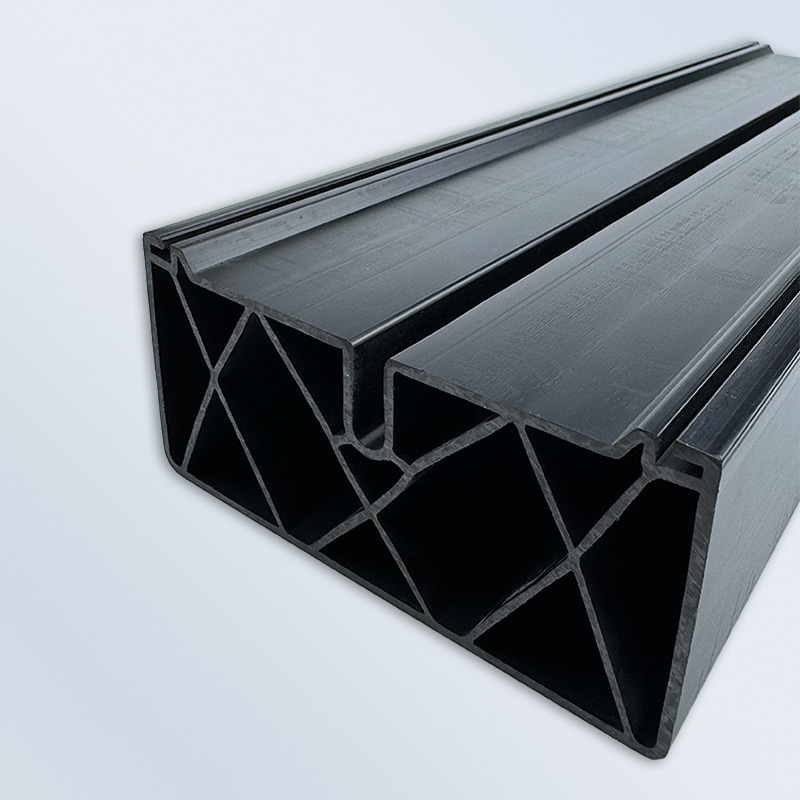 DAYOU Custom Virgin PVC Extrusion ProfilesConsult this custom PVC profile option for non-standard cross-sections, colors, and hardness when tooling and minimum order quantities shape procurement.View Product →
Most extrusion factories set the minimum at one full container load, which is roughly 20 tonnes of slats, or at 500 kg per colour when an existing die matches the required cross-section. A new die adds tooling cost and typically raises the minimum to two or three tonnes so the manufacturer can amortise it.
Properly stabilised PP slats hold structural integrity for 8 to 12 years in temperate climates; rigid PVC reaches 12 to 15 years because it is less sensitive to UV degradation, but it becomes brittle faster in hard freeze-thaw cycles. Both figures assume a HALS loading above 0.3 percent and a pigmented formulation.
Yes, within limits. A slat sized 0.3 mm to 0.8 mm under a 50 x 200 mm aperture will also thread most 55 x 200 mm panels, but the fit becomes loose and the screen loses tension. Specifying one profile per panel type is the safer route when a project mixes suppliers.
Seven items: polymer grade, cross-section with tolerance band, colour reference with Delta E limit, UV stabiliser loading, surface finish, coil or straight length, and packing method. A specification missing the tolerance band or the stabiliser figure is not a specification, it is a price request.

 +86-18267317201
 +86-572-2373931
 [email protected]
 1411 Building 1,No.1969 Chuangye Avenue, Huzhou City ,Zhejiang Province, China.
 | Login


 Español
  Deutsch