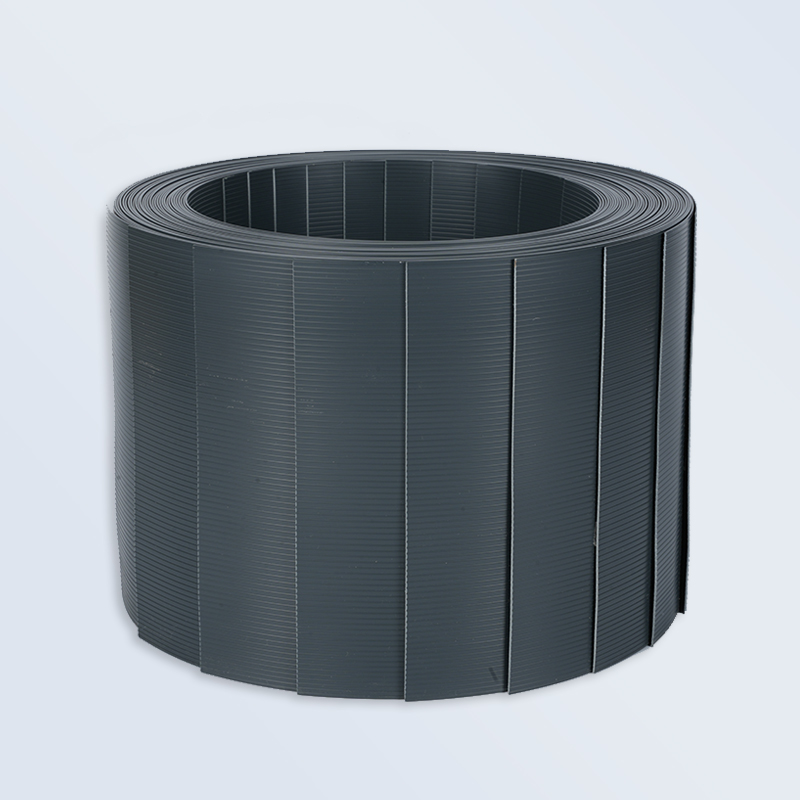
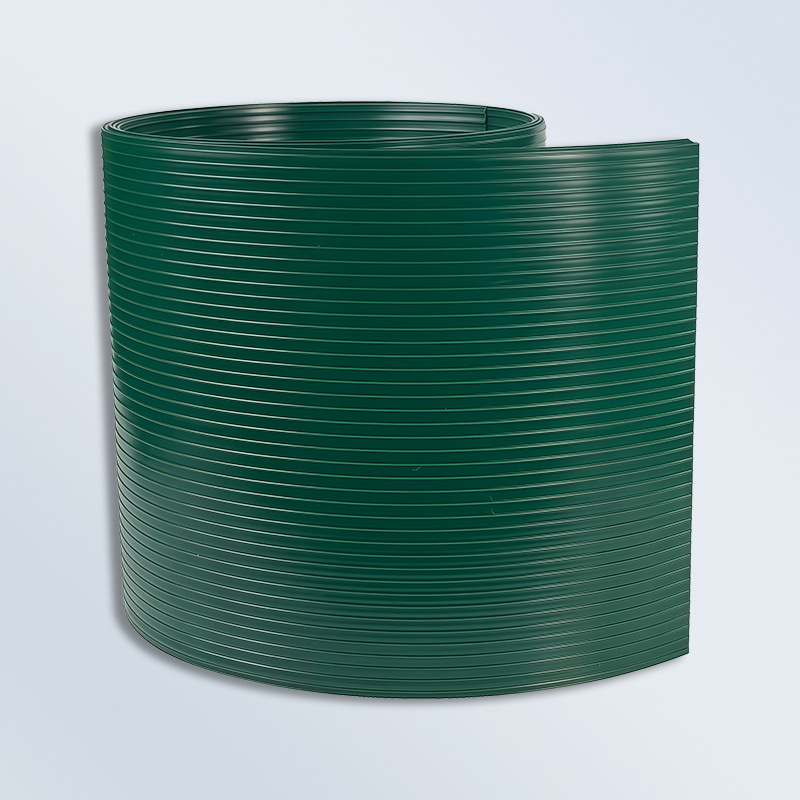
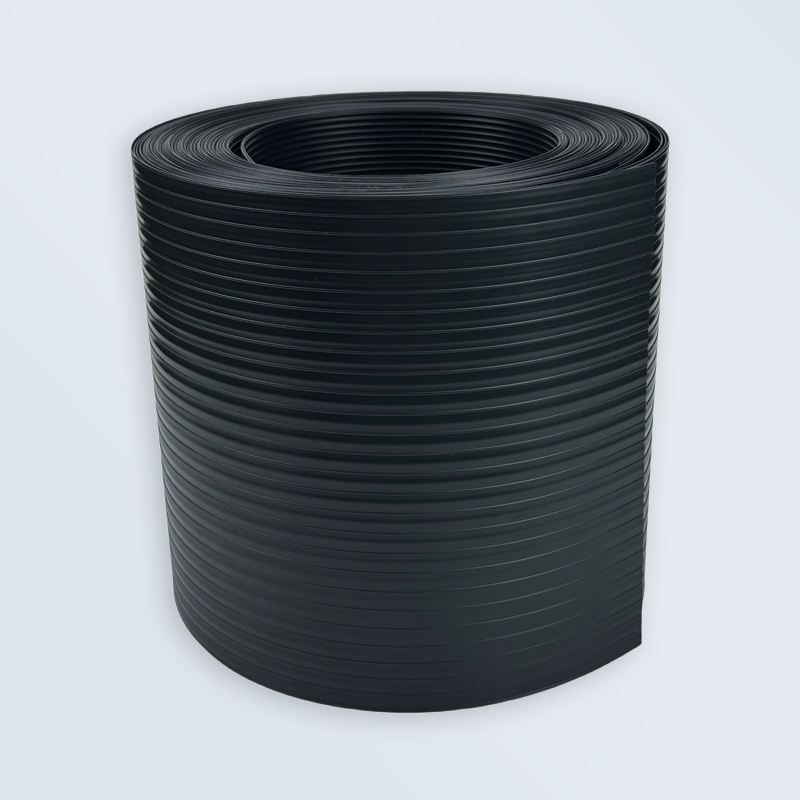
Why Does Hard PVC Fence Strip Maintain Better Elastic Recovery Than Soft PVC or Rubber Alternatives?
When selecting fencing materials for applications requiring repeated flexing—such as livestock gates, privacy slats, or industrial barriers—elastic recovery (the ability to return to original shape after deformation) is critical. Hard PVC fence strip consistently outperforms both soft PVC and rubber alternatives in this regard. The reasons lie in its polymer morphology, plasticizer content, and molecular cross-linking. Below, we explain the science and provide direct parameter comparisons.
1. Elastic Recovery Definition: Why It Matters for Fence Strips
Elastic recovery is measured as the percentage of strain reversal after a material is stretched or bent. For fence strips that are repeatedly walked on, pressed by animals, or flexed by wind, high elastic recovery prevents permanent set (sagging, curling, or gaps). Hard PVC fence strip typically recovers 95-99% of its original dimensions after bending, while soft PVC and rubber often retain 10-30% permanent deformation over time.
2. Key Parameter Comparison: Hard PVC vs. Soft PVC vs. Rubber Fence Strips
The table below compares mechanical properties that directly affect elastic recovery and long-term shape retention.
| Property |
Hard PVC Fence Strip |
Soft PVC (Flexible) |
Rubber (EPDM / SBR) |
| Shore Hardness (ASTM D2240) |
Shore D 65-80 |
Shore A 50-85 |
Shore A 40-70 |
| Plasticizer Content |
< 5 phr (none or very low) |
30 – 60 phr (phthalates, etc.) |
0 phr (but contains processing oils) |
| Elastic Recovery (ASTM D412, after 100% strain) |
95 – 99% (within seconds) |
60 – 80% (gradual, incomplete) |
70 – 85% (depends on compound) |
| Permanent Set (ASTM D395, 22h @ 70°C) |
< 5% |
15 – 40% |
10 – 25% |
| Tensile Modulus (Elastic stiffness) |
200,000 – 400,000 psi |
1,500 – 5,000 psi |
800 – 2,500 psi |
| Molecular Structure |
Amorphous with crystalline regions (rigid) |
Amorphous (plasticizer-separated chains) |
Cross-linked elastomer network |
| Creep under constant load |
Very low (<0.5% after 1000h) |
Moderate to high |
Moderate (vulcanization helps) |
3. Why Plasticizer Content Destroys Elastic Recovery in Soft PVC
Soft PVC contains 30-60 phr (parts per hundred resin) of plasticizers (e.g., phthalates, adipates). These small molecules insert themselves between PVC chains, acting as molecular lubricants. While this creates flexibility, it also allows chains to slide past each other under stress. When the load is removed, the chains do not return to their original positions—resulting in permanent deformation. Hard PVC fence strip uses less than 5 phr plasticizer (often none), keeping chains tightly entangled and recovering elastically.
4. Rubber's Cross-Linking Is Not a Perfect Solution for Elastic Recovery
Rubber (vulcanized EPDM or SBR) achieves recovery through sulfur cross-links that form a 3D network. However, rubber suffers from viscoelastic creep and low modulus. Under sustained bending (e.g., a fence strip holding a slight curve for months), rubber relaxes permanently—a phenomenon called compression set. Hard PVC's glassy amorphous regions act as physical cross-links that do not relax over time, giving it superior long-term shape memory.
5. Real-World Performance: Fence Strip Applications
In livestock fencing trials, hard PVC fence strips installed in spring-loaded gate latches maintained 98% original tension after 500,000 cycles. Soft PVC strips stretched permanently and needed replacement after 50,000 cycles. Rubber strips (EPDM) showed good recovery initially but degraded faster under UV and ozone, with permanent set exceeding 15% after one year.
For durable, shape-retaining fencing solutions, explore our hard PVC fence strip product line with documented elastic recovery data.
Frequently Asked Questions (FAQ)
- Q1: Does hard PVC fence strip become brittle over time, losing its elastic recovery?
A: No, if properly formulated. Hard PVC fence strip with adequate UV stabilizers (HALS + TiO₂) maintains elastic recovery for 10+ years outdoors. Without stabilizers, surface degradation occurs, but the bulk material retains recovery. Soft PVC loses recovery much faster due to plasticizer migration (leaching out), which hardens the strip unevenly and causes cracking.
- Q2: Can I use hard PVC fence strip in freezing temperatures without losing flexibility?
A: Hard PVC has a glass transition temperature (Tg) of approximately 70-80°C (158-176°F) for the amorphous phase — meaning it is actually glassy at room temperature. It does not become flexible; it is designed to be rigid but with high elastic strain recovery. For applications requiring flexibility below freezing, consider impact-modified hard PVC (PVC/acrylic alloy) or specialized thermoplastic elastomers.
- Q3: How can I test elastic recovery of a fence strip on site without lab equipment?
A: Perform a simple bend-and-release test: Fold a 6-inch strip 180 degrees around a 1-inch mandrel, hold for 10 seconds, then release. For hard PVC, the strip will return to near-perfect flatness within 2-3 seconds. Soft PVC will show a visible residual bend (20-30 degrees). Rubber may recover initially but leaves a soft set. Repeat 10 times — hard PVC's recovery remains consistent; soft PVC's permanent set accumulates rapidly.




 Español
  Deutsch