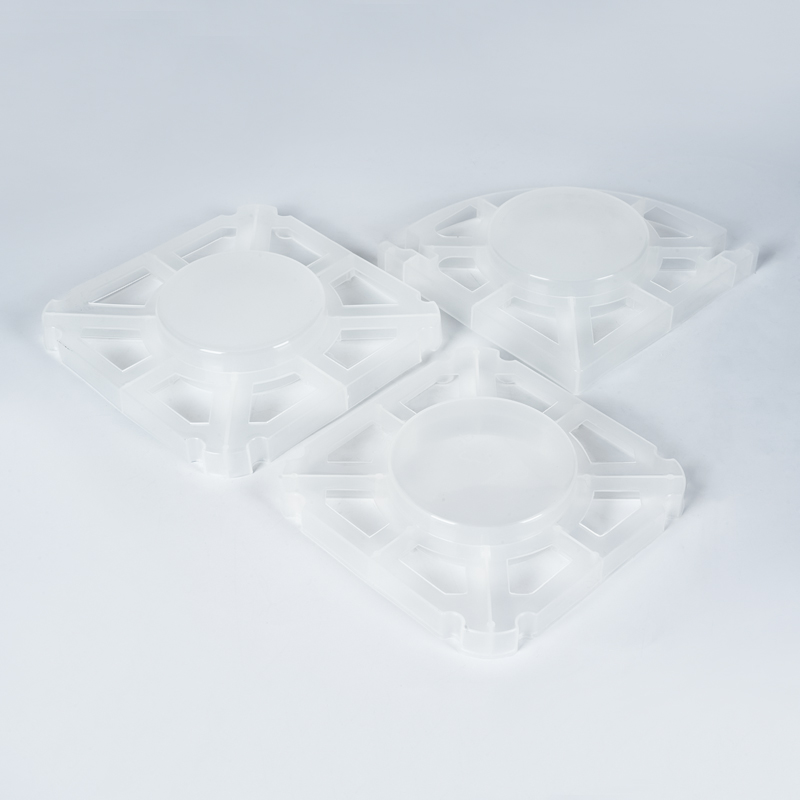
What are the standard inner diameters for plastic roll core holders?
Plastic roll handling systems are widely used in packaging, film winding, paper converting, textile production, and industrial wrapping applications. In these systems, the core holder plays a critical role in supporting, stabilizing, and rotating rolls during processing or dispensing. The correct inner diameter selection directly affects operational stability, installation compatibility, roll tension, and overall production efficiency. Different industries use different core standards depending on material thickness, roll weight, equipment configuration, and transportation requirements.
Manufacturers often design plastic rolls around standard tube sizes to ensure compatibility with automated equipment and manual dispensers. As production lines become more specialized, selecting the right roll core support system has become increasingly important for maintaining smooth operation and reducing material waste. Understanding the common inner diameter standards helps buyers, converters, and equipment manufacturers make more informed decisions when selecting plastic roll accessories.
In modern plastic processing industries, customized solutions are also becoming more common. Companies with deep experience in polymer processing and extrusion technologies can provide tailored support systems according to production requirements. For example, Zhejiang Huzhou Dayou Plastic Technology co.,ltd. has accumulated extensive experience in polymer material modification, extrusion technology optimization, and terminal plastic product development. Through continuous research in extrusion, injection molding, and blow molding applications, the company has developed customized plastic products suitable for different industrial environments and roll handling systems.
Understanding the Function of a Plastic Roll Core Holder
A core holder is designed to secure the inner tube of a plastic roll during winding, unwinding, storage, or transportation. The holder must match the inner diameter of the roll core precisely to avoid instability, vibration, or deformation. In many industrial environments, plastic films and packaging materials are wound around paperboard or plastic cores. These cores are then mounted onto shafts, dispensers, or automated equipment through dedicated holding systems.
The inner diameter of the roll core determines the type of support equipment that can be used. Small manual dispensers typically require compact holders with lightweight construction, while industrial converting machinery may require reinforced support systems capable of handling heavy rolls under continuous rotation. Improper diameter matching can lead to production interruptions, uneven tension control, and accelerated equipment wear.
Industries that frequently use roll core systems include:
- Plastic packaging manufacturing
- Stretch film processing
- Protective film production
- Medical wrapping material conversion
- Food packaging industries
- Textile winding applications
- Industrial tape manufacturing
Because production environments vary greatly, manufacturers often produce holders in both standard and customized dimensions. The design may also include features such as anti-slip surfaces, reinforced edges, adjustable locking systems, and chemical-resistant materials.
Common Standard Inner Diameters Used in Plastic Roll Systems
Several standard inner diameters are widely accepted across the global plastics and packaging industry. These dimensions are selected based on equipment compatibility, material strength, and production efficiency. The most commonly used sizes include small cores for lightweight films and larger cores for industrial rolls.
| Inner Diameter |
Typical Applications |
Characteristics |
| 25 mm |
Small wrapping films and household dispensers |
Lightweight and compact |
| 38 mm |
Plastic wrap and protective film rolls |
Common in medium-duty applications |
| 50 mm |
Industrial packaging rolls |
Good balance between strength and weight |
| 76 mm |
Large industrial film production |
Widely accepted international standard |
| 152 mm |
Heavy industrial converting systems |
Suitable for large diameter rolls |
Among these standards, the 76 mm core is considered one of the most commonly used industrial specifications because it offers strong structural stability while remaining compatible with many automated systems. Large-scale converting machines frequently use this dimension due to its ability to support high-speed rotation and heavy roll loads.
Smaller diameters are typically found in consumer products and lightweight applications. In contrast, large industrial systems may require reinforced core structures with thicker walls and stronger support mechanisms.
Factors That Influence Inner Diameter Selection
Selecting the correct diameter for a core holder depends on multiple operational and material considerations. The size must align not only with the roll core itself but also with the processing equipment and environmental conditions. Manufacturers usually evaluate several important factors before finalizing the specification.
Material Weight and Roll Size
Heavier rolls generally require larger core diameters because wider cores provide better load distribution and structural stability. Thin cores may deform under high pressure or during long-term storage. Large industrial rolls often use reinforced cores to maintain dimensional accuracy during transport and processing.
Equipment Compatibility
Automated converting equipment is usually designed around standard shaft sizes. The internal diameter of the core must match the machine spindle or adapter system. Incorrect sizing can cause operational vibration, uneven winding tension, or installation failure.
Material Type
Different materials create different mechanical requirements. Stretch films, adhesive films, laminated materials, and protective wraps may require varying levels of support rigidity. Some flexible films perform better with larger diameter cores to reduce material memory and deformation.
Transportation Requirements
Rolls transported internationally must maintain dimensional stability under changing environmental conditions. Stronger core systems help prevent crushing and deformation during storage and shipment.
Production Speed
High-speed winding and unwinding operations place significant stress on roll supports. Larger diameters often improve rotational balance and reduce vibration during continuous production.
Materials Used in Manufacturing Plastic Core Holders
The performance of a plastic roll holder depends heavily on material selection. Industrial manufacturers choose materials according to load capacity, chemical exposure, environmental conditions, and durability requirements.
Common materials include:
| Material |
Main Advantages |
Typical Applications |
| PP |
Lightweight and chemical resistant |
Packaging systems |
| PVC |
Good durability and dimensional stability |
Protective film holders |
| ABS |
High impact resistance |
Industrial dispensing equipment |
| Nylon |
Wear resistance and mechanical strength |
Heavy-duty rotating systems |
Core holder systems may also include customized surface treatments such as matte finishes, smooth coatings, or reinforced textures to improve grip and reduce operational wear. Material selection becomes especially important in environments exposed to humidity, chemicals, ultraviolet light, or high temperatures.
Zhejiang Huzhou Dayou Plastic Technology co.,ltd. provides customized material solutions according to customer requirements. The company supports multiple material options including PP, PVC, ABS, and Nylon while also offering specialized functions such as UV resistance, chemical resistance, and high-temperature durability for industrial applications.
Why Standardization Matters in Industrial Roll Systems
Standardization simplifies manufacturing, reduces operational complexity, and improves supply chain compatibility. When industries adopt standard core diameters, equipment manufacturers can design machinery with interchangeable components, reducing maintenance costs and improving production flexibility.
For converters and packaging manufacturers, standardized systems offer several advantages:
- Improved equipment compatibility
- Reduced inventory complexity
- Faster installation and replacement
- Lower maintenance requirements
- More efficient international transportation
- Reduced production downtime
However, standardization does not eliminate the need for customization. Some industries require non-standard dimensions due to unique processing requirements or specialized machinery configurations. In these situations, experienced manufacturers can develop customized extrusion products and engineered support systems.
With more than ten years of experience in raw material optimization and finished plastic product manufacturing, Zhejiang Huzhou Dayou Plastic Technology co.,ltd. provides flexible production capabilities for customized roll handling products. The company supports customer-specific size specifications, irregular shapes, tubular designs, and tailored surface treatments according to industrial operating conditions.
Customization Trends in Modern Core Holder Manufacturing
Modern manufacturing industries increasingly require customized plastic solutions instead of universal products. As automation systems become more advanced, many production lines use highly specialized roll handling systems designed around unique operational requirements.
Customized core holder systems may include:
- Adjustable diameter structures
- Reinforced internal support ribs
- Quick-lock installation systems
- Anti-slip surface textures
- Corrosion-resistant materials
- Lightweight structural optimization
- High-speed rotational balancing
The customization process typically begins with requirement analysis. Customers provide information regarding material type, roll dimensions, environmental conditions, and functional expectations. Engineers then design suitable structures and recommend appropriate polymer materials.
Production flexibility is particularly important for industries requiring short lead times and changing specifications. Manufacturers with integrated extrusion and molding capabilities can often respond more efficiently to evolving customer requirements.
The development process used by Zhejiang Huzhou Dayou Plastic Technology co.,ltd. includes requirement analysis, design confirmation, production quality control, and after-sales support. This structured workflow helps ensure that customized plastic products meet industrial performance expectations while maintaining stable quality standards.
How Inner Diameter Accuracy Affects Operational Efficiency
Even small variations in inner diameter accuracy can significantly influence production performance. Excessive clearance between the roll core and support shaft may create vibration during rotation, while insufficient clearance can make installation difficult and increase mechanical stress.
High-precision manufacturing improves:
- Rotational balance
- Film winding consistency
- Machine operating stability
- Roll alignment accuracy
- Operator safety
- Long-term equipment durability
Industrial manufacturers often apply strict quality control procedures during production to maintain consistent dimensional tolerances. Material shrinkage, extrusion stability, cooling conditions, and molding precision all influence final product accuracy.
Companies specializing in polymer processing usually optimize production technologies to improve consistency across large production batches. Precision extrusion systems and strict inspection standards help maintain uniformity throughout the manufacturing process.
Future Development Trends for Plastic Roll Support Systems
The future of industrial roll handling systems is moving toward lighter materials, improved environmental sustainability, and higher automation compatibility. Manufacturers are increasingly focusing on recyclable materials and durable polymer formulations that extend service life while reducing material consumption.
Several emerging trends are influencing the development of core holder products:
- Eco-friendly polymer materials
- Enhanced wear resistance
- Automation-compatible designs
- Modular installation systems
- Smart manufacturing integration
- Reduced product weight
- Improved chemical resistance
As industrial packaging systems continue evolving, demand for customized and high-performance support components is expected to increase. Manufacturers with strong expertise in polymer engineering, extrusion technologies, and application-specific design will remain important suppliers for modern industrial converting systems.
Conclusion
Standard inner diameters for plastic roll systems are essential for ensuring compatibility, operational stability, and efficient production. Common sizes such as 25 mm, 38 mm, 50 mm, 76 mm, and 152 mm are widely used across packaging, film converting, and industrial processing applications. The correct diameter selection depends on material type, equipment requirements, roll weight, and operational conditions.
A properly designed core holder improves rotational stability, reduces production interruptions, and supports long-term equipment performance. As manufacturing industries continue moving toward customization and automation, demand for specialized roll support systems will continue growing.
Manufacturers capable of combining polymer material expertise with precision extrusion and molding technologies can provide highly adaptable solutions for different industrial environments. Through flexible customization capabilities, professional quality control, and application-focused design, suppliers can meet increasingly complex roll handling requirements across global markets.
FAQ
Q1: What is the most common inner diameter used for industrial plastic roll cores?
The 76 mm inner diameter is one of the most widely used industrial standards because it provides strong structural support and compatibility with many automated converting systems.
Q2: Why is accurate core diameter important for roll handling systems?
Accurate diameter matching improves rotational stability, reduces vibration, prevents material damage, and helps maintain smooth machine operation during winding and unwinding processes.
Q3: Which materials are commonly used for manufacturing plastic core holders?
Common materials include PP, PVC, ABS, and Nylon. Each material offers different advantages related to durability, chemical resistance, impact strength, and wear resistance.
Q4: Can plastic roll support systems be customized?
Yes. Many manufacturers provide customized sizes, materials, surface treatments, and structural designs according to customer equipment requirements and industrial operating conditions.
Q5: What industries commonly use core holder systems?
Packaging, film converting, protective film production, textile manufacturing, industrial tape processing, and medical wrapping industries frequently use roll core support systems.
Q6: How does material weight influence core diameter selection?
Heavier rolls generally require larger core diameters because larger cores distribute weight more effectively and improve structural stability during storage and operation.




 Español
  Deutsch