What Makes PVC Bamboo Fencing Structurally Different from Natural Bamboo
Natural bamboo is a technically impressive material—high tensile strength, rapid renewability, and a distinctive aesthetic that has made it a staple in garden and landscape design across Asia and increasingly in Western markets. Its structural weakness, however, is well documented: untreated bamboo begins to degrade within two to three years of outdoor exposure. Even treated culms are susceptible to moisture infiltration at cut ends, UV bleaching, and splitting along the grain as the material cycles through wet and dry seasons.
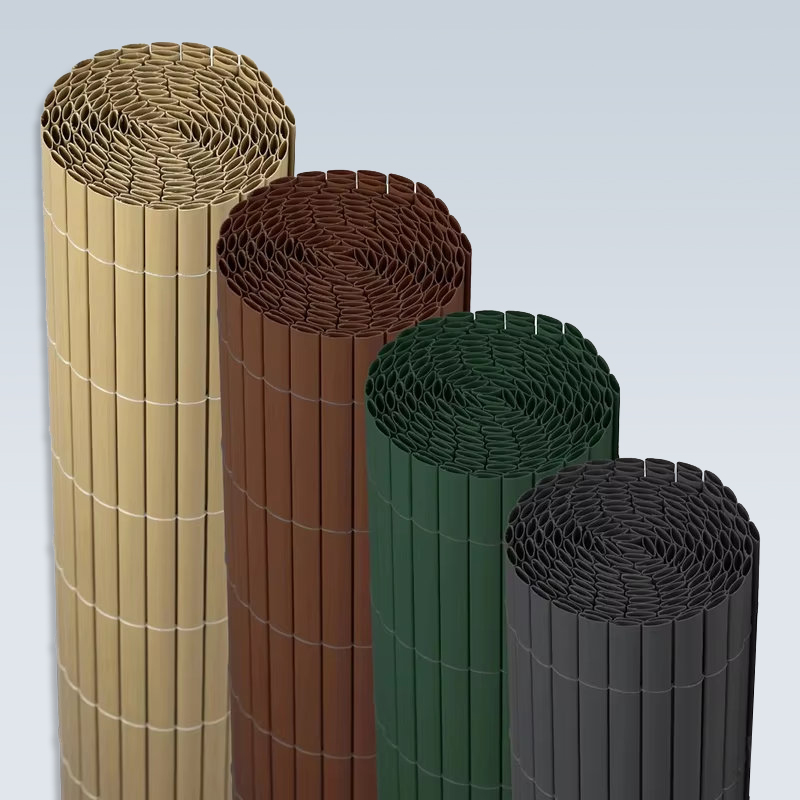
PVC artificial bamboo fencing addresses these failure modes directly. The extrusion process produces a hollow or solid-core profile that replicates the visual geometry of bamboo culms—the characteristic nodes, tapered sections, and surface texture—while substituting a dimensionally stable polymer matrix for the organic fiber structure. Unlike natural bamboo, a PVC profile does not absorb moisture, does not support fungal growth, and does not split under UV exposure when properly compounded with stabilizers.
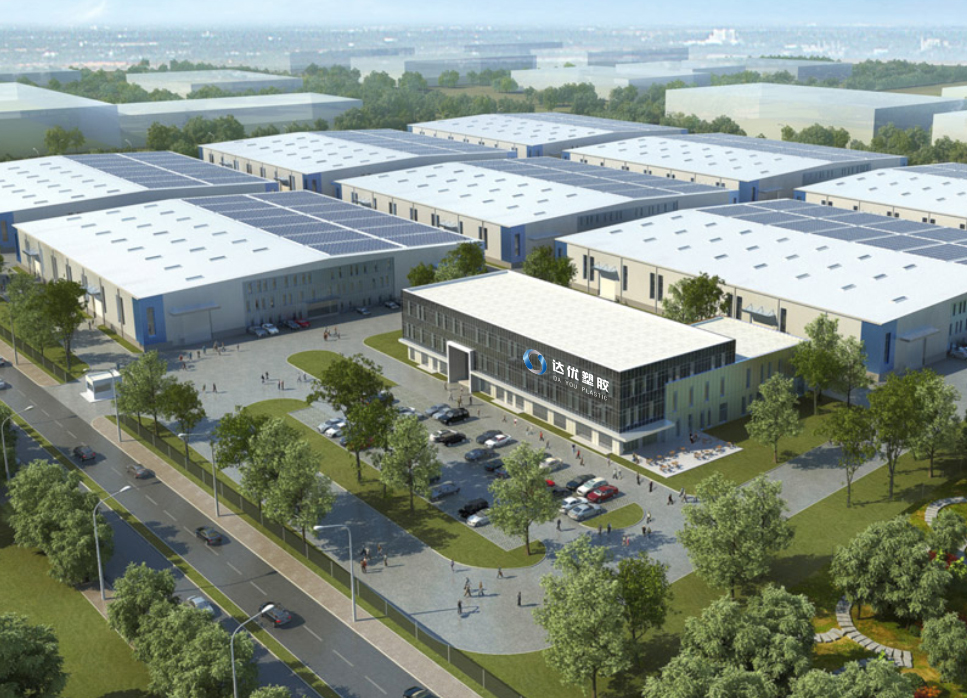
Zhejiang Huzhou Dayou Plastic Technology Co., Ltd engineers its PVC artificial bamboo fence profiles with this material science in mind, integrating UV resistance and impact modification into the compound formulation rather than relying on surface coatings that can wear or peel over time.
Appearance Realism: How Manufacturers Close the Visual Gap
The credibility of any artificial bamboo product rests on how convincingly it replicates the visual details of the natural material. Early-generation PVC bamboo profiles were easily identified as synthetic—smooth surfaces, uniform color, and evenly spaced nodes at machine-precision intervals. Contemporary production methods have narrowed this gap considerably through several techniques:
- Surface embossing — mold tooling with grain-pattern cavities imprints longitudinal texture onto the profile surface during extrusion, mimicking the fibrous surface of real culms
- Node geometry variation — slight variation in node spacing and prominence, built into the mold design, breaks the mechanical uniformity that makes synthetic products identifiable at a glance
- Multi-tone color compounding — co-extruded capstock layers with graduated color depth, or through-body pigmentation with tonal variation, replicate the natural color range of aged and fresh bamboo without requiring paint
- Diameter variation across profiles — offering panels composed of multiple culm diameters arranged in natural-looking groupings, rather than uniform single-diameter rows
Mold design capability is central to achieving these effects. Because the tooling geometry determines everything from node definition to surface texture, manufacturers with in-house mold design capacity can iterate on realism details that are difficult to specify or verify through a third-party tooling supplier. Dayou Plastic's integrated mold design function enables this level of profile refinement directly within the production process.
Installation Contexts and Panel Configuration Options
PVC artificial bamboo fencing is deployed across a wide range of residential and commercial applications, each with distinct configuration requirements. Understanding how panel format affects suitability for a given application helps buyers specify correctly from the outset.
| Application |
Recommended Format |
Key Specification |
| Garden privacy screen |
Pre-assembled panel with frame |
Full-coverage culm spacing; min. 1.8 m height |
| Balcony or terrace screen |
Roll or flexible panel |
Lightweight; UV and moisture resistance priority |
| Commercial landscape boundary |
Modular rigid panel, post-mounted |
Wind load rating; vandal resistance; uniform appearance at scale |
| Pool or spa surround |
Rigid panel, chemical-resistant grade |
Chlorine and salt air resistance; non-porous surface |
Common PVC artificial bamboo fence configurations by application type
For importers supplying multiple market segments, it is worth confirming whether a supplier can produce across panel formats from the same base profile, as this reduces SKU complexity while allowing market-specific packaging and configuration options.
Evaluating Durability Claims: What Long-Term Performance Actually Requires
Durability claims for outdoor PVC products are common and frequently unqualified. A more useful evaluation framework focuses on the specific material and production variables that determine real-world service life:
- UV stabilizer type and loading — HALS (hindered amine light stabilizers) outperform basic UV absorbers in long-term color and mechanical property retention; loading levels should be disclosed or verifiable through third-party testing
- Wall thickness consistency — extrusion die quality directly determines how uniform wall thickness is along the profile length; thin spots are stress concentration points that crack first under thermal cycling or impact
- Joint and connection hardware — stainless steel or UV-stabilized polymer fasteners maintain integrity in humid or coastal environments where zinc-coated steel corrodes and stains the fence surface
- Thermal expansion provision — panels installed without allowance for linear expansion will buckle in summer or develop visible gaps in winter; well-designed systems build this tolerance into the connection detail
Sourcing the PVC artificial bamboo fence from a manufacturer with integrated raw material production—as is the case with Dayou Plastic, which controls compound formulation across its three production bases in Zhejiang and Anhui—provides a meaningful quality assurance advantage, since material consistency is maintained within the supply chain rather than depending on external compound suppliers whose batch-to-batch variation may not be disclosed.




 Español
  Deutsch