Why Profile Geometry Matters in Fence Slat Design
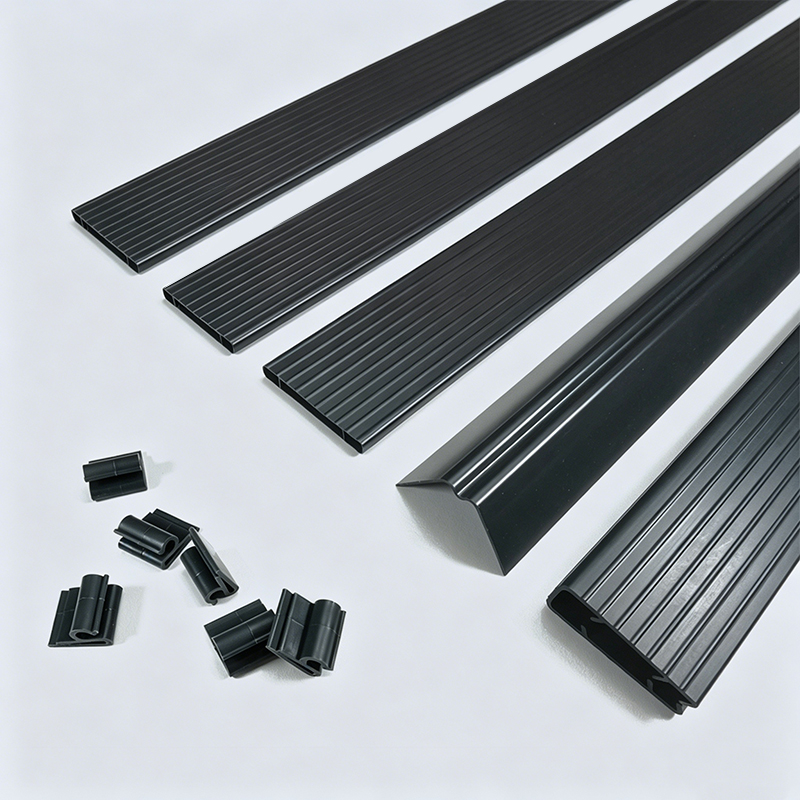
Not all fence slats are built the same. The shift from flat-profile strips to three-dimensional fence slat geometry represents a meaningful engineering evolution, not just a cosmetic one. A 3D profile—characterized by corrugated ridges, angular folds, or wave-form cross-sections—distributes lateral wind pressure more evenly across the slat surface, reducing the peak stress at any single point. Flat slats concentrate bending forces at the center span, which is why they are more prone to warping or permanent deformation under sustained load.
The structural advantage of a ribbed or corrugated profile comes from the same geometric principle applied in corrugated steel roofing and cardboard packaging: folded material resists bending in the direction perpendicular to the fold far better than a flat sheet of identical thickness and weight. In outdoor fence applications, this translates to longer panel service life, less post-replacement maintenance, and better dimensional stability across seasonal temperature swings.
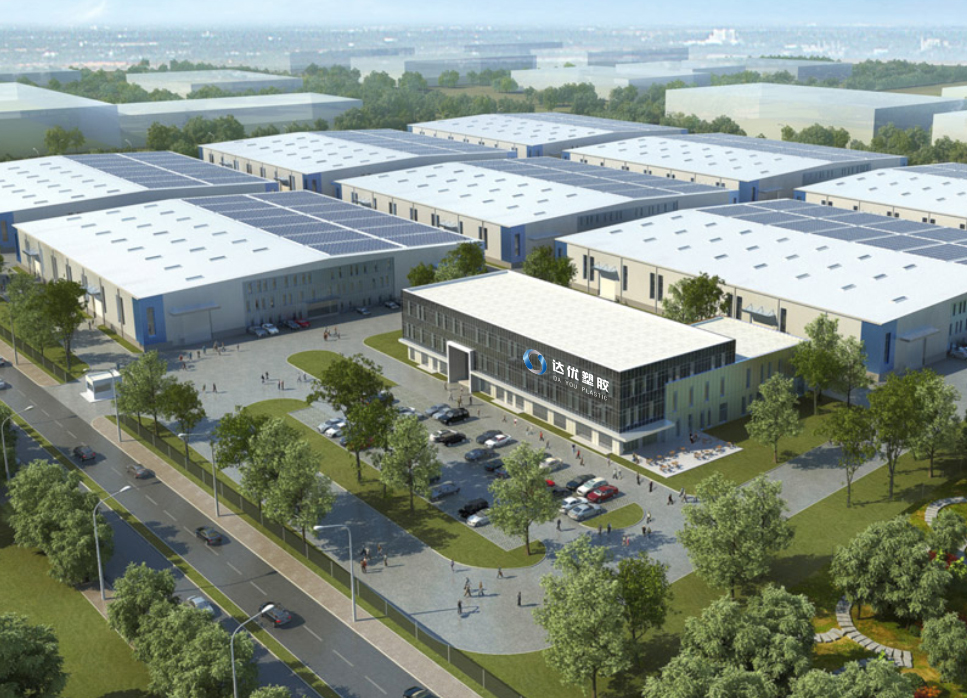
At Zhejiang Huzhou Dayou Plastic Technology Co., Ltd, the extrusion tooling used for 3D fence slat and strip profiles is engineered in-house, allowing precise control over wall thickness uniformity and rib geometry—two variables that directly determine how well the finished profile performs under real-world load conditions.
Material Selection and Its Long-Term Implications
PVC remains the dominant raw material for extruded fence slats and strips used in garden and residential fencing. Its appeal is straightforward: it does not corrode, does not require painting, and can be compounded with UV stabilizers and impact modifiers to extend outdoor service life significantly. However, the quality of the compound itself—specifically the concentration of UV absorbers and the grade of stabilizer used—varies considerably between manufacturers, and this variation is largely invisible at the point of purchase.
Key material indicators buyers should evaluate include:
- UV resistance rating — look for formulations tested to ASTM G154 or equivalent accelerated weathering standards
- Impact strength at low temperature — relevant in climates where winter temperatures drop below –10°C, where brittle fracture risk increases in standard PVC
- Color fastness — co-extruded capstock layers with pigment-dense surface compounds outperform through-colored profiles in long-term color retention
- Recycled content ratio — clearly disclosed recycled content is a sign of compound quality control; undisclosed blending of post-industrial regrind into structural profiles is a common cost-cutting practice that affects mechanical performance
With independent raw material production integrated into its manufacturing process, Dayou Plastic maintains direct control over compound formulation, ensuring that the PVC used in finished slat and strip profiles meets consistent performance benchmarks across production runs.
Installation Systems: Slat Kits vs. Loose Strip Supply
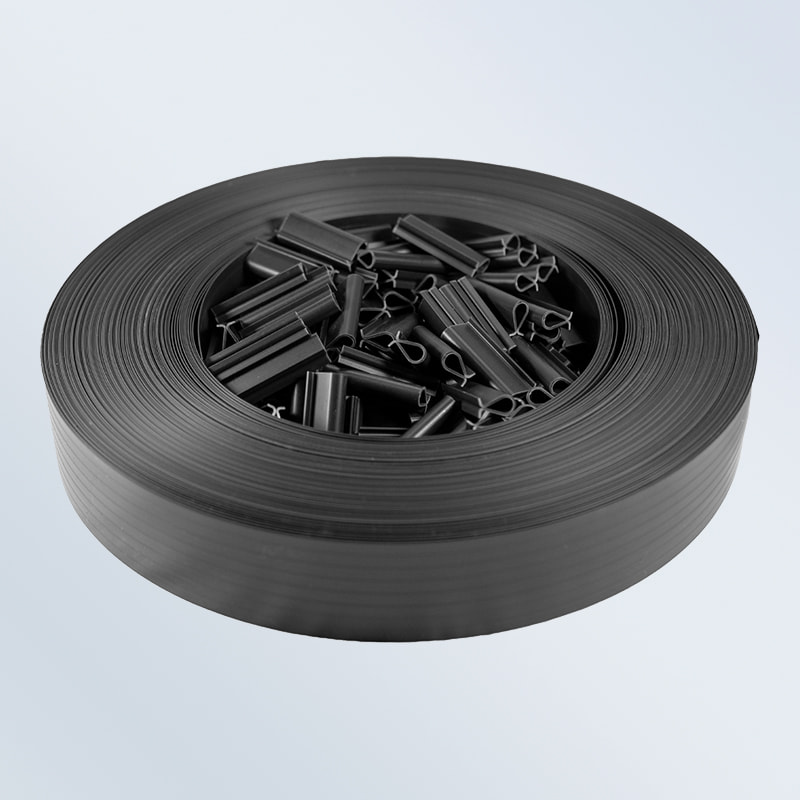
The distinction between purchasing individual fence strips and procuring a complete slat kit has practical implications for installation efficiency and final appearance. A kit approach bundles the slats themselves with compatible channel posts, end caps, and any necessary connector hardware, ensuring dimensional compatibility across all components. This eliminates the common field problem of sourcing slats from one supplier and posts from another, only to discover tolerance mismatches that create visible gaps or require forced fitting.
| Supply Format |
Best Suited For |
Key Consideration |
| Complete Slat Kit |
Residential installers, project contractors |
Guaranteed component compatibility; simplifies BOM |
| Loose Strip Supply |
Distributors, replacement part sourcing |
Requires verified dimensional match with existing post system |
| Custom Profile Order |
OEM buyers, branded product lines |
Requires mold investment; viable at sufficient annual volume |
Comparison of fence slat supply formats and their appropriate use cases
For importers and distributors evaluating sourcing options, kit supply also simplifies customs classification and inventory management, as all components ship under a coordinated product structure rather than as disparate SKUs requiring separate handling.
Specifying 3D Fence Slats for Different End-Use Environments
Profile selection for fence slats should be driven by the specific environmental and functional demands of the installation site, not by aesthetic preference alone. Three variables consistently determine which 3D profile is appropriate: wind load zone, privacy requirement, and thermal expansion range.
In high-wind coastal or open-plain environments, deeper rib profiles with tighter post spacing are preferable. Shallow decorative profiles appropriate for sheltered garden settings will deflect excessively under sustained lateral wind loads exceeding 1.0 kPa. Privacy fencing applications typically require slat widths and insertion depths that eliminate sight lines at standard viewing distances (approximately 1.5–2.0 m); this usually means slat overlap of at least 10–15 mm in the installed position.
Thermal expansion is a frequently underestimated specification variable. PVC expands at roughly 0.07 mm per meter per degree Celsius. A 2-meter slat exposed to a 50°C seasonal temperature range will change approximately 7 mm in length over the year. 3D fence slat and strip systems designed with appropriate end-play tolerances in their channel posts accommodate this movement without buckling or gap formation—a detail worth verifying in any kit specification before placing an order. The production engineering team at Dayou Plastic builds expansion allowance guidance into kit component design, reflecting the real-world installation conditions its products are deployed in across international markets.




 Español
  Deutsch