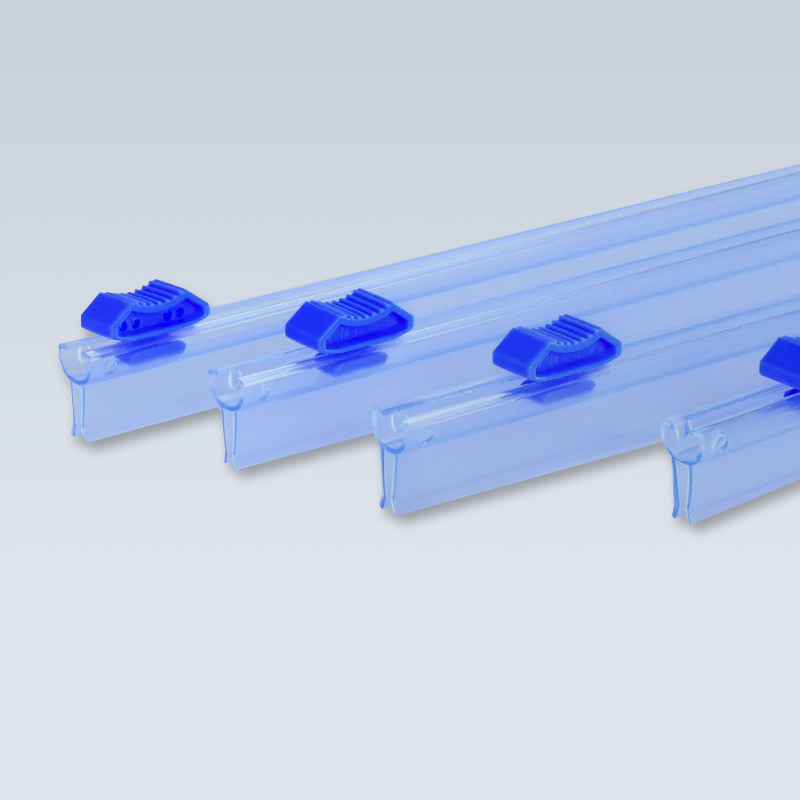
How do manufacturers ensure push on slide cutters fit various box edge sizes?
In modern packaging and warehouse operations, carton opening tools are expected to provide accuracy, safety, and compatibility with a wide range of packaging structures. Among these tools, the push on slide cutter has become increasingly popular because of its compact structure, convenient installation, and reliable cutting performance. Manufacturers face an important challenge when designing these cutters: ensuring that they can securely fit different box edge sizes while maintaining cutting precision and user safety.
A well-designed push on slide cutter must accommodate variations in carton thickness, corrugated board density, edge curvature, and industrial packaging standards. To achieve this, manufacturers rely on detailed material selection, adjustable structural design, precision molding technology, and strict quality inspection procedures. These factors work together to create products that remain stable during operation while still being flexible enough to adapt to different applications.
As global logistics and e-commerce industries continue to expand, the demand for customized cutting accessories has increased significantly. Companies that specialize in plastic processing and extrusion technologies are now combining engineering knowledge with user-oriented design concepts to create cutting tools suitable for industrial, commercial, and household environments. One example is push on slide cutter solutions that integrate durable polymers with ergonomic sliding mechanisms for long-term use.
Understanding the structural requirements of box edge compatibility
The primary purpose of a slide cutter is to remain securely attached to the edge of a box while allowing smooth and controlled blade movement. Different types of boxes present unique dimensional challenges. Some corrugated cartons have thick reinforced edges, while lightweight packaging may use thinner materials with narrower folds. Manufacturers therefore need to engineer cutter bodies that can adapt to these variations without compromising grip stability.
To solve this issue, engineers carefully evaluate edge tolerance ranges during the product development stage. The internal channel structure of the cutter is designed with enough flexibility to handle minor dimensional differences while still preventing looseness. The guiding rails, locking grooves, and pressure points must all function together to ensure the cutter slides evenly across the box surface.
Another important consideration is user handling behavior. In warehouses and shipping centers, operators may apply inconsistent pressure when installing the cutter onto packaging edges. A reliable design therefore needs to compensate for variable installation force. Manufacturers often incorporate slightly elastic polymer structures to absorb pressure changes and maintain proper positioning.
The following factors commonly influence compatibility with box edges:
- Corrugated board thickness variations
- Differences in edge folding structures
- Surface texture and friction characteristics
- Environmental conditions such as humidity
- Repeated installation and removal cycles
- Operational safety requirements
When these factors are considered together, manufacturers can create sliding box cutters that perform consistently across a broad range of packaging applications.
Material selection and flexibility optimization
Material selection plays a critical role in determining whether a cutter can adapt to different box edge sizes. Rigid materials may provide strength, but they often lack the flexibility required for universal compatibility. On the other hand, overly soft materials may fail to provide sufficient structural stability. Manufacturers therefore balance flexibility and durability through careful polymer selection and processing techniques.
According to production specialists at Zhejiang Huzhou Dayou Plastic Technology co.,ltd., extensive experience in raw material modification and extrusion processing allows manufacturers to optimize product structures for both flexibility and wear resistance. Their background in polymer research and terminal product development supports the creation of plastic wrap cutters and industrial sliding tools capable of maintaining long-term operational stability in demanding environments.
Commonly used materials include PP, PVC, ABS, and Nylon. Each material offers distinct performance characteristics:
| Material |
Main Advantages |
Typical Applications |
| PP |
Lightweight and flexible |
General packaging cutters |
| PVC |
Good dimensional stability |
Industrial carton cutting tools |
| ABS |
Impact resistance and durability |
Heavy-duty slide cutters |
| Nylon |
Wear resistance and toughness |
High-frequency industrial use |
Manufacturers also improve compatibility by adjusting wall thickness and structural reinforcement positions inside the cutter body. Flexible side panels can slightly expand when attached to larger box edges while still maintaining enough gripping force for smaller cartons. This balance allows a single cutter design to support multiple packaging standards.
In addition, surface treatments such as matte textures or smooth coatings may improve installation comfort and reduce friction during sliding operations. Some specialized models also include UV resistance, chemical corrosion resistance, or high-temperature resistance for industrial environments.
Precision molding and dimensional consistency
Even the best material cannot ensure compatibility without accurate manufacturing processes. Precision molding is therefore one of the most important stages in the production of a push on slide cutter. Injection molding and extrusion technologies are widely used because they provide consistent dimensions and repeatable product quality.
Dimensional consistency is particularly important when the cutter must fit various box edge sizes. Minor deviations in internal groove width or rail alignment can reduce grip performance and create unstable cutting movement. Manufacturers therefore implement strict tooling maintenance and mold calibration procedures throughout production.
At Zhejiang Huzhou Dayou Plastic Technology co.,ltd., production systems are supported by practical experience in extrusion, injection molding, and blow molding technologies. This expertise helps ensure that customized plastic products maintain stable dimensions while meeting customer-specific functional requirements. Their production philosophy emphasizes quality-first standards, teamwork, and respect for individual contributions throughout the manufacturing process.
The manufacturing process generally includes the following stages:
- Requirement analysis and dimensional evaluation
- Material selection and prototype development
- Mold design and structural optimization
- Injection or extrusion production
- Quality inspection and fitting verification
- Packaging and delivery preparation
Manufacturers often conduct repeated installation tests on multiple carton types to confirm dimensional adaptability. These tests evaluate gripping force, sliding smoothness, edge retention, and operational safety under different conditions.
Customization solutions for different industries
Not all industries use the same carton specifications. Logistics companies may handle lightweight shipping cartons, while industrial manufacturers often use reinforced packaging with thicker corrugated structures. Because of this variation, customized solutions have become increasingly important in the cutter manufacturing industry.
Customized production allows manufacturers to modify dimensions, shapes, surface finishes, and material properties according to specific customer requirements. This flexibility helps ensure that the cutter fits accurately onto target packaging structures while supporting operational efficiency.
Many industrial customers require special functional characteristics beyond standard sizing compatibility. Examples include:
- UV-resistant materials for outdoor storage environments
- Chemical-resistant polymers for industrial packaging facilities
- Enhanced durability for high-frequency warehouse operations
- Irregular structural shapes for specialized packaging systems
- Smooth or matte finishes for ergonomic handling
Zhejiang Huzhou Dayou Plastic Technology co.,ltd. supports these customization demands through flexible production systems and short lead-time delivery processes. Customers can submit detailed size, material, and functional requirements, after which engineering teams provide optimized design solutions and production recommendations. This collaborative process improves both compatibility and long-term product reliability.
Customization also improves operational safety. By matching cutter dimensions more precisely to packaging structures, manufacturers can reduce excessive movement during use and improve cutting control. This is particularly important in fast-paced logistics environments where worker efficiency and safety are closely connected.
Quality control and fitting verification procedures
Strict quality control procedures are essential for ensuring that slide cutters fit different box edge sizes consistently. Even small production inconsistencies may affect gripping force, sliding stability, or user safety. Manufacturers therefore establish multi-stage inspection systems throughout the production cycle.
Quality control begins with raw material verification. Polymer batches are inspected to ensure consistency in flexibility, impact resistance, and dimensional stability. During production, technicians monitor molding temperatures, cooling performance, and structural alignment to prevent dimensional irregularities.
Finished products are then tested using multiple carton types with varying edge thicknesses. These evaluations help determine whether the cutter maintains secure attachment and smooth cutting performance under practical operating conditions.
| Inspection Category |
Main Objective |
Evaluation Focus |
| Dimensional inspection |
Verify structural accuracy |
Groove width and alignment |
| Material inspection |
Confirm durability standards |
Flexibility and wear resistance |
| Functional testing |
Evaluate operational stability |
Sliding smoothness |
| Safety evaluation |
Reduce operational risks |
Blade positioning stability |
Manufacturers also conduct repeated cycle testing to simulate long-term use. This process helps determine whether the cutter maintains structural integrity after multiple installations and removals. Consistent testing standards are especially important for products used in commercial distribution centers where tools experience frequent daily operation.
In addition, after-sales support contributes to long-term product performance. Reliable manufacturers provide technical guidance, replacement recommendations, and customized improvement suggestions based on customer feedback and operational conditions.
Ergonomic considerations and operational efficiency
A cutter that fits multiple box edge sizes must also remain comfortable and efficient to use. Ergonomic design is therefore closely connected to compatibility engineering. If the cutter is difficult to attach or remove, users may apply excessive force, increasing operational risks and reducing productivity.
Manufacturers improve ergonomics through balanced structural proportions, smooth edge transitions, and optimized sliding resistance. The installation mechanism should provide enough holding force without requiring excessive pressure from the user.
The push on slide cutter design is especially valued in logistics operations because it allows rapid attachment and controlled movement along the package surface. Compact structural dimensions also improve storage convenience and reduce workspace clutter.
Important ergonomic design considerations include:
- Comfortable grip structure
- Smooth sliding resistance
- Secure blade positioning
- Easy installation and removal
- Reduced hand fatigue during repetitive use
- Safe edge protection features
Manufacturers increasingly use user feedback to refine these ergonomic elements. Warehouse workers, packaging operators, and shipping personnel often provide valuable practical insights regarding installation comfort and operational efficiency. Continuous product optimization based on real-world usage data helps manufacturers improve compatibility across different packaging systems.
Future trends in adaptable slide cutter manufacturing
The packaging industry continues to evolve rapidly due to e-commerce growth, automated logistics systems, and sustainability requirements. As packaging diversity increases, manufacturers must develop more adaptable cutting solutions capable of supporting wider dimensional ranges and operational environments.
Future developments in push on slide cutter production are expected to focus on material innovation, lightweight structural optimization, and enhanced environmental performance. Recyclable polymers and high-performance composite materials may help manufacturers improve both durability and sustainability.
Digital manufacturing technologies are also influencing product development. Precision mold simulation, automated inspection systems, and intelligent quality monitoring can improve dimensional consistency while reducing production waste. These advancements help manufacturers maintain stable compatibility across large-scale production batches.
Zhejiang Huzhou Dayou Plastic Technology co.,ltd. continues to emphasize environmentally responsible material development and customized plastic solutions for global customers. Their experience with extrusion products, fence tape systems, and cutting tool development supports ongoing innovation in the plastics industry while meeting diverse market demands across more than 60 countries.
As industrial packaging standards continue to diversify, manufacturers that combine material expertise, flexible customization, and rigorous quality control will remain well positioned to provide efficient and reliable cutter solutions for global supply chain operations.
FAQ
Q1: Why is compatibility with different box edge sizes important for slide cutters?
Different industries use cartons with varying thicknesses and structural designs. A cutter that fits multiple box edge sizes improves operational flexibility, reduces tool replacement frequency, and enhances efficiency in logistics and packaging environments.
Q2: Which materials are commonly used for manufacturing slide cutters?
Common materials include PP, PVC, ABS, and Nylon. These materials are selected based on flexibility, durability, impact resistance, and wear performance requirements.
Q3: How do manufacturers test fitting performance?
Manufacturers conduct dimensional inspections, functional sliding tests, repeated installation evaluations, and safety verification procedures using different carton structures to confirm compatibility and stability.
Q4: Can slide cutters be customized for industrial applications?
Yes. Many manufacturers provide customized solutions that include size adjustments, special materials, UV resistance, chemical resistance, and unique structural shapes based on customer requirements.
Q5: What advantages does a push on slide cutter provide in warehouse operations?
This type of cutter offers fast installation, stable cutting control, compact storage convenience, and improved operational efficiency for repetitive carton-opening tasks.




 Español
  Deutsch