
 2026.09.24
 Industry News
Bamboo screening is one of those products that tends to look its best on installation day. A roll of natural cane stretched along a balcony railing or garden fence delivers instant warmth and privacy, and then the weather starts working on it. Within a season or two, sun-facing canes bleach to grey, hairline splits appear, and the wire lacing loosens enough to open privacy gaps between the poles. That gap between first impressions and second-year performance is the main reason homeowners, landscapers, and fencing contractors switch to a PVC bamboo screen. The short conclusion of this guide: for any screen that has to face sun, rain, and temperature swings for more than a season or two, PVC holds its color, shape, and privacy performance, while natural bamboo remains a decorative choice with a short service life.
Content
A PVC bamboo screen is an artificial bamboo fence or screening panel made from polyvinyl chloride that has been extruded into pole-shaped profiles and assembled to imitate natural bamboo. The poles are not cut canes. They are formed profiles with a consistent diameter, a uniform wall thickness, and color that is compounded into the material itself rather than painted or stained on the surface. Because the pigment runs through the profile, a minor scratch does not expose a raw, pale core the way it would on a stained natural cane.
Extrusion is the process behind that consistency. Heated PVC compound is forced through a die that shapes it into a hollow or solid bamboo pole, and the same die produces thousands of identical poles. This is where manufactured screens differ most from natural ones: pole diameter stays even, privacy coverage stays continuous, and panel weight stays predictable, which matters when you are fixing a screen to a balcony railing or quoting a multi-panel installation.
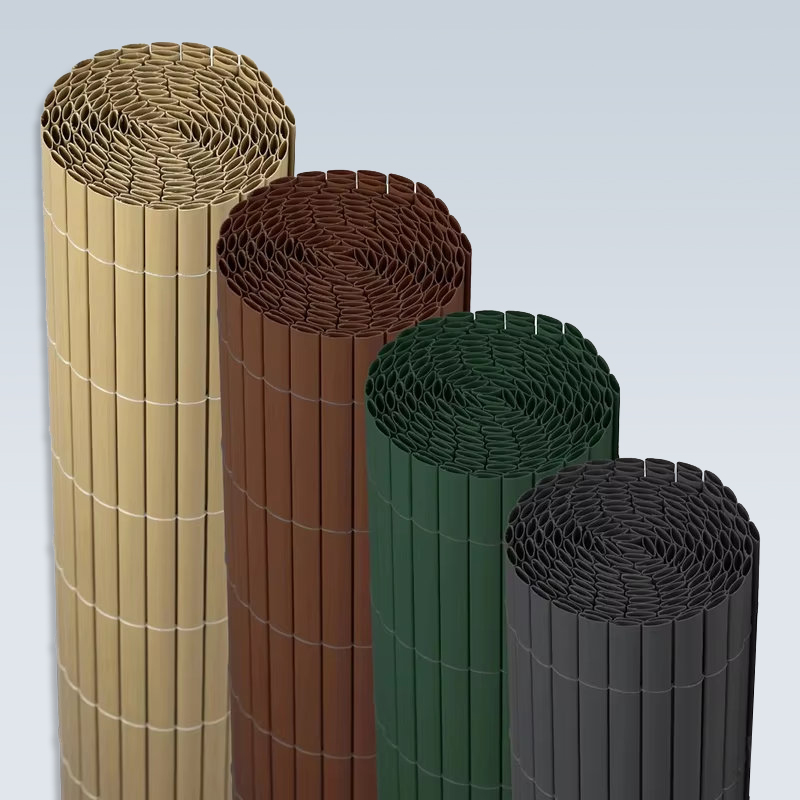
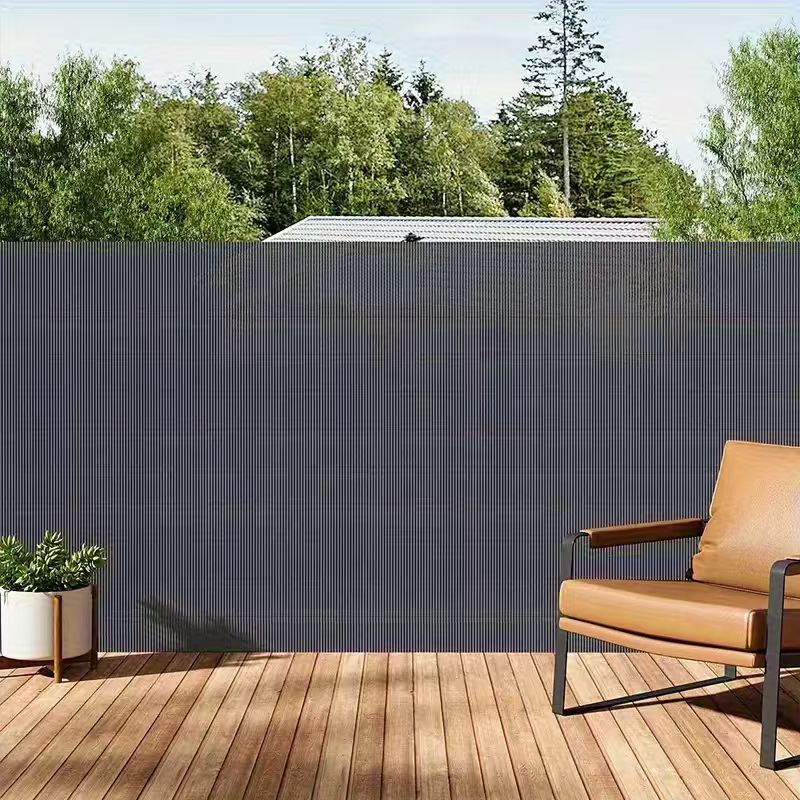 Artificial PVC Bamboo Screening FenceExtruded with a consistent die, this bamboo-look PVC screen keeps pole diameter and panel weight even, offering waterproof, mold-resistant privacy coverage for balconies and multi-panel installations.View Product →
Quality differences between suppliers usually come down to the compound rather than the shape. UV stabilizers, impact modifiers, and the ratio of virgin to recycled PVC determine how a screen behaves after its second summer outdoors. Two panels can look identical on a pallet and behave very differently two years later.
Conclusion first: natural rolled bamboo wins on upfront price and authentic texture. A PVC bamboo screen wins on everything that happens after the first year. If the screen is part of a permanent fence line, a balcony privacy upgrade, or a commercial space where replacement labor is expensive, the PVC option is almost always the better long-term purchase.
| Factor | Natural rolled bamboo | PVC bamboo screen |
|---|---|---|
| Outdoor lifespan | Often 1-3 seasons before fading and splitting become obvious | Engineered for many years of service when the compound is UV stabilized |
| Moisture behavior | Absorbs water, swells, and can rot where canes touch the ground | Non-absorbent, so rain and irrigation do not degrade the panel |
| Color retention | Fades to grey as the canes dry out | Pigment and UV stabilizers are compounded into the profile |
| Privacy consistency | Natural variation in pole diameter creates uneven gaps | Uniform extruded poles keep coverage even along the whole panel |
| Maintenance | Re-lacing, sealing, and early replacement are common | An occasional wash with mild detergent is usually enough |
| Upfront cost | Lower | Higher, offset over the longer service life |
On an elevated balcony, every screen has to satisfy two demands at once: it must block sightlines, and it must survive wind without adding much load to the railing. Extruded PVC poles deliver privacy with far less weight than masonry or timber slats, and they do not absorb the driving rain that a balcony faces. For rental properties and apartment renovations, the ability to fix a screen to existing railings without structural changes is often the deciding factor.
A bamboo-effect screen is a fast way to hide the things nobody wants to look at: waste bins, air-conditioning units, compost bays, pool pumps, or a neighbor's storage corner. Because the panels are light and modular, a two-person job can usually be finished in an afternoon, and the screen can be moved or extended if the layout of the yard changes.
Chlorinated splash, humid air, and constant cleaning are hostile to natural cane but harmless to PVC. Cafes, restaurants, and hotel patios also value the fact that the screen can be wiped down during routine cleaning without the surface losing its finish.
Bamboo-look screening does not have to work alone. In smaller gardens and on narrow balconies, buyers often combine a fixed screen with an expandable PVC trellis, which gives climbing plants a lattice to grow across while the bamboo screen handles privacy. The combination keeps the green look of a living wall without asking the screen itself to carry plant weight it was not designed for.
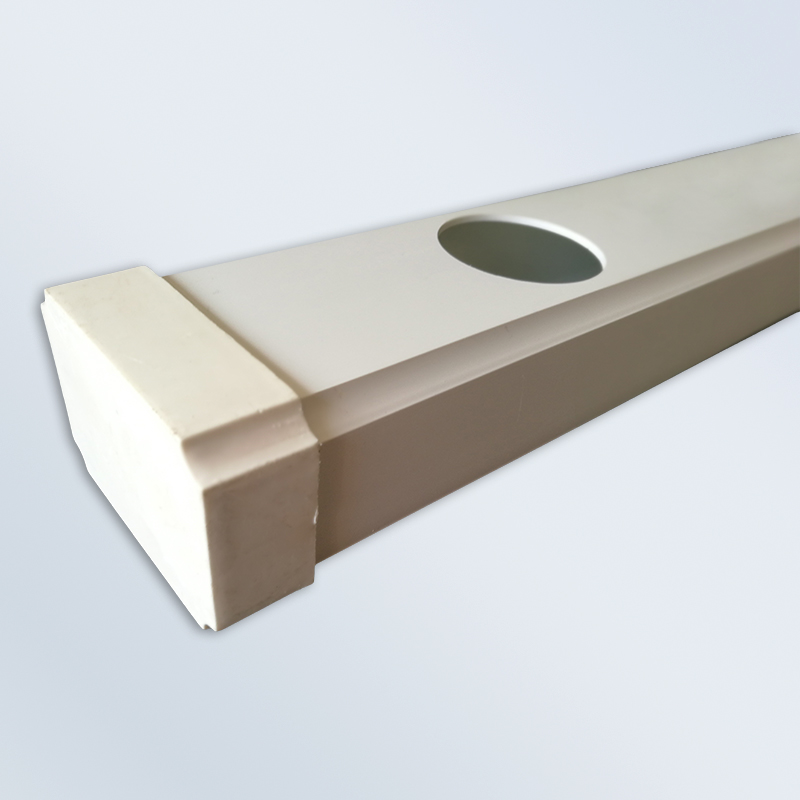
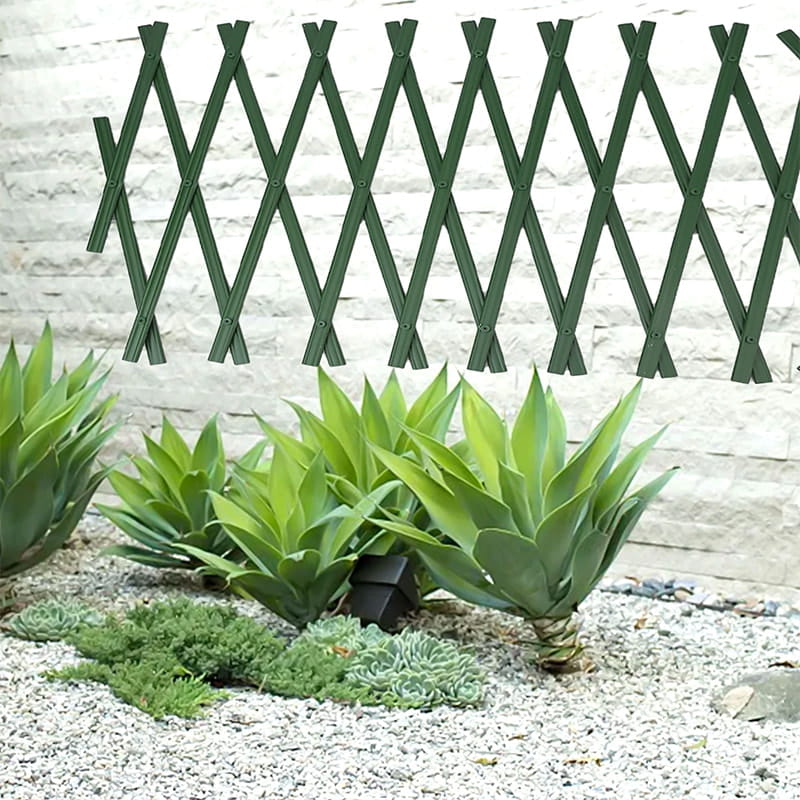 Expandable PVC Trellis for Climbing PlantsThis hinged, adjustable PVC lattice pairs with bamboo screens on narrow balconies, supporting climbing plants with UV-protected, weather-resistant mesh while keeping plant weight off the screen.View Product →
Two PVC bamboo screens can look nearly identical in photos and still perform very differently outdoors. These are the checks that separate the two:
Most premature failures of artificial bamboo screening trace back to installation, not material. Three habits protect the panel:
Cleaning is simple: a soft brush, mild detergent, and water once or twice a year will keep the surface free of the dust and algae film that dulls any outdoor plastic. Avoid abrasive pads and solvents, which can scratch or cloud the surface. For context on how different outdoor fence materials age side by side, our guide to garden fence material lifespan, cost, and weather resistance covers the comparison in detail.
For wholesalers, fencing manufacturers, and landscape contractors, the buying questions shift from appearance to process. A supplier worth shortlisting will be able to answer the following:
It is also worth asking what else the supplier extrudes. A factory that produces rigid PVC fence strips for wire mesh privacy, alongside a wider range of garden fence materials, can usually match a bamboo-effect program to the rest of a fencing range, from color matching to compatible fixing hardware.
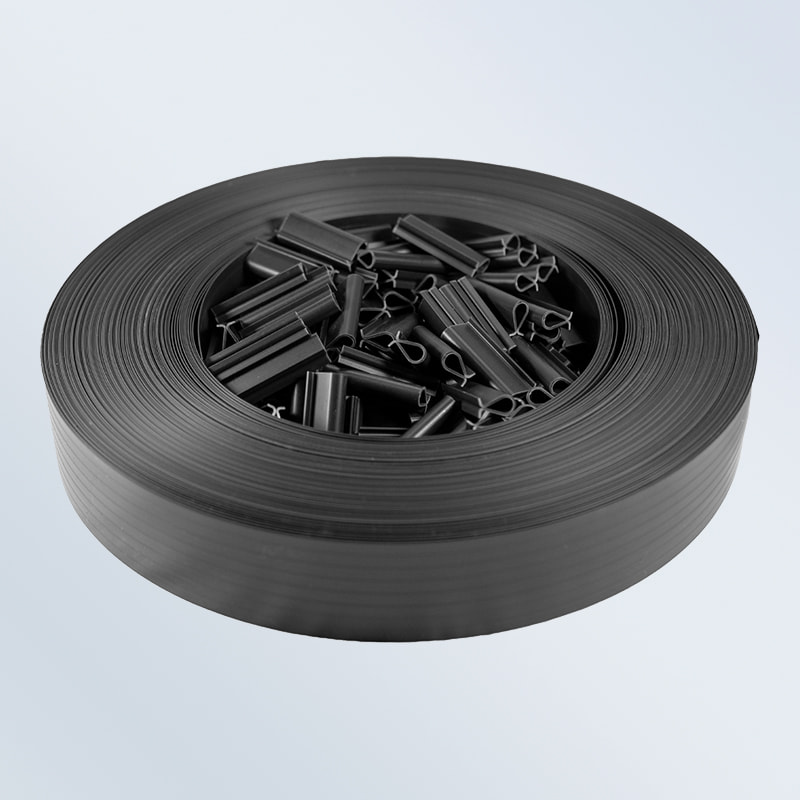
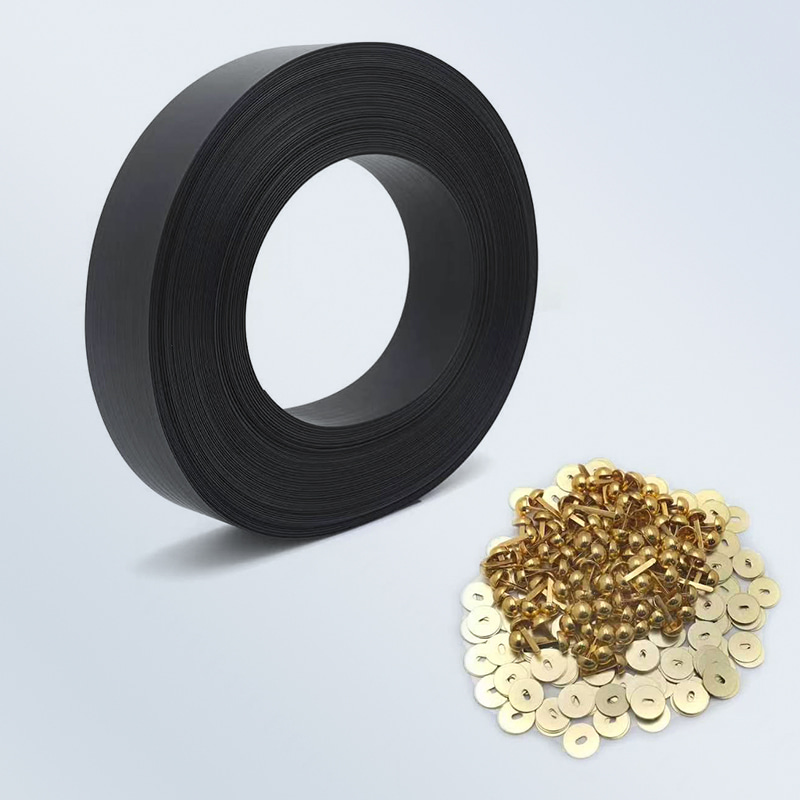
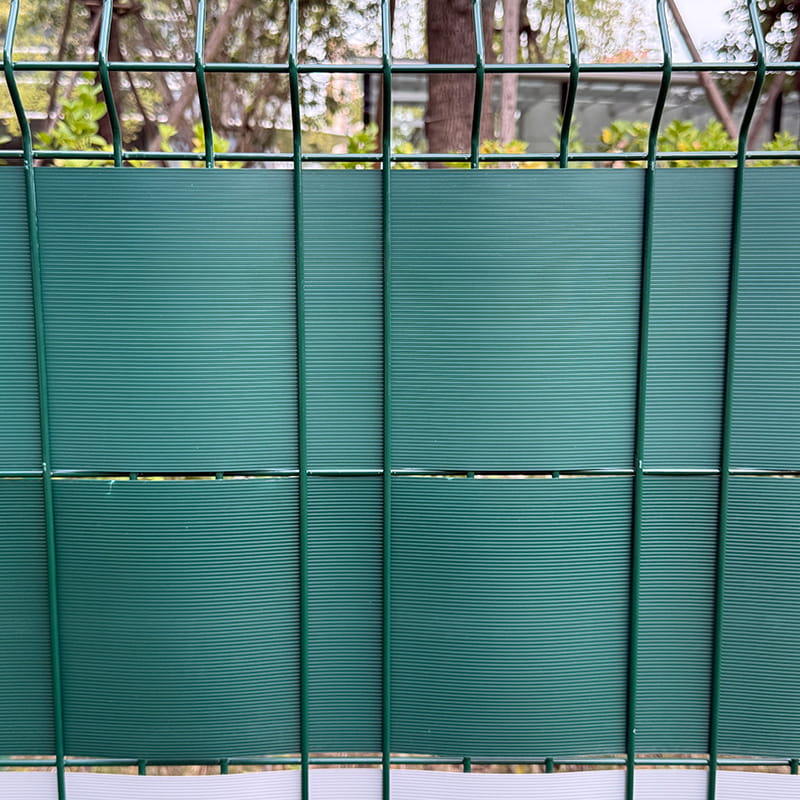 Smart Line PVC Fence Privacy StripA rigid PVC strip that adds privacy to wire mesh fencing, UV-protected and tear-resistant, showing how a bamboo screen program can match a supplier's wider extruded fencing range.View Product →
Screening products sit inside a larger system of fence materials, profiles, and accessories. If you are building out a full program, our complete plastics and solutions catalog shows how the bamboo screen line connects to the rest of the range.
Choose a PVC bamboo screen when the bamboo look has to last: on balconies, around pools, along garden boundaries, and anywhere replacement labor costs more than the panel itself. Judge the product on wall thickness, UV stabilization, and through-color rather than on photos, install it with intermediate fixings and room for thermal movement, and wash it occasionally. For volume buyers, add one more filter: a supplier that extrudes its own profiles and can document its compound is the one most likely to deliver the same screen on the twentieth container that it delivered on the first.

 +86-18267317201
 +86-572-2373931
 [email protected]
 1411 Building 1,No.1969 Chuangye Avenue, Huzhou City ,Zhejiang Province, China.
 | Login


 Español
  Deutsch