
 2026.09.10
 Industry News
A privacy tape that sags out of the mesh, a slat that rattles in every gust, a bottom wire that drifts off the post: in most of these cases the fence panel itself is fine, and the fault traces back to the clips. Fence clips are the smallest and cheapest parts of a fencing system, yet they carry every connection that matters: post to wire, fabric to rail, tape to mesh. The practical conclusion for anyone specifying or buying fence components is straightforward. Choose the clip for the fence type, the load, and the material it touches, and treat it as a component in its own right rather than an accessory. Get that decision right and the rest of the fence behaves.
Content
Every fence is a system of parts that want to move differently. A steel post barely moves at all, the fabric stretched between posts sits under constant tension, and a privacy tape woven through mesh flexes each time the wind picks up. The clip is the point where those movements meet, so its job is threefold: grip the wire or post without damaging it, hold the second component against pull and flutter, and survive sunlight, rain, and temperature swings for as long as the fence does.
When a clip fails, it fails in one of three ways. It slips, because the leg spread does not match the wire it was sold for. It snaps, because the material was never formulated for outdoor UV exposure or was fatigued during installation. Or it corrodes, in the case of steel clips whose coating was too light for the site. Those three failure modes double as an evaluation checklist for any clip on a supplier's datasheet: check the grip range, the resin or coating, and the installation method, in that order.
The term covers several distinct hardware families, and mixing them up is the most common sourcing mistake. Each one solves a different connection problem.
T-post clips are short lengths of high-tensile steel wire with hooks formed at each end, used to fasten woven wire, field fence, and barbed wire to studded steel T-posts. The hooks catch the studs on the post face, the clip wraps around post and wire together, and the installer twists the ends until the joint is tight. Pliers do the job, though many crews speed the work up with a driving socket in a cordless drill. Galvanizing is the specification that matters here, because a lightly coated clip will rust through long before the wire it holds.
On chain link fences the fastening hardware splits into several roles. Looped tie wires fasten the fabric to line posts and top rails at regular intervals. Tension bands and tension bars take the heavier pull at end, corner, and gate posts. Hog rings, closed with dedicated pliers, stitch the bottom edge of the fabric to a tension wire so the mesh cannot be lifted from below. Each of these performs the same function as a clip, even though it is sold under a different name.
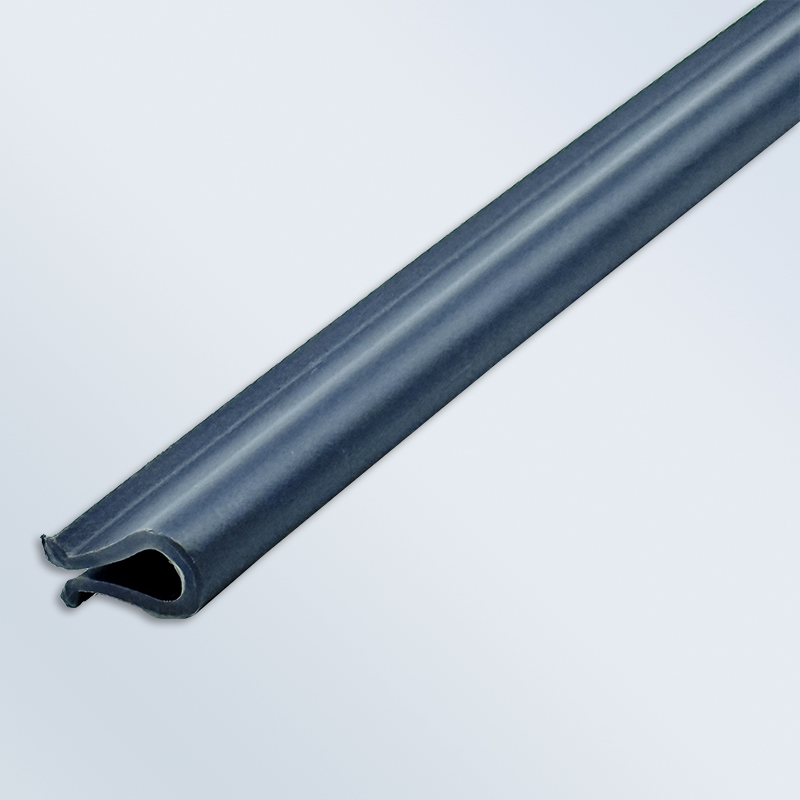
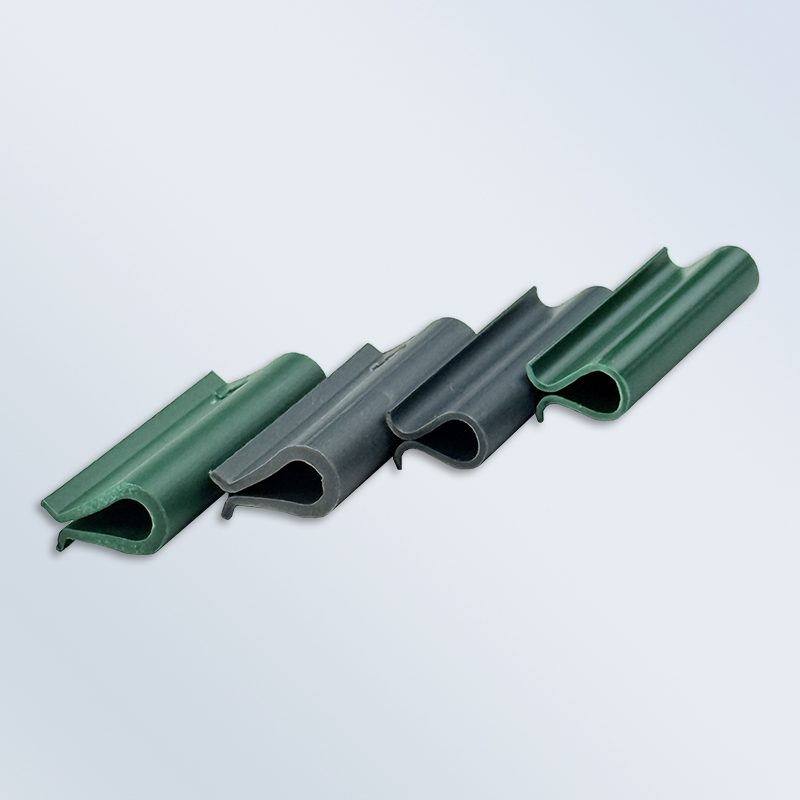
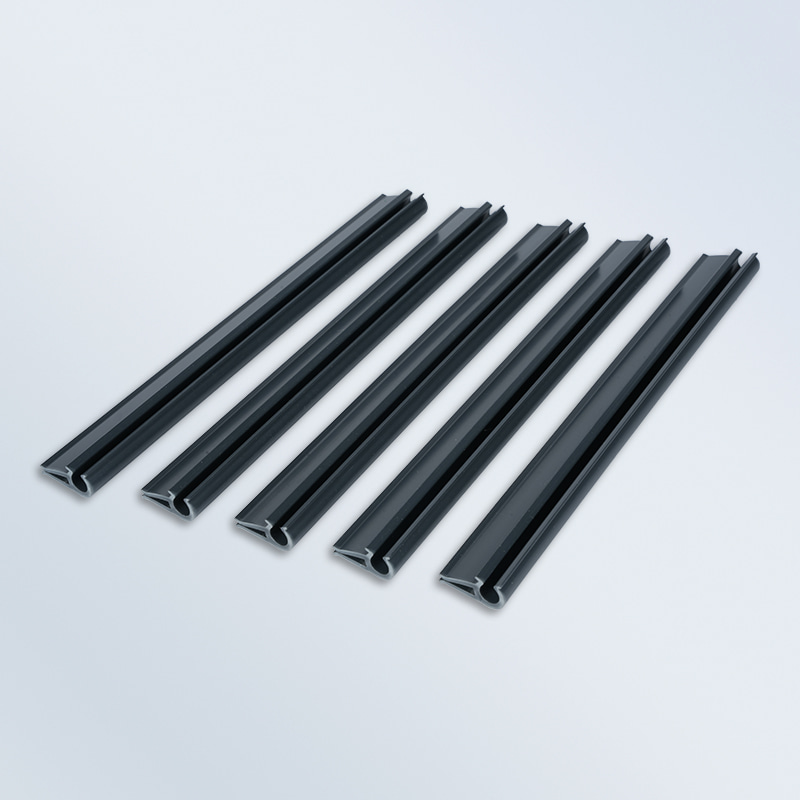
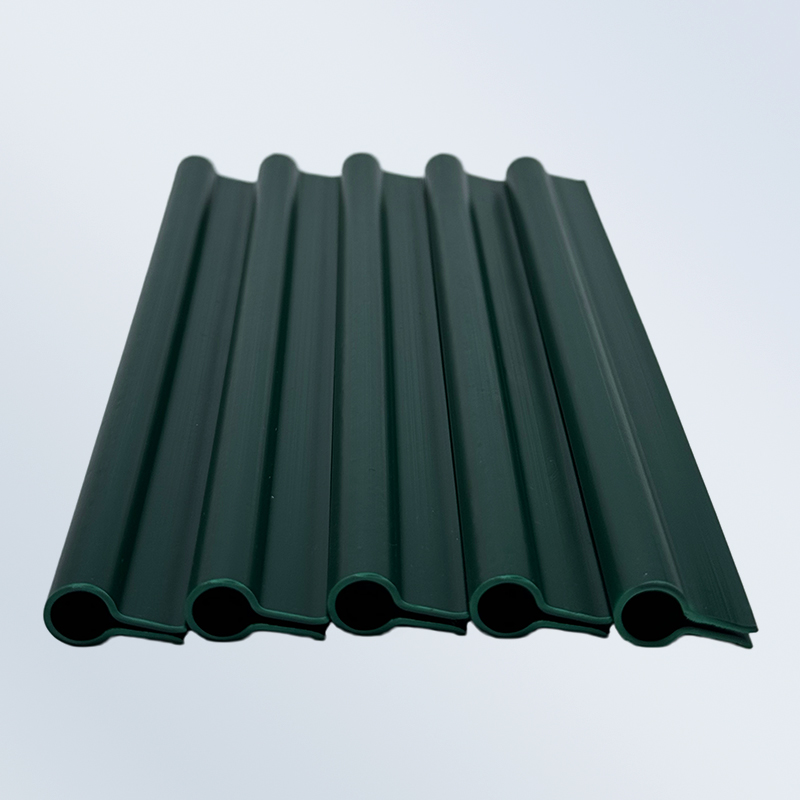
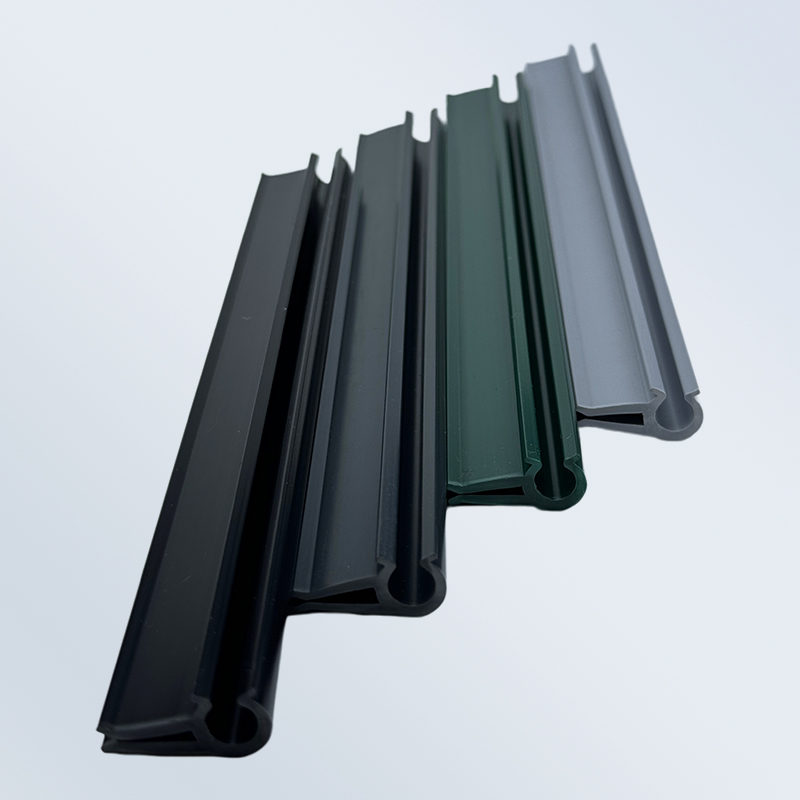
The third family is the one that concerns privacy screening: molded plastic clips that hold privacy tape or slats against chain link mesh and welded wire panels. They are injection molded, typically in PP or PVC, with legs that snap over the fence wire and a body that captures the tape. Being plastic, they do not abrade the tape's coating, they introduce no corrosion of their own, and they can be colored to match the fence. Clip geometry varies more within this family than any other, because one small part has to close on the wire and the tape at the same time.
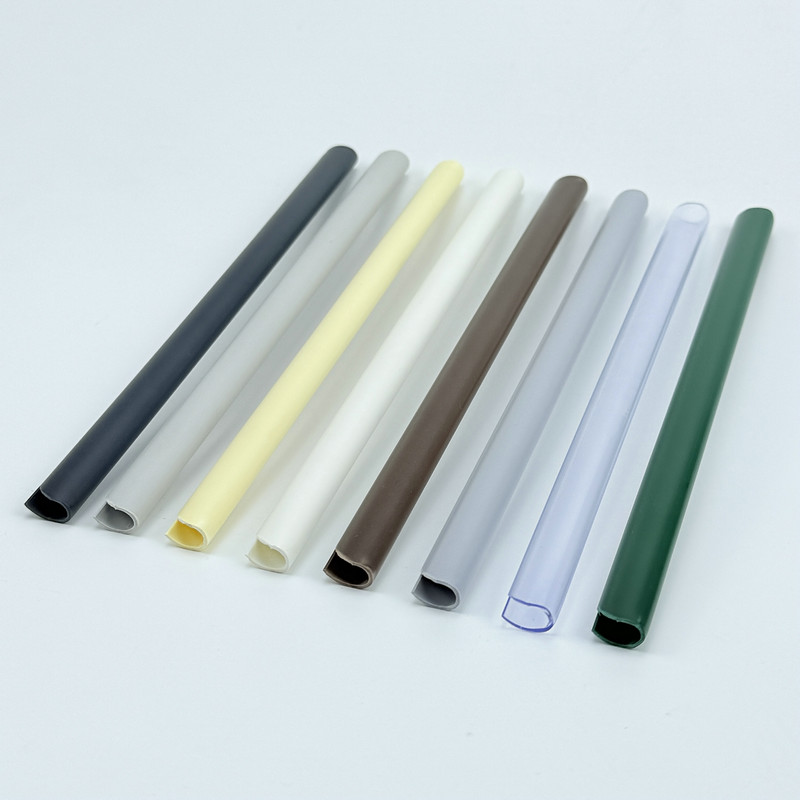 DPC01 Plastic Mounting Clips for Fence StripThese snap-fit plastic clips hold privacy tape or slats firmly against chain link and welded mesh without tools, drilling, or coating abrasion. Before ordering, match the clip geometry to the wire diameter, tape width, and mesh aperture it must fit.View Product →
| Clip Type | Connects | Typical Material | Typical Application |
|---|---|---|---|
| T-post clip | Wire fencing to studded steel T-posts | Galvanized high-tensile steel | Agricultural, livestock, and boundary fencing |
| Chain link tie | Fabric to line posts and top rails | Galvanized steel wire | Residential, commercial, and security chain link |
| Hog ring | Fabric to bottom tension wire | Galvanized steel | Securing the bottom edge of chain link fabric |
| Plastic mounting clip | Privacy tape or slats to mesh | PP or PVC | Privacy screening on chain link and welded mesh panels |
Start with geometry, not material. Measure three things before ordering: the wire diameter the clip legs must close around, the width and finished thickness of the tape or slat the clip body must hold, and the mesh aperture the assembled clip has to pass through. A clip sized for light wire will never sit square on a heavier gauge, and a body built for a wide tape lets a narrow strip wander inside it. Tolerance matters more here than on almost any other fence component, because the same clip has to be neither loose nor overstressed along hundreds of meters of fence.
Match the clip family to the tape family next: PP tape with PP clips, PVC tape with PVC clips. Both parts then share similar stiffness and temperature behavior, and neither wears at the other's surface. The tape deserves equal scrutiny, because chain link privacy tape is specified by weight as well as width, and a product such as PVC privacy tape for chain link fence has a finished thickness that the clip legs must close on fully rather than merely span.
Exposure sets the final variable. An open field or a roadside run sees wind flutter and UV load that a sheltered backyard never will, and the answer is tighter clip spacing, a stiffer tape, and a UV-stabilized clip material. Spacing and material choices differ more between agricultural and garden settings than most buyers expect, which is why it pays to follow a dedicated fence tape clip guide for agricultural and garden fencing before locking in a specification.
Where a single project mixes fence types, for instance a chain link run meeting a welded mesh panel, it is usually cheaper to standardize on one clip series with several geometries than to blend loose hardware from different sources.
 DPC04 Plastic Mounting Clips for Fence StripA tool-free, reusable clip for fastening flexible fence strips, installed by hand pressure without damaging the fence or tape. Its multiple geometries within one series make it practical when a project mixes chain link runs and welded mesh panels.View Product →
Good clips installed carelessly fail exactly like poor clips installed carefully, so the installation routine deserves as much attention as the purchase order.
Spacing itself has no single correct number. It depends on wind exposure, tape stiffness, and whether the fence is a decorative screen or a working windbreak, so it belongs in the written specification rather than in the installer's judgment on the day.
Ultraviolet exposure is the main enemy of any plastic clip. A clip molded from unstabilized or heavily recycled resin can chalk and embrittle within a couple of summers, while a properly UV-stabilized virgin PP or PVC clip keeps its flexibility for years under the same sun. The difference is invisible from the outside, so the question to put to a supplier is not whether the clip is plastic, but which resin it uses and what is in the UV package. The same logic that separates virgin from recycled PP fence strips applies directly to the clips that hold them.
That last point is where a manufacturer earns its place over a trader. When clips and tape come off the same production line, as they do where plastic clips for privacy fence strips are produced fully in-house, the fit is engineered rather than hoped for, and batch-to-batch variation stays inside the range the clip geometry was designed around.
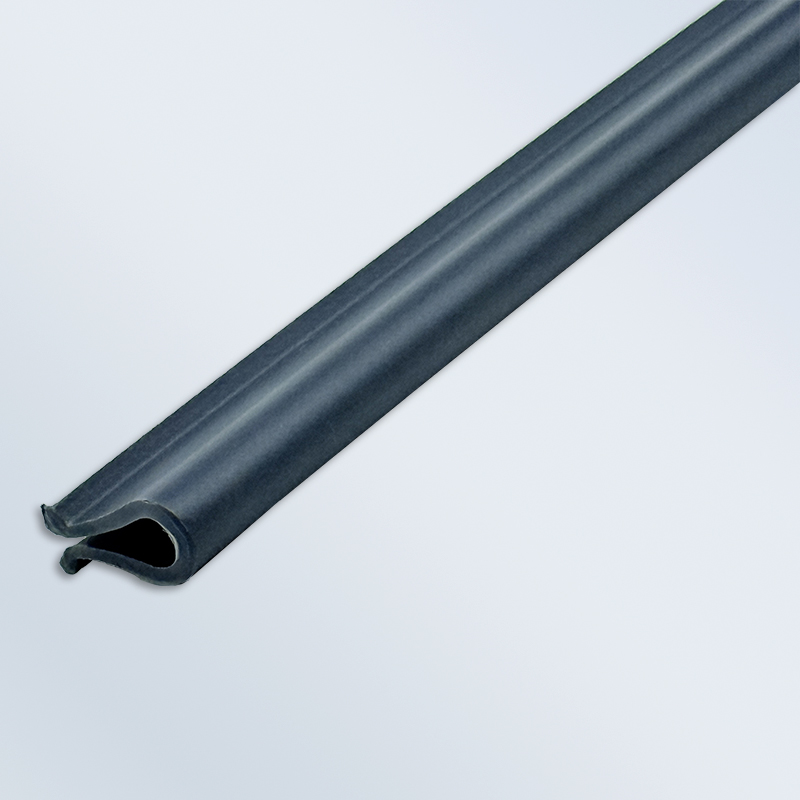 DPC06 Plastic Mounting Clips for Fence StripProduced in-house alongside the fence tape it secures, this press-on plastic clip offers an engineered, consistent fit with reusable, non-destructive fixing. Available in multiple RAL colors and clear, it keeps privacy strips stable and neatly aligned outdoors.View Product →
A fence clip will never be the reason someone buys a fence, but it is routinely the reason a fence needs repair. Specify it against the wire it grips and the tape it holds, get the resin and coating details in writing, and install it with the same discipline as the panels themselves. Do those three things and the smallest component in the system quietly does the largest job: keeping everything else exactly where it was installed.

 +86-18267317201
 +86-572-2373931
 [email protected]
 1411 Building 1,No.1969 Chuangye Avenue, Huzhou City ,Zhejiang Province, China.
 | Login


 Español
  Deutsch