
 2026.05.22
 Industry News
Content
Modern transportation systems are experiencing continuous expansion, with increasing vehicle density, more frequent road construction activities, and growing demand for temporary traffic control solutions. In this context, road safety equipment has become a critical component of urban and highway infrastructure management. Among these tools, the PVC triangle delineator has emerged as a practical and efficient solution for improving visibility, guiding traffic flow, and reducing accident risks in dynamic road environments.
Unlike traditional static barriers, modern traffic guidance devices must balance portability, visibility, durability, and adaptability. The PVC triangle delineator meets these requirements by offering a lightweight yet stable structure designed for both temporary and semi-permanent traffic control scenarios. It is widely used in construction zones, roadside maintenance areas, emergency response sites, and parking management systems.
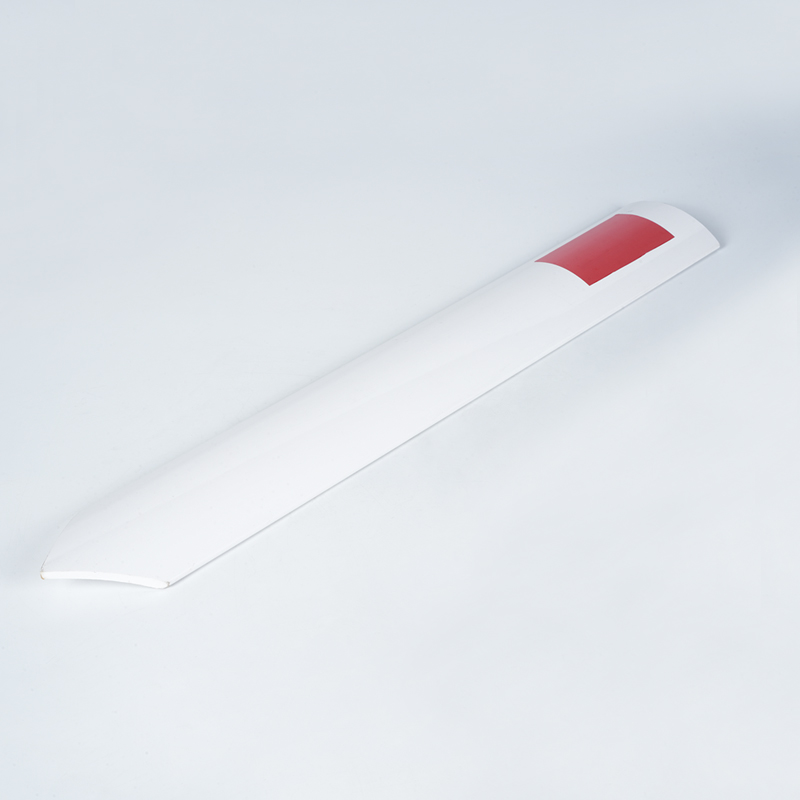
A PVC triangle delineator is a traffic safety device designed in a triangular geometric structure made primarily from polyvinyl chloride (PVC) material. The triangular design is not arbitrary; it is engineered to provide enhanced stability and visibility from multiple viewing angles, making it highly effective in guiding drivers and pedestrians in complex traffic environments.
The structure typically consists of a reinforced PVC frame combined with reflective surfaces or strips that enhance visibility during low-light conditions. This makes it particularly effective for nighttime operations or environments with poor weather conditions such as fog, rain, or dust.
PVC material plays a crucial role in the performance of the device. It offers excellent resistance to environmental stressors such as UV radiation, moisture, and temperature fluctuations. This ensures that the PVC warning triangle for road safety maintains its structural integrity even under prolonged outdoor exposure.
In essence, the PVC triangle delineator functions as a modular traffic guidance unit that can be deployed quickly and repositioned easily, offering significant advantages in dynamic traffic environments.
The effectiveness of a PVC triangle delineator lies in its combination of structural design and material properties. Each feature contributes to improved road safety and operational efficiency in traffic control systems.
| Function | Description | Benefit |
|---|---|---|
| High Visibility Reflective Surface | Equipped with reflective strips for enhanced visibility in low-light conditions | Improves nighttime driver awareness and reduces accident risk |
| Lightweight PVC Structure | Constructed from durable yet lightweight PVC material | Enables easy transportation and rapid deployment |
| Triangle Stability Design | Geometric triangular configuration enhances balance | Prevents tipping and maintains positioning in outdoor conditions |
| Weather Resistance | Resistant to UV rays, rain, and temperature variations | Ensures long-term outdoor usability |
| Modular Deployment Capability | Can be combined with other units for extended traffic control zones | Supports flexible traffic management layouts |
One of the most important advantages of the durable traffic delineation triangle is its balance between strength and mobility. While traditional barriers may require heavy equipment for installation, PVC-based solutions allow for quick deployment without specialized tools.
High visibility remains a core performance requirement. The reflective traffic delineation device ensures that drivers can detect road warnings from a significant distance, especially during nighttime driving conditions or in low-visibility environments.
The PVC triangle delineator is widely used across multiple traffic management scenarios due to its versatility and ease of deployment.
In road construction zones, it serves as a temporary boundary marker that guides vehicles away from hazardous work areas. Construction sites often require frequent layout adjustments, and the portability of the portable traffic safety triangle makes it highly suitable for such dynamic environments.
On highways, these devices are used during maintenance operations to redirect traffic and create safe working corridors for maintenance crews. Their reflective properties make them especially effective at high speeds, where early driver recognition is essential.
In urban environments, they are commonly deployed in parking management systems and temporary road closures. Their lightweight design allows for quick installation during peak traffic hours or special events.
Additionally, in accident or emergency zones, outdoor traffic control triangle marker systems are used to isolate affected areas and ensure the safety of both responders and passing vehicles.
Compared to conventional traffic safety equipment, the PVC triangle delineator offers several distinct advantages.
Traditional traffic cones, while widely used, often lack structural height and can be easily displaced by wind or vehicle turbulence. In contrast, triangle-based delineators provide improved stability and a larger reflective surface area, enhancing visibility from multiple angles.
Metal barriers offer high durability but are often heavy, difficult to transport, and time-consuming to install. The PVC solution achieves a balance between durability and portability, making it more suitable for rapid-response traffic management scenarios.
Plastic bollards, although effective in certain applications, are typically fixed installations. The PVC triangle delineator, however, supports flexible deployment and repositioning, allowing traffic engineers to adapt layouts in real time.
This combination of flexibility, visibility, and efficiency positions the high visibility traffic triangle marker as a modern alternative to traditional road safety equipment.
One of the key advantages of the PVC triangle delineator is its simplified installation process. In most cases, deployment does not require specialized tools or heavy machinery.
For temporary setups, units can be placed directly on road surfaces at designated intervals to create clear visual boundaries. In more structured applications, multiple units can be arranged in linear formations to guide traffic flow or define restricted zones.
For longer-term installations, additional stabilization methods may be applied, such as weighted bases or interlocking systems that connect multiple delineators into a unified traffic control structure.
Maintenance is minimal, typically involving periodic cleaning of reflective surfaces and inspection of structural integrity. When not in use, the units can be stacked or nested for efficient storage, reducing logistical costs.
Visibility is a critical factor in traffic safety design. The PVC triangle delineator is engineered to maximize recognition distance under various environmental conditions.
Reflective strips are strategically positioned to capture headlights from approaching vehicles, ensuring early detection even at high speeds. This is particularly important in highway environments where reaction time is limited.
The triangular shape also contributes to improved visual recognition. Unlike flat or linear markers, the three-dimensional structure allows drivers to perceive depth and direction more effectively.
In adverse weather conditions such as rain, fog, or nighttime darkness, the reflective traffic delineation device significantly enhances situational awareness, reducing the likelihood of collisions or misdirection.
The global demand for traffic safety equipment continues to grow, driven by expanding infrastructure development and stricter road safety regulations. Temporary traffic control systems are increasingly being adopted in both urban and rural environments.
One of the key market trends is the shift toward lightweight, modular, and reusable safety equipment. The PVC triangle delineator aligns with this trend by offering a cost-effective and scalable solution for traffic management authorities.
Another important factor is the increasing focus on nighttime safety. As road usage extends into non-daylight hours, high visibility traffic triangle marker systems are becoming essential components of modern traffic infrastructure.
Environmental considerations are also influencing product development, with greater emphasis on recyclable materials and sustainable production methods in traffic safety equipment manufacturing.
The PVC triangle delineator represents a significant advancement in modern traffic safety and road management systems. Its combination of lightweight construction, high visibility, structural stability, and environmental resistance makes it a highly effective tool for a wide range of applications.
From road construction zones to emergency response areas, it provides a reliable solution for guiding traffic and enhancing safety conditions. Compared to traditional traffic control devices, it offers superior flexibility and ease of deployment, making it an essential component in contemporary traffic management strategies.
1. What is a PVC triangle delineator used for?
A PVC triangle delineator is mainly used for road safety and traffic guidance. It helps mark hazardous zones, construction areas, lane diversions, and temporary restricted spaces. Its reflective structure improves driver awareness and reduces accident risks, especially in low-visibility conditions.
2. How is a PVC triangle delineator different from a traffic cone?
Unlike a traffic cone, which is low in height and easily displaced, a PVC triangle delineator offers a larger reflective surface and a more stable geometric structure. This improves visibility from multiple directions and enhances wind resistance and overall durability in outdoor environments.
3. Can PVC triangle delineators be used at night?
Yes, they are specifically designed for both daytime and nighttime use. Most models include reflective strips or surfaces that enhance visibility when illuminated by vehicle headlights, making them effective as a high visibility traffic triangle marker in low-light conditions.
4. Are PVC triangle delineators weather-resistant?
Yes, they are typically manufactured from durable PVC material that is resistant to UV rays, rain, wind, and temperature changes. This makes them suitable for long-term outdoor use in various environmental conditions without significant performance degradation.
5. Where are PVC triangle delineators commonly installed?
They are widely used in road construction zones, highway maintenance areas, parking management systems, accident sites, and temporary traffic diversion zones. Their portability makes them ideal for both planned and emergency traffic control scenarios.
6. How easy is it to install and move a PVC triangle delineator?
Installation is very simple and does not require specialized tools. The lightweight structure allows quick placement and repositioning, making it a practical portable traffic safety triangle solution for dynamic traffic environments.
7. What maintenance is required for PVC triangle delineators?
Maintenance is minimal. Regular cleaning of reflective surfaces and periodic inspection for structural wear are usually sufficient to ensure long-term performance and safety effectiveness.

 +86-18267317201
 +86-572-2373931
 [email protected]
 1411 Building 1,No.1969 Chuangye Avenue, Huzhou City ,Zhejiang Province, China.
 | Login


 Español
  Deutsch