
 2026.11.24
 Industry News
Content
Sourcing dossier: custom screening
Ask three factories for the same 1.8 m by 10 m roll of artificial bamboo screening and you will get three quotations that differ in slat width, wall thickness, gloss and colour - and none of the three documents will say which value it used.
That silence is expensive. A screen that photographs well can still arrive 3 mm narrower across the panel than the sample, or read olive instead of warm honey under northern daylight, and the claim is settled by whoever kept the better paperwork. Everything below is written so a purchase order can be checked with a caliper, a spectrophotometer and a scale rather than an opinion.
Custom supply in this category covers four controllable variables and nothing more: the slat profile, the compound colour, the surface pattern and the assembled format. Roll length, tie wire, carton print and pallet height are logistics, not customisation.
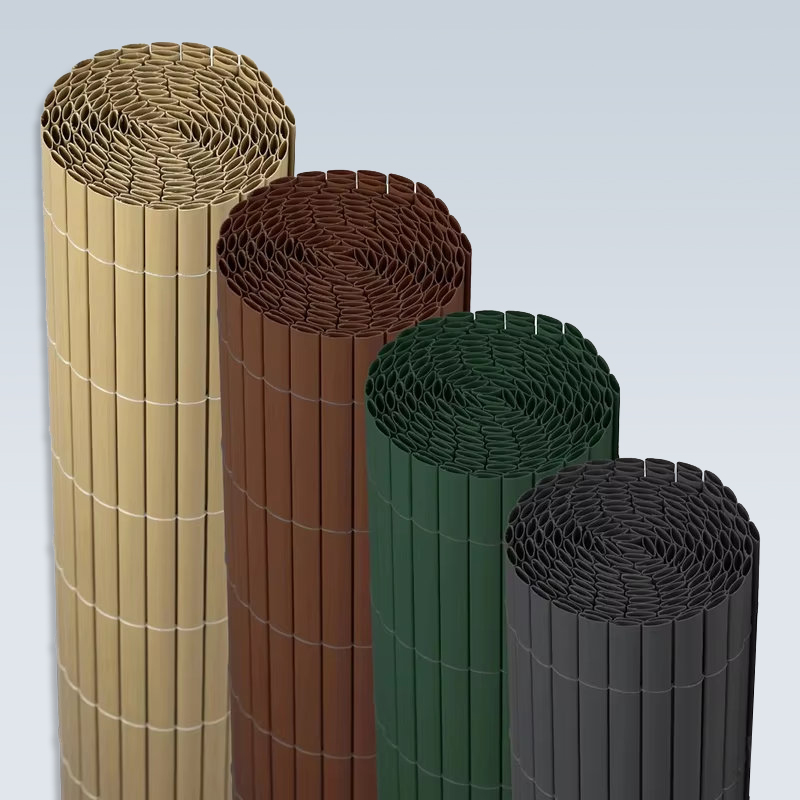
Artificial PVC bamboo screening is an extruded polyvinyl chloride slat, normally 8 mm to 20 mm wide and 1.2 mm to 3.0 mm thick, patterned to imitate bamboo culms and joined by galvanised wire, thread or a hinged reed weave into rolls or panels for garden and boundary screening.
A complete request for quotation should carry five items before anyone mentions a die:
The product on the other side of that document is a roll of slats, not a finished fence. Treat the roll as a semi-finished component and the specification stays honest.
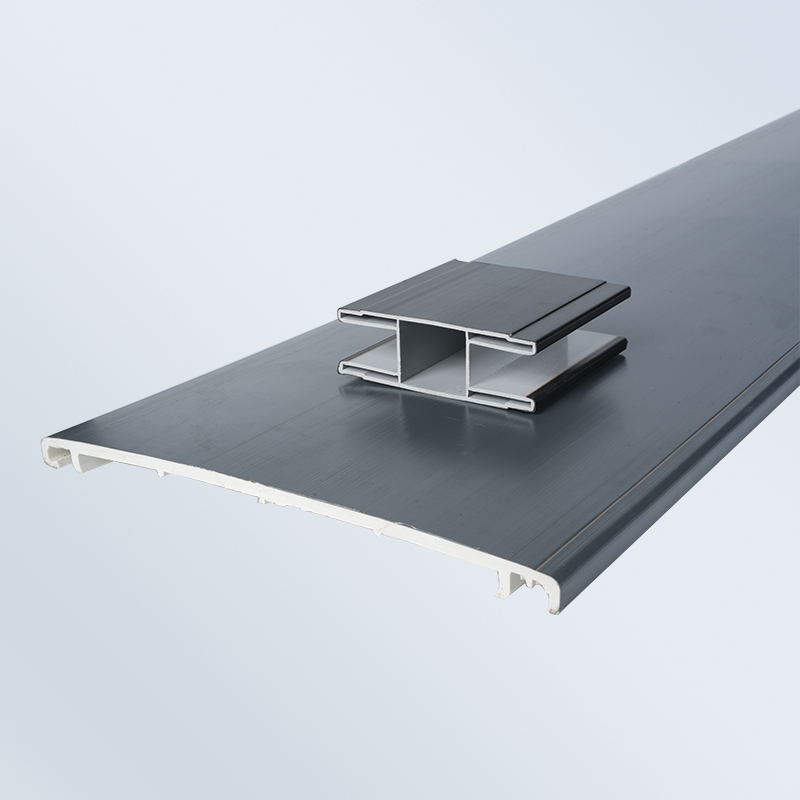
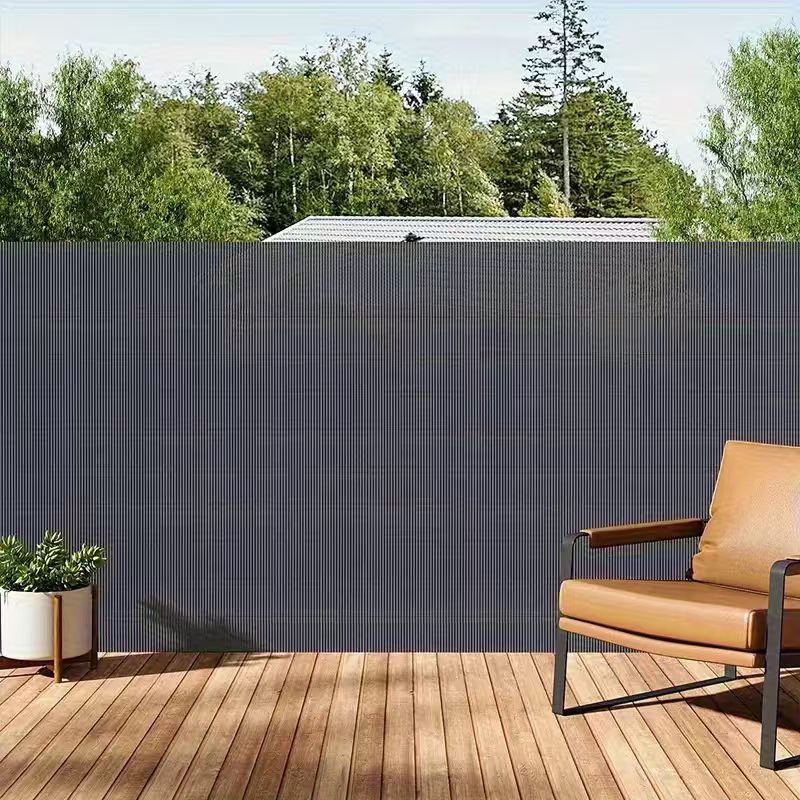 Bamboo-Look PVC Screening Fence RollsDecorative virgin PVC screening in bamboo-look rolls, available in multiple heights and lengths; useful for specifying semi-finished slat components before assembly.View Product →
Six numbers decide whether the fifth container matches the first, and all six are measurable on the loading dock. Put them in the order, not in the email thread.
| Parameter | Band to specify | How it is verified |
| Slat width | 12.0 mm plus or minus 0.3 mm | Caliper on 10 slats per roll |
| Wall thickness | 2.0 mm plus or minus 0.15 mm | Micrometer at three points per slat |
| Colour match | Delta E 1.5 or lower against the master chip | Spectrophotometer, D65 light, 10 degree observer |
| Surface gloss | 8 to 12 gloss units at 60 degrees | Gloss meter on the flat face |
| Mass per square metre | 1.68 kg plus or minus 5 percent | Weigh a full roll, divide by finished area |
| Weave pitch | 20 mm plus or minus 1 mm | Steel rule across 20 consecutive pitches |
Mass is the only single figure that prices three costs at once: resin, ocean freight and the wind load the fence frame has to carry. A 20 x 3.0 mm slat at 26 mm pitch weighs 3.23 kg per square metre, close to three times an 8 x 1.5 mm slat at 15 mm pitch at 1.12 kg. Across a 2,000 square metre order that is a 4.2 tonne difference in container weight before a single roll is wrapped.
Indicative mass per square metre of finished screen, calculated from slat cross-section at a PVC density of 1.40 g/cm3 and the stated weave pitch.
Stabilised PVC screening holds 8 to 12 years in a mid-latitude garden; a compound without a verified UV package fails between year 4 and year 6, and the dividing line is chemistry rather than wall thickness.
1,000 h
ISO 4892-3 exposure before a colour claim is accepted
Delta E 2.3
Approximate threshold at which a colour shift becomes visible
4 to 6 phr
Typical rutile titanium dioxide loading in an outdoor compound
Three additives carry the service life. Rutile titanium dioxide at 4 to 6 phr blocks UV at the surface, hindered amine light stabilisers interrupt the oxidation chain that turns PVC chalky, and a calcium-zinc stabiliser replaces the lead systems still found in low-cost regrind. Chalk filler above 15 phr cuts compound cost and cuts outdoor life with it, because the filler leaves the surface open to photo-oxidation.
Colour shift should be judged against a stated illuminant, not a memory. Write the acceptance line as "Delta E 1.5 or lower after 1,000 hours of ISO 4892-3 exposure, measured under D65" and keep the retained chip in a drawer away from daylight. The full cost and lifespan model behind that figure is covered in this garden fence material guide on lifespan, cost and weather resistance.
A custom colour and a custom profile are two separate purchases with two separate cost structures, and buyers who bundle them in one enquiry usually pay for both.
Custom colour, stock die
Minimum run of 3,000 m per shade. No tooling charge. Lead time 18 to 25 days. The risk is drift between batches, so every run is compared to the retained chip.
Custom profile, new die
Minimum run driven by compound weight, typically 800 kg for a first run. Die and calibration sleeve are quoted as a one-off charge. Lead time 30 to 40 days including dimensional tuning.
A supplier that owns both the extrusion line and the colour lab - Zhejiang Huzhou Dayou Plastic Technology Co., Ltd. runs PVC artificial bamboo fencing from its Huzhou works - can re-run a shade without opening a new die, which is what makes a small top-up order possible eighteen months after the first container.
Keep the signed counter-sample in a dark drawer. It is the only document that settles a colour claim after the container has landed.
Where the slat geometry itself has to change - a deeper groove, a wider face, a different rib profile - the work moves from a fence accessory to a general extrusion project and should be quoted that way.
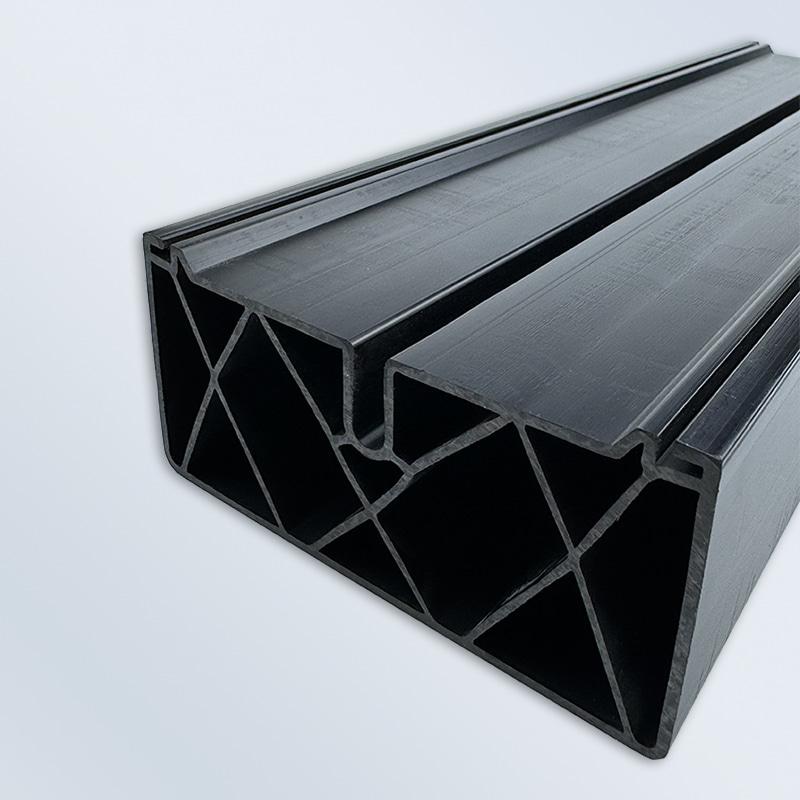 Custom PVC Profile Extrusion by DAYOUCustom virgin PVC profiles with adjustable cross-sections, colours and hardness; suited to general extrusion projects requiring tooling, co-extrusion and secondary processing.View Product →
A manufacturer owns a die, a calibration table and a colour lab; a trading company owns a telephone. Five questions settle which one you are talking to, and none of them requires a factory visit.
Four components decide whether a wire-tied screen still hangs flat in year three: tension wire, fixing clips, ground anchors and a top rail.
Mixing systems is where most garden installations fail: a lattice panel bolted to a bamboo roll creates a hard fixing point that tears the first winter wind. Where a lighter, non-bamboo screen suits the site better, an expandable PVC lattice gives a similar visual density at a lower mass per square metre.
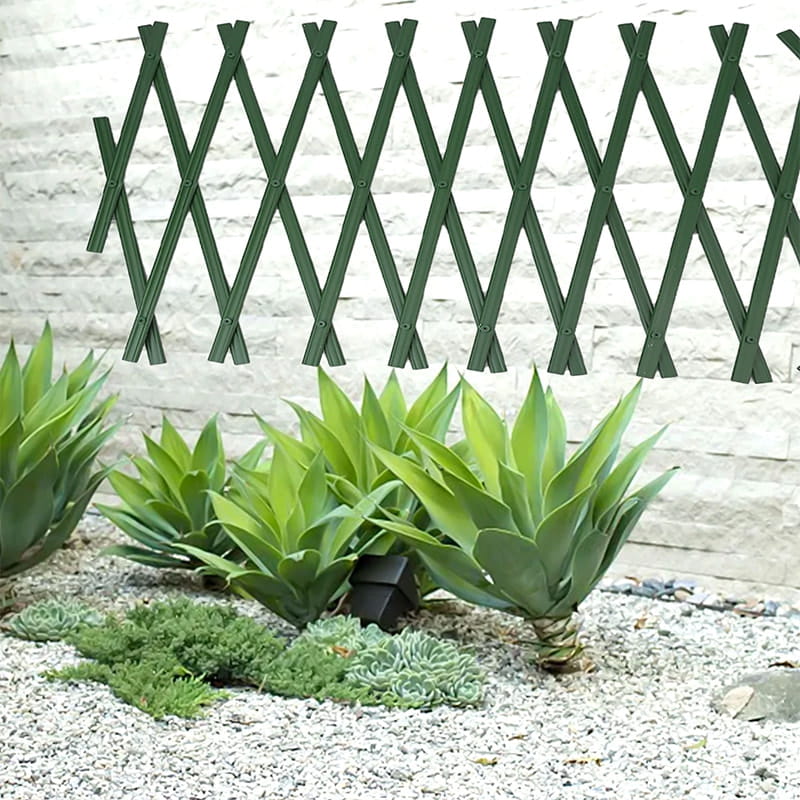 Expandable PVC Garden Trellis and Climbing Plant LatticeFlexible, collapsible virgin PVC lattice for climbing plants and privacy screens; a lightweight non-bamboo screening option for garden and patio installations.View Product →
Custom colour on a stock profile usually starts at 3,000 metres per shade, because the extruder must clean the line and run a colour batch. A new profile carries a lower metre count but a weight floor, typically 800 kg to 1,000 kg of compound for the first run, since the die and calibration sleeve have to be proven before volume production.
Yes, when the brief arrives as physical evidence. Send 200 mm cuts from three culms, state the illuminant for the match, and accept the result as Delta E 1.5 or lower under D65. A photograph cannot be used as a master reference, because screen calibration differs between phones.
UV stabilisation. A 1.2 mm slat with 4 to 6 phr rutile titanium dioxide and a hindered amine package will outlast a 3.0 mm slat with neither, because failure begins at the surface rather than in the core. Thickness buys rigidity and wind resistance, not years.
It tracks mass. A 1.12 kg per square metre specification and a 3.23 kg per square metre specification differ by roughly a factor of three in resin cost before weaving, wire, carton and freight are added, which is why a price quoted without a slat cross-section carries no information.
The order that survives its first winter is not the cheapest one. It is the one that left the factory with six measurable numbers on it, a signed counter-sample in a drawer and a colour measured under a stated light. Fix those before tooling starts and the second container becomes a repeat purchase rather than a negotiation.
Specification figures in this guide reflect common extrusion practice for outdoor PVC slats; final tolerances, minimum runs and lead times are confirmed per project against the approved sample.

 +86-18267317201
 +86-572-2373931
 [email protected]
 1411 Building 1,No.1969 Chuangye Avenue, Huzhou City ,Zhejiang Province, China.
 | Login


 Español
 Deutsch