PVC vs. Vinyl Fencing: What's the Real Difference in Plastic Fencing Products?
When researching plastic fencing options, you will often see the terms PVC and vinyl used interchangeably. However, understanding the subtle but real differences between PVC and vinyl fencing can help you make a more durable, cost-effective, and aesthetic choice for your property. This guide breaks down the material science, performance metrics, and long-term value of each, so you know exactly what you are buying.
1. Material Composition: Are They Actually the Same?
Technically, PVC (polyvinyl chloride) is the base polymer, while vinyl fencing is the finished product made primarily from PVC. In the fencing industry, "vinyl" refers to the entire category of plastic fencing, whereas "PVC" specifies the raw compound. However, not all vinyl fences use 100% pure PVC; many include impact modifiers, UV stabilizers, and acrylic resins. The real difference lies in the formulation and wall thickness.
2. Key Parameter Comparison: PVC vs. Vinyl Fencing
Below is a technical comparison of standard plastic fencing products labeled as "PVC" versus general "Vinyl" fencing. Note that high-end vinyl often outperforms basic PVC.
| Parameter |
PVC Fencing (Basic/Standard) |
Vinyl Fencing (Premium/Composite Blend) |
| Material Base |
Unmodified polyvinyl chloride |
PVC with acrylic capstock or impact modifiers |
| Wall Thickness |
Typically 0.040” – 0.060” |
Typically 0.065” – 0.090” (thicker rails & pickets) |
| Impact Resistance (Izod) |
2.0 – 3.5 ft-lb/in |
4.0 – 7.0 ft-lb/in (with acrylic alloy) |
| UV Stability (Color hold) |
5-7 years before minor fading |
10+ years with titanium dioxide additive |
| Temperature Flexibility |
May become brittle below -5°C (23°F) |
Remains impact-resistant down to -20°C (-4°F) |
| Typical Warranty |
15-20 years (pro-rated) |
Lifetime limited (non-pro-rated often) |
| Cost per linear foot (installed) |
$15 – $25 |
$22 – $40 |
3. Structural Strength and Durability
Vinyl fencing (especially premium grades) outperforms basic PVC fencing in flexural strength and cold-weather impact resistance. While both resist rot, insects, and moisture, a high-quality vinyl fence uses a co-extruded cap layer that protects against UV rays and chemical stains. Basic PVC fences are more prone to shattering in freezing temperatures and warping under heavy impact (e.g., from lawn equipment).
4. Aesthetics and Color Retention
Both products come in white, tan, or grey, but premium vinyl fencing offers a matte or wood-grain texture while standard PVC is typically high-gloss. For color retention, use the Delta E (color difference) standard: Premium vinyl fences maintain ΔE < 2.0 after 5 years of Florida weathering; basic PVC often shows ΔE > 5.0 (visibly faded).
5. Installation and Maintenance
Both require similar installation methods (post hole, concrete, brackets). However, thicker vinyl fencing (0.070”+ wall) resists oil-canning (wavy appearance) far better than thin PVC. Maintenance for both is soap-and-water cleaning, but basic PVC may develop chalkiness on the surface after 8-10 years, requiring a sealant — premium vinyl does not.
For a complete selection of high-durability plastic fencing, check out our vinyl and PVC fencing product lineup.
6. Cost vs. Long-Term Value
While PVC fencing has a lower upfront cost ($15-$25/ft), its shorter lifespan (15-20 years before brittleness) means you may replace it sooner. Vinyl fencing (premium grade) costs 30-50% more upfront but often lasts 40+ years with minimal maintenance, making the annualized cost lower over time.
Frequently Asked Questions (FAQ)
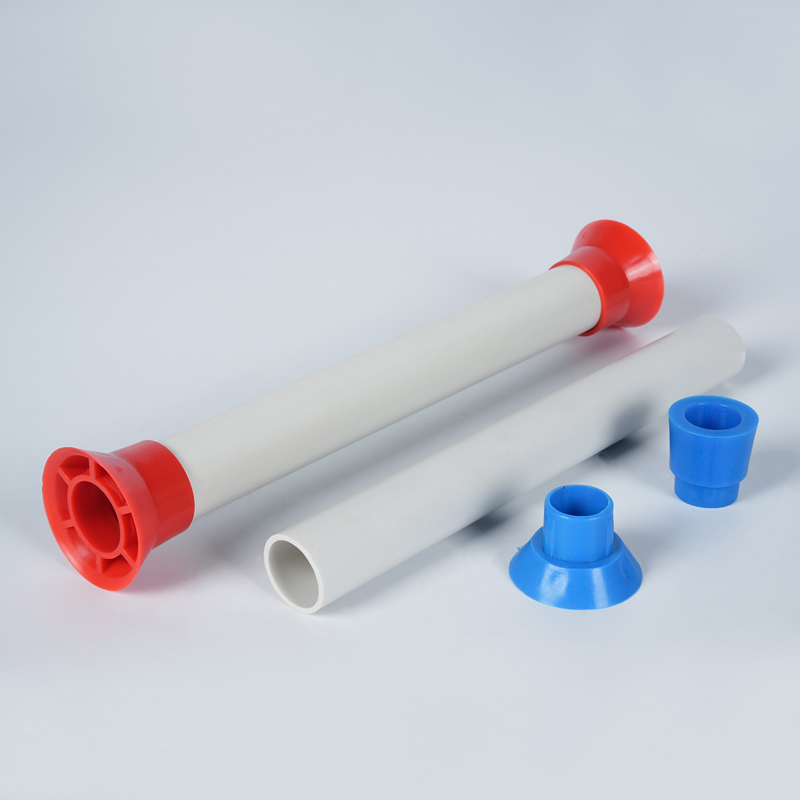
- Q1: Can I use standard PVC pipe to build a fence instead of buying vinyl fencing?
A: No. PVC pipe is not UV-stabilized and lacks impact modifiers. It will become chalky, brittle, and crack within 1-2 years. Always use fence-grade vinyl (with capstock layer) for outdoor structures.
- Q2: Which is more resistant to a lawnmower strike — PVC or vinyl fencing?
A: Premium vinyl fencing (thickness ≥0.070” with acrylic impact modifiers) resists cracking much better than basic PVC (0.040”-0.050”). In standard ASTM D256 impact tests, premium vinyl scores 4-7 ft-lb/in vs. basic PVC at 2-3.5 ft-lb/in.
- Q3: Does “cellular PVC” (like for trim boards) count as vinyl fencing?
A: No. Cellular PVC is expanded foam core designed for trim and millwork, not fencing. It is too soft for fence rails and absorbs moisture over time. True vinyl fencing is rigid, non-cellular and engineered for structural fence loads.




 Español
  Deutsch