
 2026.10.22
 Industry News
Content
That gap between a purchase order and a delivered roll is the reason sourcing a custom 450gsm PVC fence strip from the right manufactory matters. Areal weight, base fabric count, plasticizer load and the UV package are four separate variables, and a trading company that only relabels cartons controls none of them.
What follows covers what 450gsm truly means on a coated strip, the tolerances that belong in the purchase order, how strip grade changes outdoor service life, and the five checks that separate a working coating line from a repackaging operation.
A 450gsm PVC fence strip carries 450 grams of finished material per square metre, counted as base fabric plus PVC compound plus pigment and stabilisers.
Two rolls can both be labelled 450gsm and still behave nothing alike. A 150gsm woven polyester scrim carrying 300gsm of coating has a different tear profile from a 110gsm scrim carrying 340gsm of compound, even though the areal weight is identical. The heavier scrim resists tearing at the clip holes; the heavier coating resists abrasion, colour fade and water wicking along the weave. When a supplier quotes a single total weight, ask for the two numbers separately and put both into the order confirmation.
Practical caliper for a soft 450gsm strip lands between 0.38 and 0.42 mm. Below 0.35 mm the strip curls in summer heat and drums against the mesh in wind; above 0.45 mm it stops draping and starts fighting the clip. Buyers who specify thickness instead of weight usually end up with a strip that feels right in the hand and fails at the fixing point.
Four specifications decide whether a roll behaves on site: slit width, areal weight, tensile strength and cold crack. Everything else is secondary.
| Parameter | Practical range | What it controls on site |
| Slit width | 190 mm plus or minus 2 mm | Clip grip and a straight screen line over long runs |
| Areal weight | 450 g/m2 plus or minus 5 percent | Tear resistance at clipped or punched holes |
| Caliper | 0.38 to 0.42 mm | Drape, heat curl, wound roll diameter |
| Tensile, warp | 850 N per 50 mm minimum | Wind load across a 1.8 m panel |
| Elongation at break | 15 to 25 percent | Under 12 percent goes brittle, over 30 percent sags |
| Cold crack | -25 C | Winter handling, clipping and transport |
| UV package | 2,500 hours QUV-A | Colour shift, chalking, tensile retention |
| Roll format | 50 m or 100 m on a 76 mm core | Unwind tension on standard application stands |
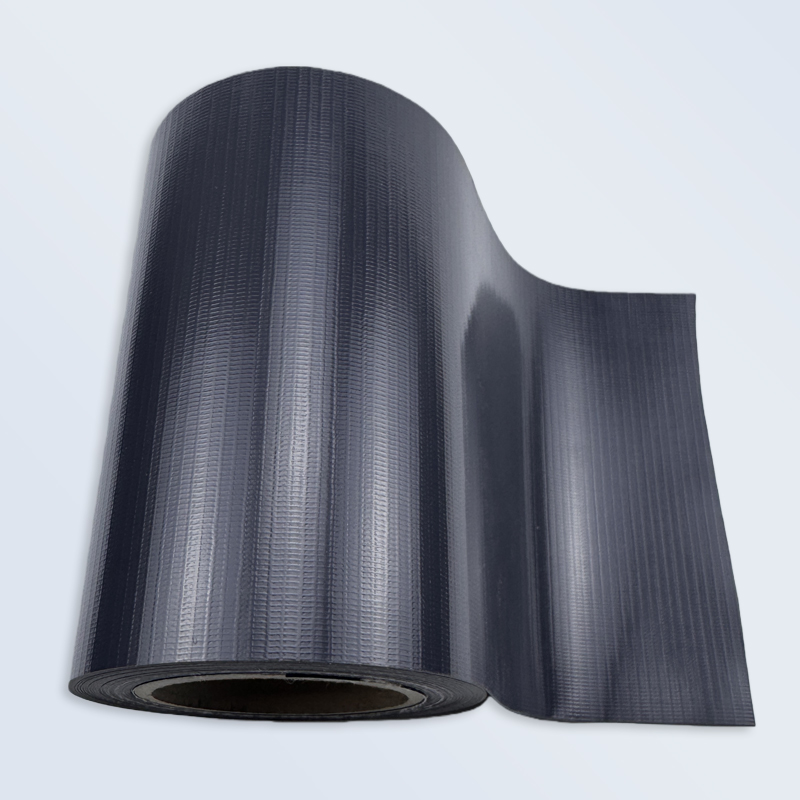
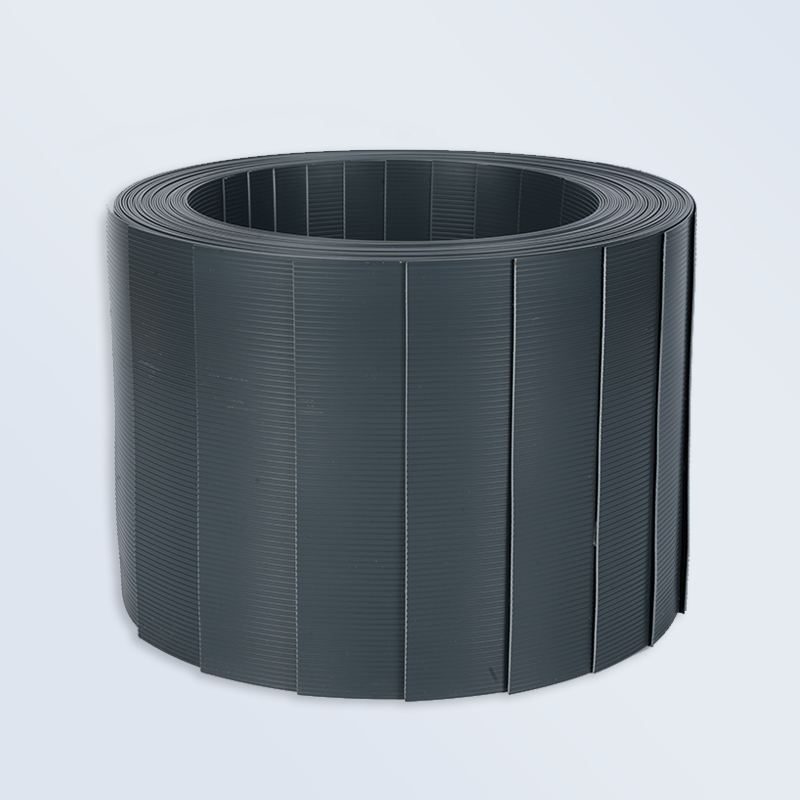
 DSF190 450gsm Soft PVC Fence Strip by DAYOUA 190 mm, 450 gsm soft PVC/polyester fence strip for weaving into garden, balcony and yard privacy screens, with tear, water and wind resistance.View Product →
A factory that runs its own weaving, coating and slitting can move coat weight in 20gsm steps and hold slit width to plus or minus 2 mm; a trader buying finished rolls can only pass along whatever tolerance arrived in the last container.
The commercial consequence is simple: custom work is a production decision, not a paperwork decision. If the supplier cannot tell you the scrim count and the coat weight of your last shipment, they did not make it.
A 450gsm soft PVC strip with a genuine 2,500-hour QUV-A package runs 5 to 7 years in temperate climates and 3 to 4 years in high-UV markets such as the Gulf, Australia and southern Spain.
The same 450gsm construction with a weak or absent UV package typically fails at 18 to 24 months, and the failure is rarely a clean break. It appears as chalking on the sun side, a colour shift of two or three shades, and hairline cracks radiating from the clips. Recorded field behaviour in how long privacy fence strips last outdoors points to the clip line, not the strip body, as the first failure point on almost every aged screen.
Five customisation levers genuinely change how a 450gsm strip performs, and three of them are usually free within a normal tooling setup.
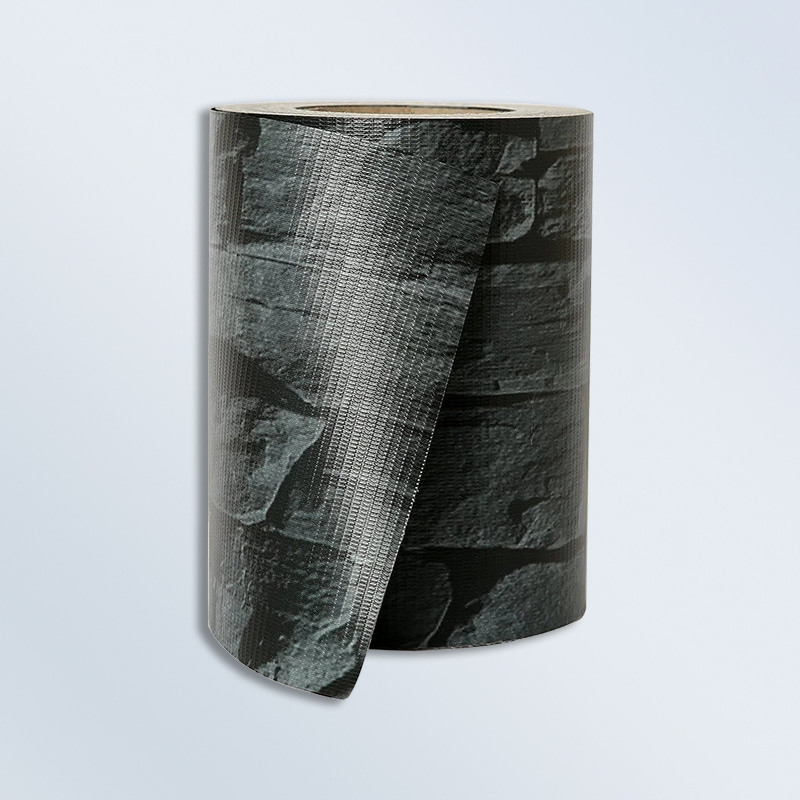
Printed formats are the fastest-growing request, because a printed strip replaces both a plain strip and a separate decorative liner. Repeat length, ink adhesion and colour fastness all need to be confirmed on a sample roll, not on a single swatch, since ink behaves differently once the strip is under tension on a fence.
 DSPF190 450gsm Printable PVC Fence Strip by DAYOUA 190 mm, 450 gsm printable PVC/polyester strip for decorative fence weaving, tested for 500-hour UV aging and Grade 4–5 color fastness.View Product →
Clip spacing of 300 to 400 mm keeps a 450gsm strip stable in gusts up to roughly 100 km/h, and the clip, not the strip, is the usual point of failure.
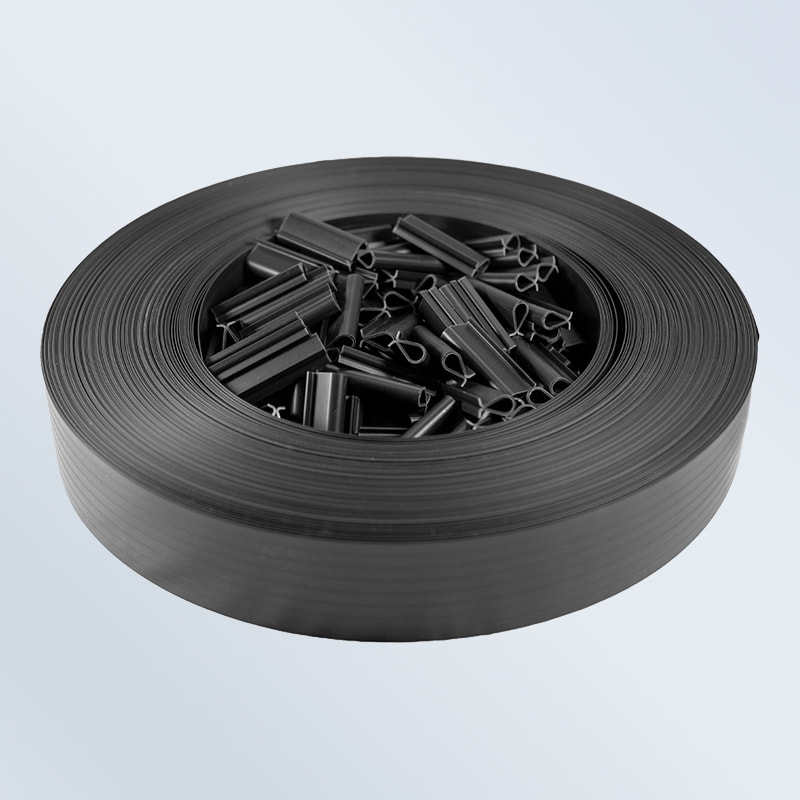
Clip material deserves the same scrutiny as the strip. A UV-stabilised polypropylene clip holds its grip for a decade; a cheap rigid PVC clip goes brittle at the hinge within two winters and starts releasing strips in the first spring storm. Zhejiang Huzhou Dayou Plastic Technology Co., Ltd. produces its clip range in-house alongside the strips, which keeps the clip-to-strip tolerance pairing under one roof instead of split across two suppliers who can blame each other.
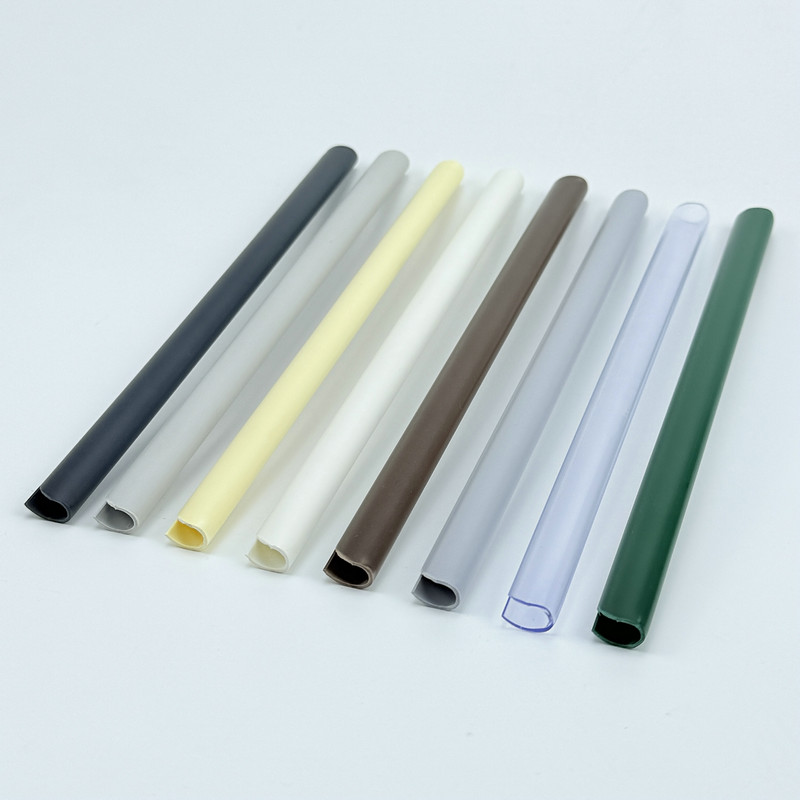 DPC01 Plastic Mounting Clips for Fence StripsSnap-fit PVC mounting clips secure flexible fence tape by hand without drilling, remain reusable for adjustments, and come in multiple colors.View Product →
Five checks separate a manufactory that can hold a specification from one that can only quote a price per metre.
A manufactory that answers all five without hesitation is worth a longer lead time. One that deflects any of them will pass the problem down the supply chain to you.
Most coating lines set the floor at 3,000 to 5,000 running metres per colour for a standard construction, and one 20-foot container for a mixed programme of widths or colours. Below that, the setup and cleaning time per colour outweighs the material cost.
Allow 20 to 30 days for stock colours and widths, and 35 to 45 days for a custom lab dip, printed repeat or a coat weight outside the standard 430 to 470gsm band. Add transit time, and a full order cycle typically lands between 45 and 65 days door to door.
Yes for screens up to about 1.5 m on a standard mesh panel. Above 1.8 m, or on an exposed coastal site, step up to 630gsm soft PVC or a 1.0 mm hard PVC strip, because the added weight per square metre is what resists flapping and fatigue at the clip holes.
Yes. Transfer printing handles multi-colour repeats with a repeat length of 200 mm and above, and it survives the same outdoor exposure as the base strip when the UV package is applied over the print rather than under it.

 +86-18267317201
 +86-572-2373931
 [email protected]
 1411 Building 1,No.1969 Chuangye Avenue, Huzhou City ,Zhejiang Province, China.
 | Login


 Español
 Deutsch