
 2026.10.15
 Industry News
Content
A chain link fence with 2 inch mesh needs a privacy strip around 190 mm wide at 450 GSM to screen the panel properly, while the same fence on a coastal site needs that strip to hold above 60 percent of its tensile strength after 1,000 hours of QUV exposure. Those two numbers rarely appear in the same quotation, and that gap is where most sourcing problems start. Buyers searching for a custom PVC privacy screen strips supplier are rarely shopping for a generic product; they are matching strip width, gram weight, colour batch and clip profile to a fence system that already exists in the field. Get one of those four variables wrong and the container still arrives, but the fence does not close.
This guide is written from the extrusion side of that transaction, for procurement managers, fence contractors and distributors who have already promised a finished panel to a client and now have to make the strip behind it work.
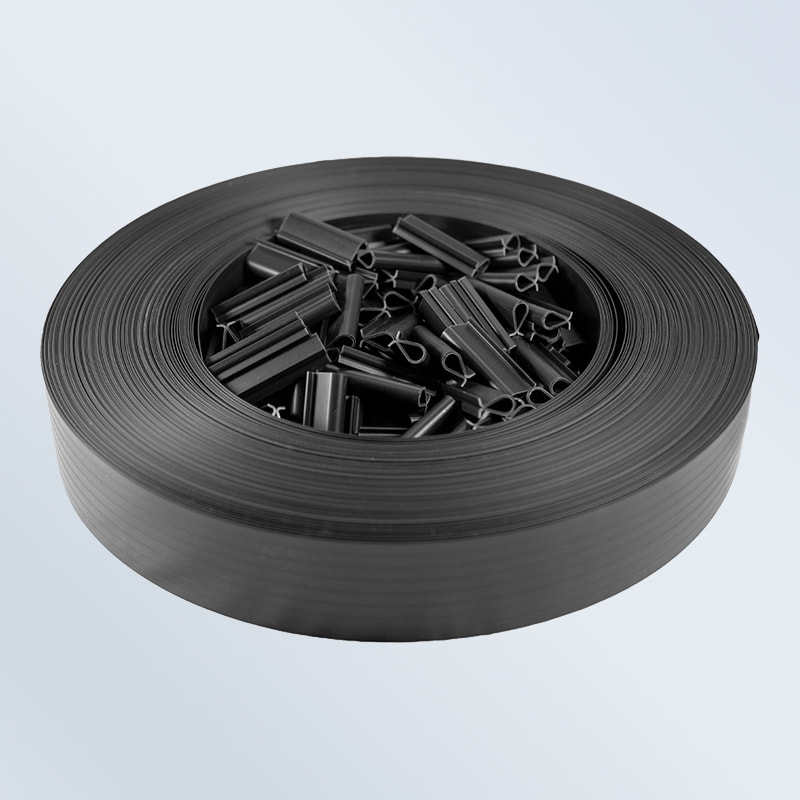
A custom PVC privacy screen strip is an extruded, UV-stabilised PVC tape, normally 60 mm to 300 mm wide and 0.3 mm to 1.2 mm thick, measured in grams per square metre or grams per linear metre and cut to match the slot or clip geometry of one specific fence system.
Four variables decide whether a custom order runs smoothly, and the hard PVC fence strip sourcing guide covers the same ground in more detail for rigid grades:
The first three are controlled at the die head and the haul-off. The fourth is controlled by the die itself, which is why a request for the same strip 20 mm wider is a tooling decision, not a cutting decision.
Rigid PVC wins on coastal, cold and high-UV sites; rigid PP wins on hot, dry, cost-driven garden projects where replacement every few years is acceptable. At equal coverage, PP usually lands 8 to 12 percent cheaper up front, but it typically loses two to four years of colour retention in a moderate to high UV climate.
The reason is formulation headroom. PVC accepts high loadings of titanium dioxide and light stabilisers without turning brittle, so a well-built PVC strip can hold its colour past the five-year mark. PP has a narrower processing window, and pushing stabiliser content too high makes the extruded tape harder to slit and wind neatly.
| Property | Rigid PVC strip | Rigid PP strip |
| Colour retention | Good to excellent, past 5 years | Fair, visible shift after 2 to 4 years |
| Low-temperature handling | Stays workable to about minus 10 C | Becomes noticeably stiffer below 0 C |
| Surface finish options | Wide, including wood grain and matte | Narrower, mostly matte and embossed |
| Fire behaviour | Self-extinguishing grades available | Burns readily unless modified |
| Cost per square metre of coverage | Baseline | 8 to 12 percent lower |
| Recycled content tolerance | Moderate, colour shift is the main risk | Higher, mechanical loss is the main risk |
The practical rule is simple: if the site sits within 20 km of salt water or sees more than 2,000 hours of annual sunshine, specify PVC with a documented stabiliser package and ask for the QUV test report before the order is confirmed.
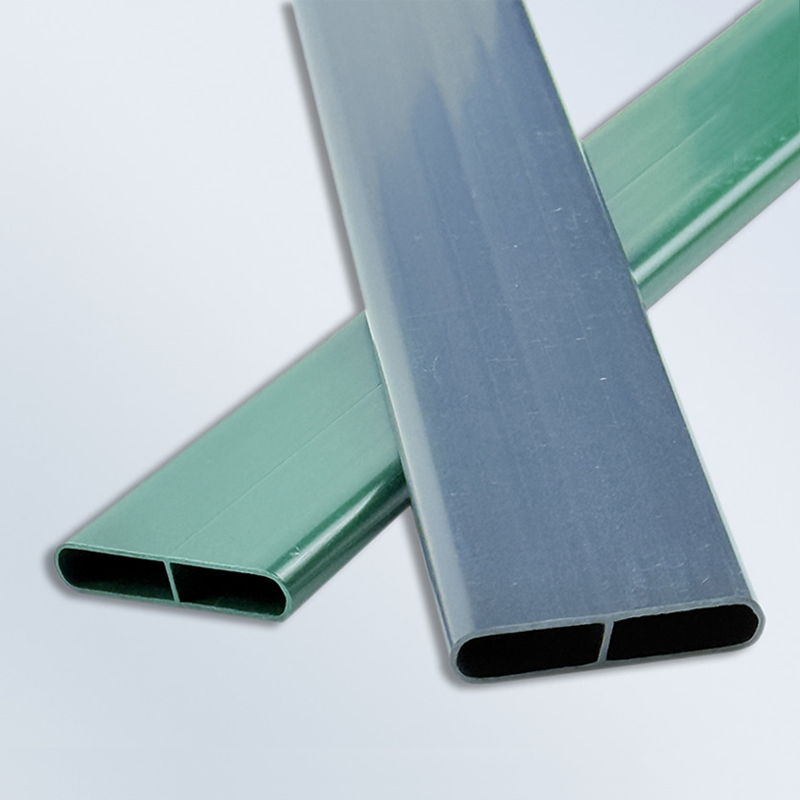
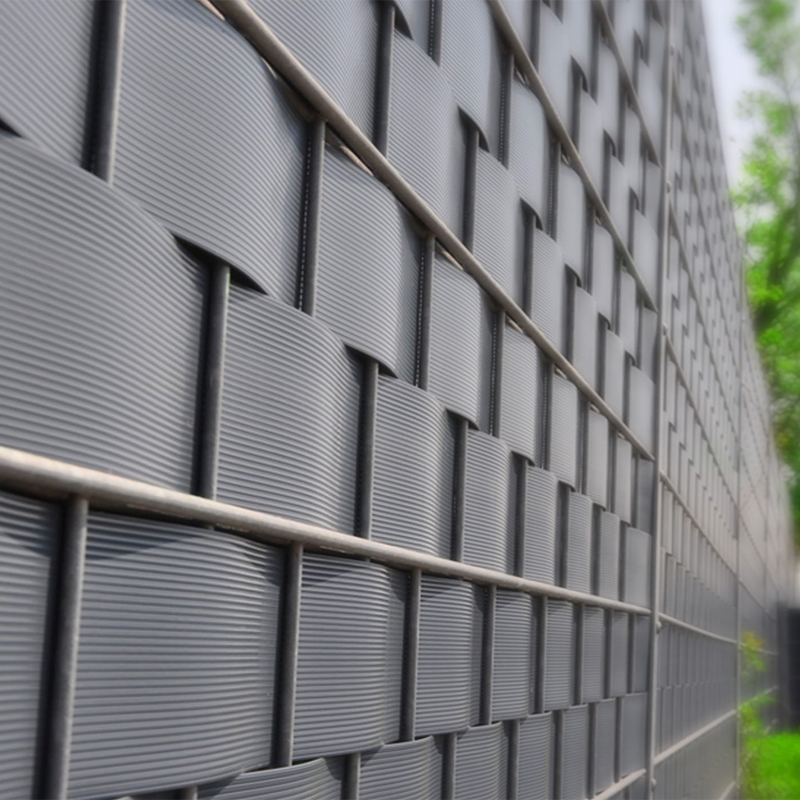 Classic Line PVC Fence Strip for Outdoor Privacy ScreensDAYOU's 190 mm PVC strip offers about 76% fence-face coverage at 250 mm centres, with UV and weather resistance for sunny residential privacy.View Product →
The number that matters is not strip width on its own but coverage per linear metre of fence, calculated from width divided by fixing pitch. A 190 mm strip fixed at 250 mm centres screens roughly 76 percent of the fence face, which is the practical target for most residential privacy work.
| Strip width | Gram weight | Fixing pitch | Coverage |
| 100 mm | 160 to 220 g/m | 150 mm | About 65 percent |
| 150 mm | 240 to 330 g/m | 200 mm | About 72 percent |
| 190 mm | 300 to 450 g/m | 250 mm | About 76 percent |
| 300 mm | 500 to 700 g/m | 330 mm | About 90 percent |
Order in linear metres, quote in kilograms. Extruders price on resin weight, and a 20 mm change in width moves the per metre weight by roughly 10 percent, which is enough to break a fixed-price contract signed six months earlier.
Five checks separate an extruder from a reseller, and all five can be run inside a week once sample strips are on the table.
Ask for three consecutive production batches. Compare measured width, thickness and gram weight. A manufacturer will show you the record; a reseller will send a single profile drawing.
Measure colour drift across batches. A colour difference of two or less on the Delta E scale is the working threshold for a repeat order. Above three, panels look mismatched when sunlight hits them at a low angle.
Confirm the stabiliser system. In-house masterbatch with a stated titanium dioxide loading is verifiable. Generic claims of UV resistance are not, and they are the most common cause of a faded second container.
Test clip fit with your own clips. Send the supplier a box of the mounting clips you already use and ask for strips extruded to fit them, not the other way round.
Check packing and container fill. Wound coil ships better than loose bundles, and a 40HQ loaded to 24 tonnes on pallets behaves very differently at the port than a hand-stacked load.
Colour and cross-section are the two parts of a privacy strip order that cannot be fixed after extrusion, so both have to be settled before the die is cut. Everything else, including width, length and packing, can still be adjusted on the line.
Where a fence system needs a profile that no standard die produces, a plastic processor can usually work from a drawing or a section of the original strip and quote a custom PVC profile extrusion within a week of receiving the sample.
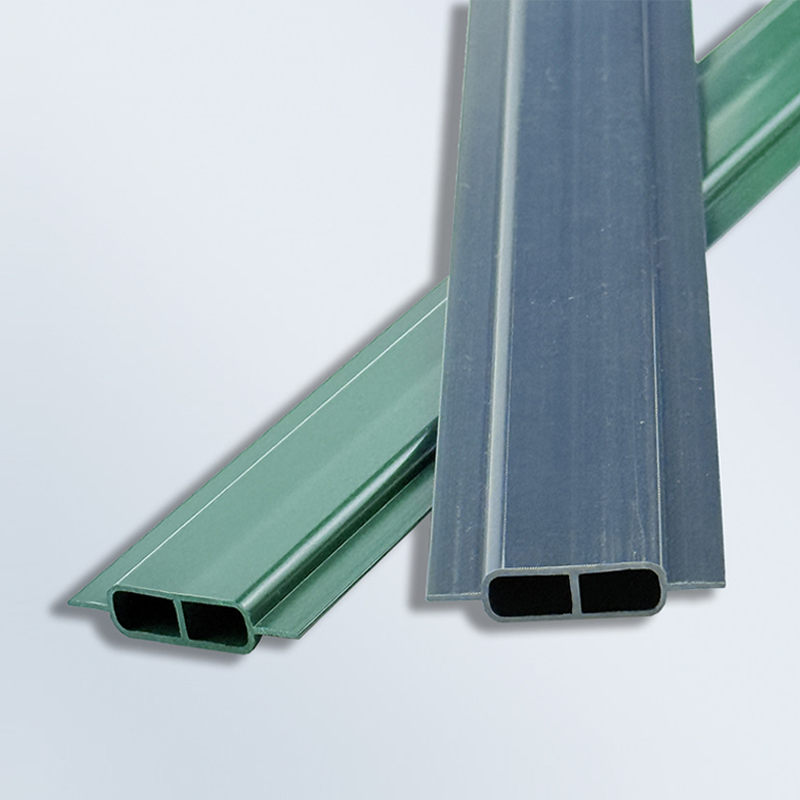
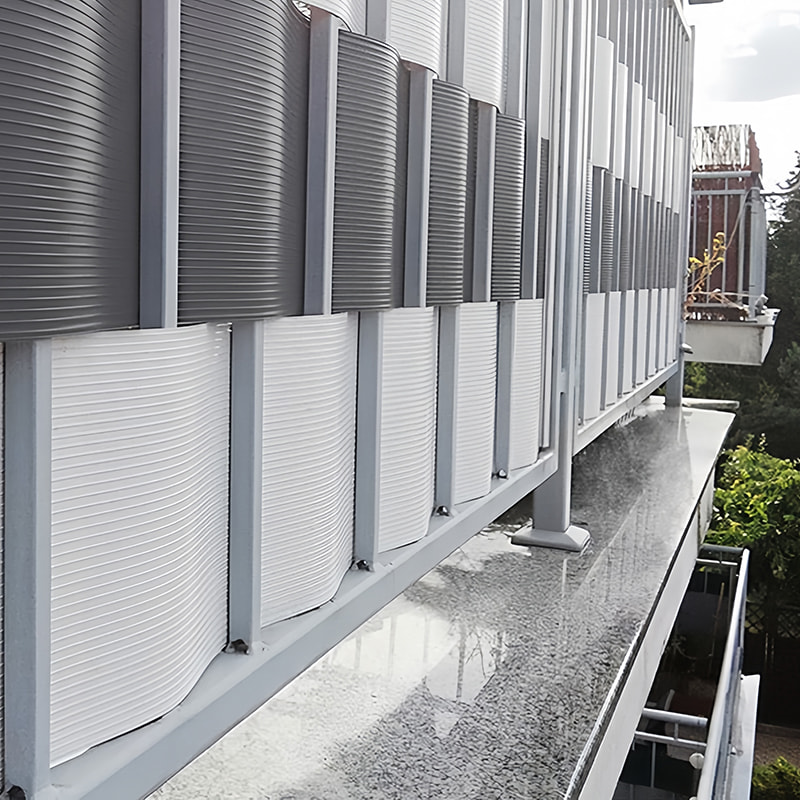 Wide Line PVC Fence Strip for Wider Panel CoverageDAYOU's 190 mm Wide Line strip suits garden fences, balcony dividers, and yard partitions, offering wider coverage and all-weather outdoor durability.View Product →
Soft strips follow a different logic. A 450 GSM tape flexes around chain link and double wire mesh, which makes it the default for curved runs and low fences, while a 630 GSM tape stands upright in taller panels and reads as a denser screen.
 Soft PVC Fence Tape DSF190-450gsm for Curved Fence RunsDAYOU's 450 GSM soft PVC tape flexes around chain link and double wire mesh, making it suitable for curved, low privacy screens.View Product →
From colour approval to a loaded container, budget 45 to 70 days, and treat minimum order quantity as a weight limit rather than a length limit. Most extruders set a custom colour MOQ near 500 kg per shade, which is roughly 5,800 metres of 190 mm strip at 86 grams per metre.
Sample in three days, production in 10 to 15 days, no tooling charge. Colour is fixed to whatever runs on the line this quarter.
Sample in seven to ten days, production in 20 to 25 days, MOQ around 500 kg per shade plus a one-off setup charge.
The risk that catches buyers most often is neither price nor lead time, it is the colour reference. A hex code photographed under office lighting drifts once it is extruded, and a strip approved from a phone screen will be rejected at goods-in. Approve from a physical chip in daylight, keep a sealed reference sample, and write the acceptance tolerance into the purchase order.
Most extruders set a custom colour minimum near 500 kg per shade, which is about 5,800 metres of 190 mm strip at 86 grams per metre. Standard colours can usually ship in smaller volumes because no cleaning run is needed between batches.
Allow seven to ten days for a physical sample and 20 to 25 days for production after approval. Add 25 to 35 days of sea freight on most export routes, so 45 to 70 days from colour approval is a realistic planning figure.
Only downward. A 300 mm strip can be slit to 190 mm, but the slit edge exposes unsealed material and the gram weight per metre drops with it. Width is best set at the die, not in the finishing department.
PVC. Coastal sites combine salt spray, high UV and wide temperature swings, and PVC compounds hold colour and flexibility across that range better than PP at equal gram weight.

 +86-18267317201
 +86-572-2373931
 [email protected]
 1411 Building 1,No.1969 Chuangye Avenue, Huzhou City ,Zhejiang Province, China.
 | Login


 Español
 Deutsch