
 2026.10.29
 Industry News
Content
Natural bamboo screening splits at the nodes after two or three wet winters, and that single failure keeps pushing garden retailers toward extruded panels. Artificial bamboo is a plastic profile rather than a woven screen, so the company that extrudes it controls wall thickness, node spacing, colour batch and UV package. Buyers who treat the product as a commodity often discover the difference in year two.
This guide is written for importers, fence assembly plants and landscape contractors buying from a custom artificial bamboo PVC garden fence manufactory. It sets out the specifications worth fixing in writing, the tooling and lead time figures to budget for, the quality checks that expose a middleman, and the accessories that decide whether the panels stay on the fence after delivery.
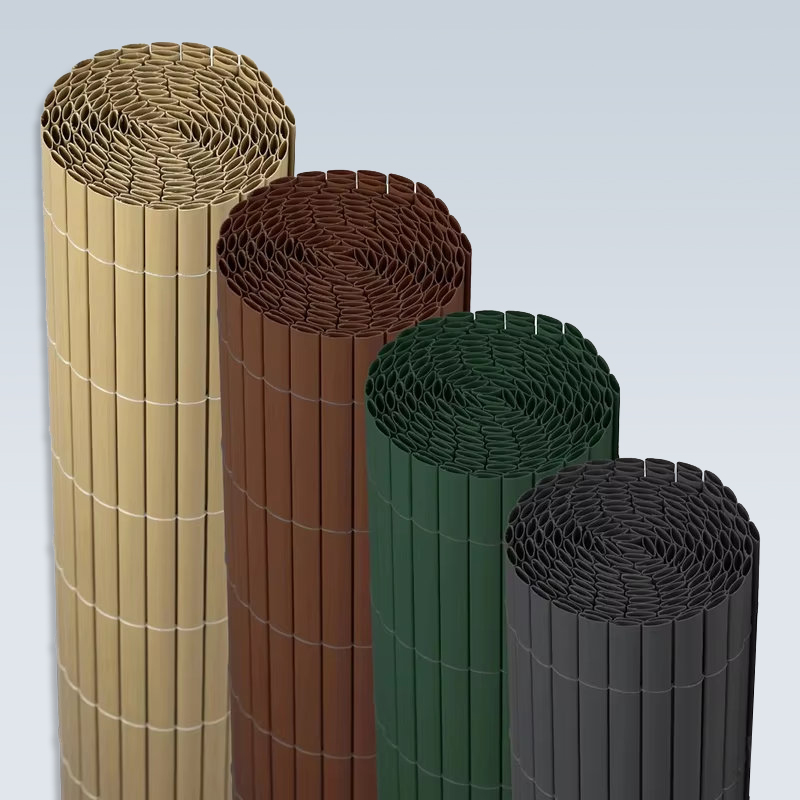
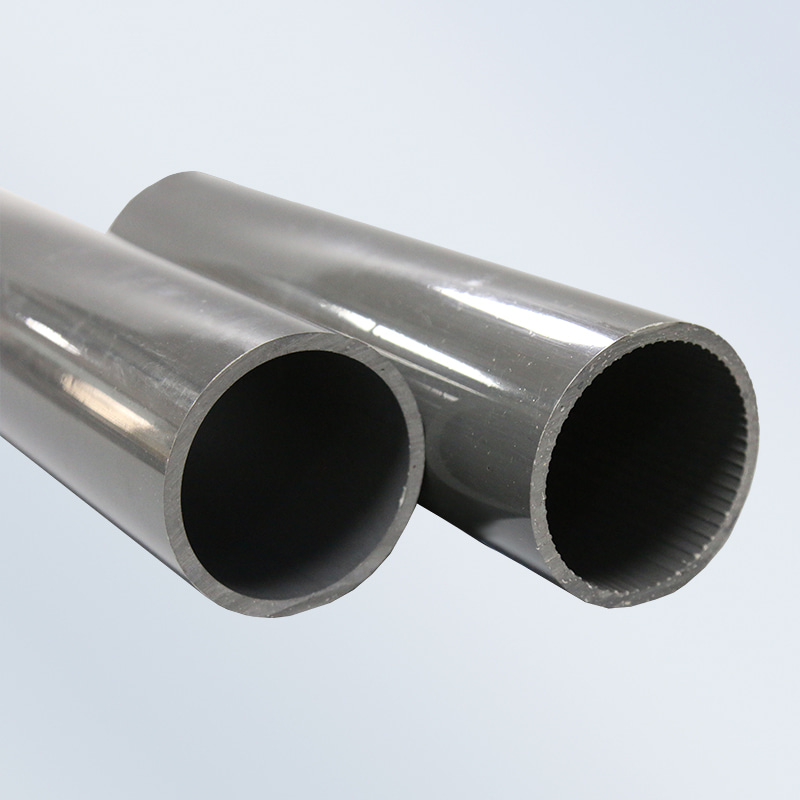
A custom artificial bamboo PVC garden fence manufactory extrudes hollow profiles with repeating node rings, then wires or clips them into roll-up screens, rigid panels, topper sections and trellis lattices. The product is an extrusion first and a fence second, which is why the factory floor decides how the garden looks five years later.
An artificial bamboo PVC garden fence is a UV-stabilised PVC profile extruded with a hollow core and periodic node rings, then assembled into a flexible screen, a rigid panel or a lattice used for garden privacy and plant support.
Everything that defines appearance and lifespan sits on the extrusion line, so a manufactory can vary all of it without rebuilding the plant:
Because the shape comes from a die and not a loom, switching diameter or node pitch usually means changing the die and the calibration sleeve rather than the whole line. That is also why a genuine custom order can be sampled in days, and why a trading company with no extrusion equipment has to quote longer or refuse the job.
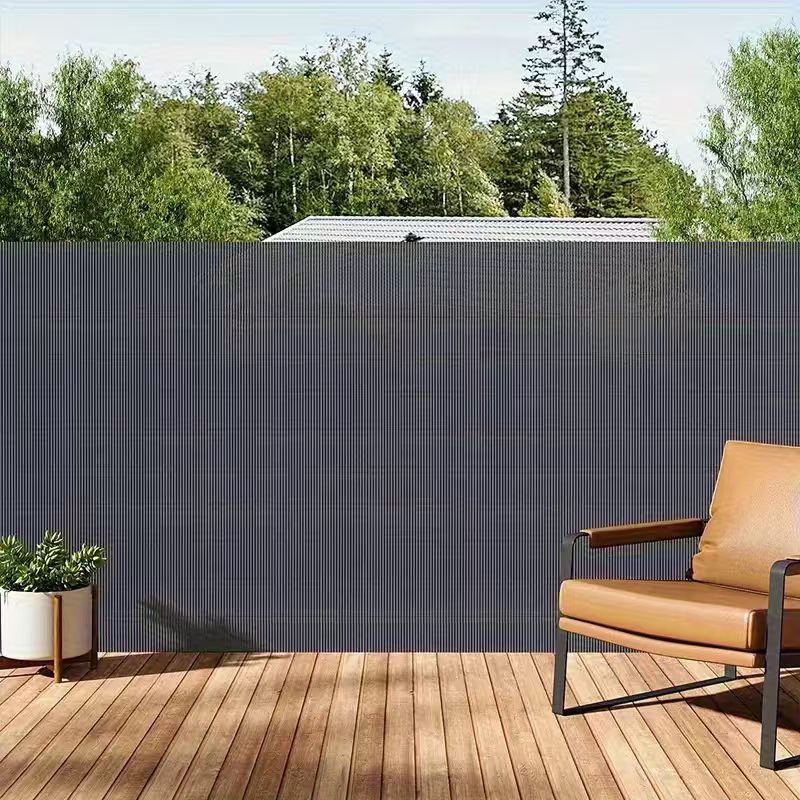 Artificial PVC Bamboo Screening Fence by DAYOUDecorative Virgin PVC bamboo-look screening for fences, waterproof and mold-resistant, available in multiple sizes and RAL colors for low-maintenance outdoor use.View Product →
Three tolerances decide whether container two matches container one: outside diameter, wall thickness and colour difference. Leave them out of the purchase order and the second shipment becomes a negotiation instead of a delivery.
Keep one sealed panel and one colour chip per SKU for at least 24 months. Every later batch is compared against that physical reference, never against a photograph on a screen or a digital colour code.
| Parameter | Target at sample approval | Site consequence if it drifts |
| Outside diameter | +/- 0.3 mm | Clips sized for 20 mm will not grip a 20.8 mm pole |
| Wall thickness | +/- 0.15 mm | Thin walls sag in summer heat, thick walls add freight cost |
| Colour difference | Below 1.5 on the CIE scale against the approved chip | Mixed batches read as visible stripes in direct sunlight |
| Node pitch | +/- 2 mm over one metre | Uneven nodes make the screen look synthetic up close |
| UV stabiliser loading | Declared on the batch record | Yellowing and chalking inside three outdoor seasons |
| Panel length | +/- 5 mm | Panel ends drift out of line in long continuous runs |
Material behaviour and climate effects are covered in more depth in this garden fence material guide, which is worth reading before a specification is frozen.
UV-stabilised PVC artificial bamboo screening holds its colour and shape for roughly 10 to 15 years outdoors, while untreated natural bamboo rarely passes four. The gap comes from the stabiliser package and the wall thickness, not from the label on the carton.
Natural bamboo screening
PVC artificial bamboo screening
A custom extrusion quote is built from four numbers: tooling, minimum order quantity, sample lead time and bulk production time. Collect all four before negotiating panel price, because they decide whether the project is viable at your volume.
Tooling is normally charged once and amortised across repeat orders, so confirm in writing which factory holds the die and who owns it if the relationship ends. Colour changes are cheaper than profile changes because they need a compound switch and a line purge rather than new steel.
Freight behaviour matters as much as the unit price. Hollow profiles ship lighter than solid timber for the same covered area, and nested roll-up screens fill a container more efficiently than rigid framed panels. A supplier able to quote both formats helps you choose the mix that keeps landed cost down.
A trading company can forward emails; only a manufactory can produce an in-line dimension log, raw material batch records, colour chip history and weathering test data. Ask for these five items before releasing a trial order.
If the supplier cannot name the machine, the gauge or the test standard, the order is being placed through a middleman and the specification is not really under your control.
Panels make up roughly 70 percent of a project's material cost, and clips, strips and trellis decide whether the other 30 percent gets wasted. Accessory mismatch is the most common post-delivery complaint on garden fence projects.
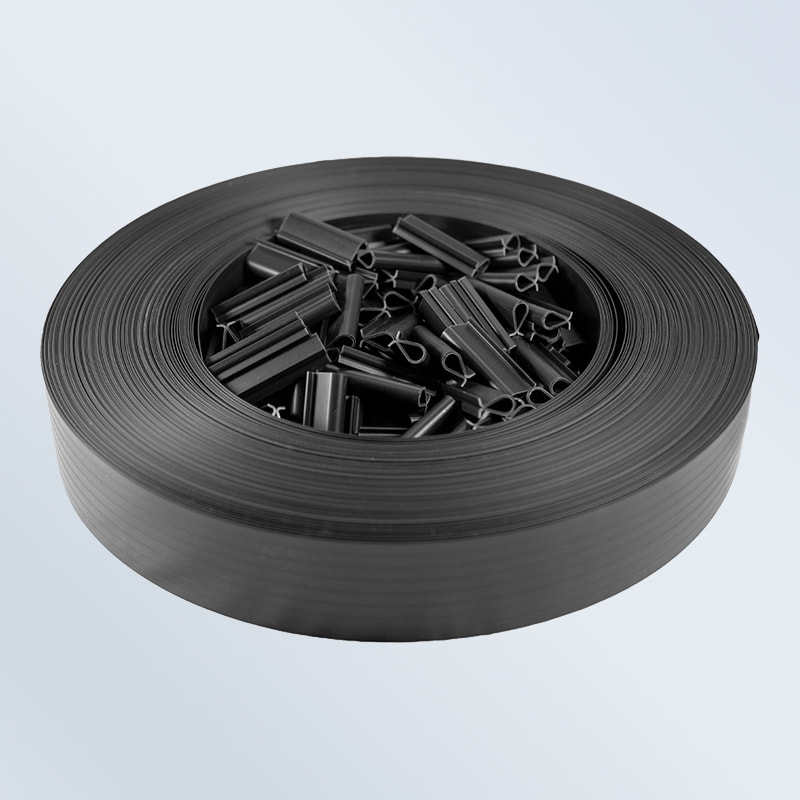
Clips are sized to the strip or slat they hold. A 6 mm slat needs a different clip from an 8 mm slat, and forcing one into the other either splits the clip or leaves the slat loose in wind. A six-model clip range covers the common strip widths, and the same clip family should be specified for every panel in a run so installers are not sorting mixed parts on site.
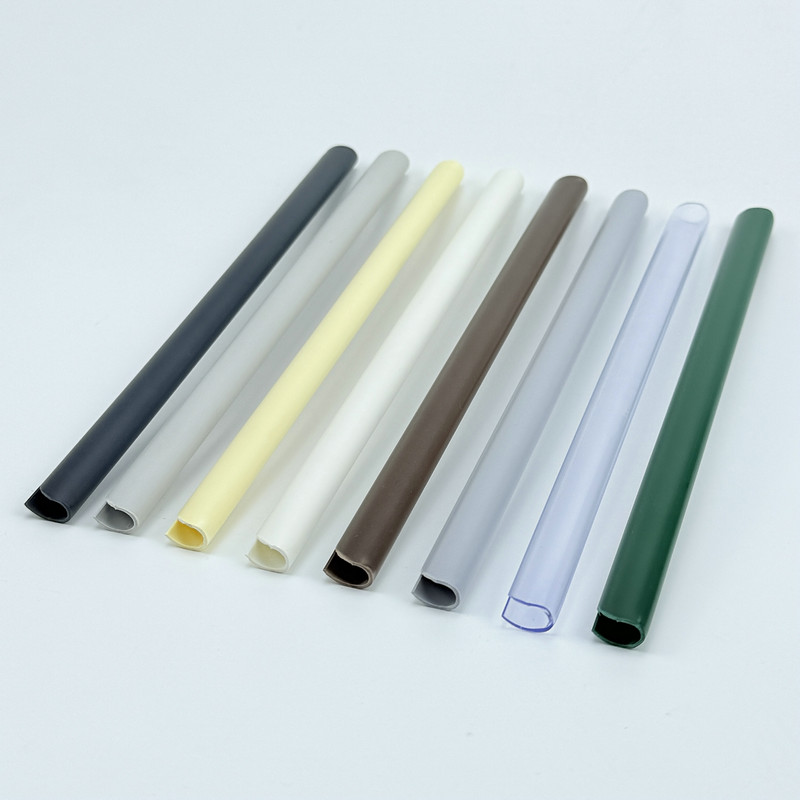 DAYOU Plastic Mounting Clips for Fence StripPlastic PVC clips that snap fence strips into a continuous privacy barrier without drilling, reusable for garden and outdoor fence systems.View Product →
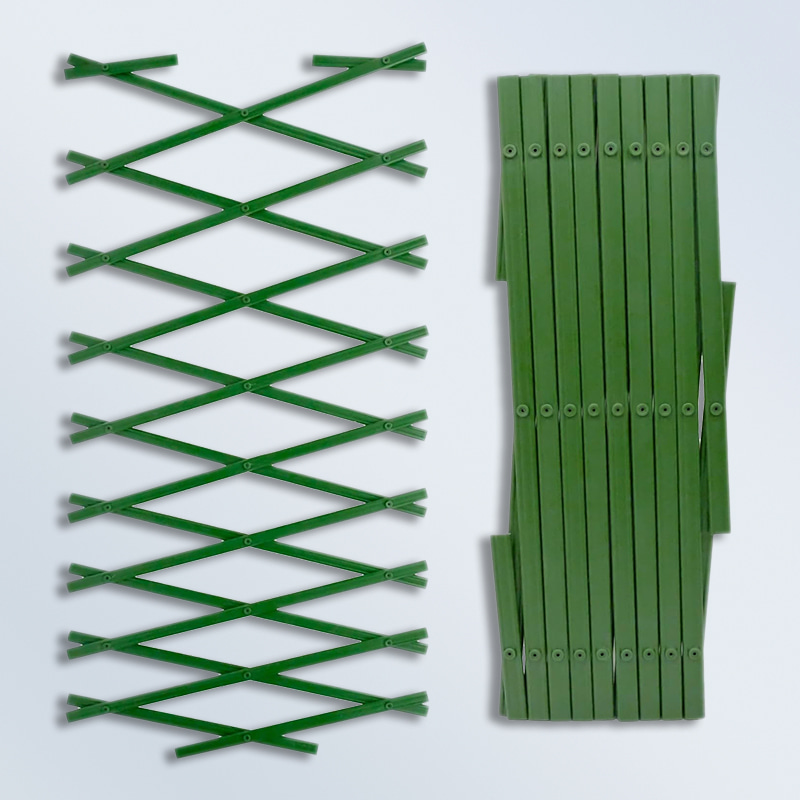
Trellis lattices are a different load case. Climbing plants add weight and wind sail area, so lattice profiles are usually specified with a thicker wall than a plain privacy panel, and the fixing points need to be planned before the lattice is mounted on a wall or a fence line.
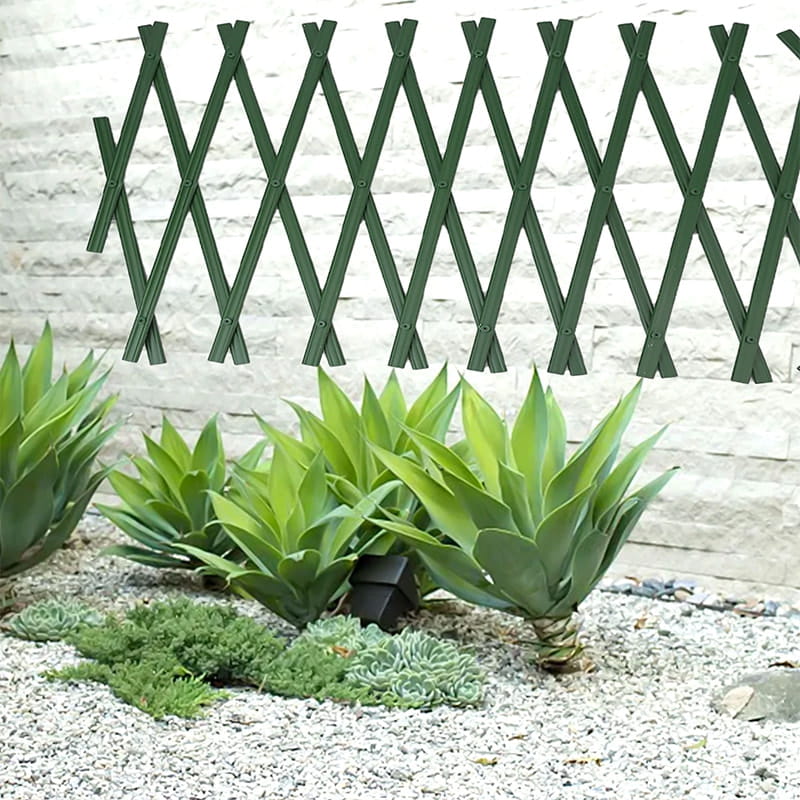 Expandable Garden PVC Trellis Plant Climbing Support LatticeFoldable Virgin PVC lattice for climbing plants, adjustable without tools and weather-resistant; fixing points need planning for garden or patio screens.View Product →
Buy clips and strips on the same shipment as the panels. A container of panels that cannot be fixed on site is a stalled installation and a return freight argument.
Buyers who need the wider picture, including hard PVC and PP strips, soft strips, trellis and lawn edging, can review the full PVC garden fence material range and match accessories to the panel specification before the order is confirmed.
For a new colour or profile, most extrusion factories work from 500 to 1,000 metres per item, because a line purge and a colour change cost the same whether the run is short or long. Existing profiles and stock colours can usually ship in smaller mixed quantities.
Yes, within limits. A physical sample is matched to a compound formulation, and the approved chip becomes the reference for every later batch. Natural bamboo varies from pole to pole anyway, so buyers normally approve two or three tones that read as one screen in the garden.
Landed cost depends on diameter, wall thickness, panel format and freight, so a per-metre figure without those variables is meaningless. Compare ten-year cost instead: a stabilised PVC screen replaced once usually beats a natural bamboo screen replaced three or four times.
No. The profile is inert PVC, it does not rot, leach or need treatment, and it is a common backing for climbing plants such as jasmine, ivy and clematis because the lattice gives tendrils a consistent surface to grip.

 +86-18267317201
 +86-572-2373931
 [email protected]
 1411 Building 1,No.1969 Chuangye Avenue, Huzhou City ,Zhejiang Province, China.
 | Login


 Español
 Deutsch