
 2026.11.03
 Industry News
Content
A custom factory controls five variables that a stock supplier has already frozen: profile geometry, extrusion width, wall thickness, polymer grade, and coil or cut length. Move any one of them and the insert stops behaving like a commodity part.
The four families sold into chain link work are not interchangeable. Each needs a different minimum wall thickness before it sags, rattles or collapses inside a vertical run of two metres or more.
Coverage also changes how the panel behaves in wind. CLFMI wind load guidance and ASCE 7 calculations treat a filled chain link panel as a solid fence rather than a porous one, so any insert package above roughly 70% coverage needs a post spacing and footing check before installation.
Mesh opening, panel height, target coverage, and the colour plus UV package decide nearly every cost line on a custom insert quotation. Everything else on the page is packaging, freight and payment terms.
Container economics move with the profile too. Flat tape coils into dense packs, while winged slats trap air, so a 20GP holds far more metres of tape than of slat. Quote in metres and budget in cubic metres.
Match the family to the mesh opening before anyone discusses colour. A 60 mm winged slat forced through a 50 mm diamond distorts the wire, and a 38 mm tube slat dropped into a 76 mm diamond works loose within one season.
| Mesh opening | Insert family | Typical insert width | Fit note |
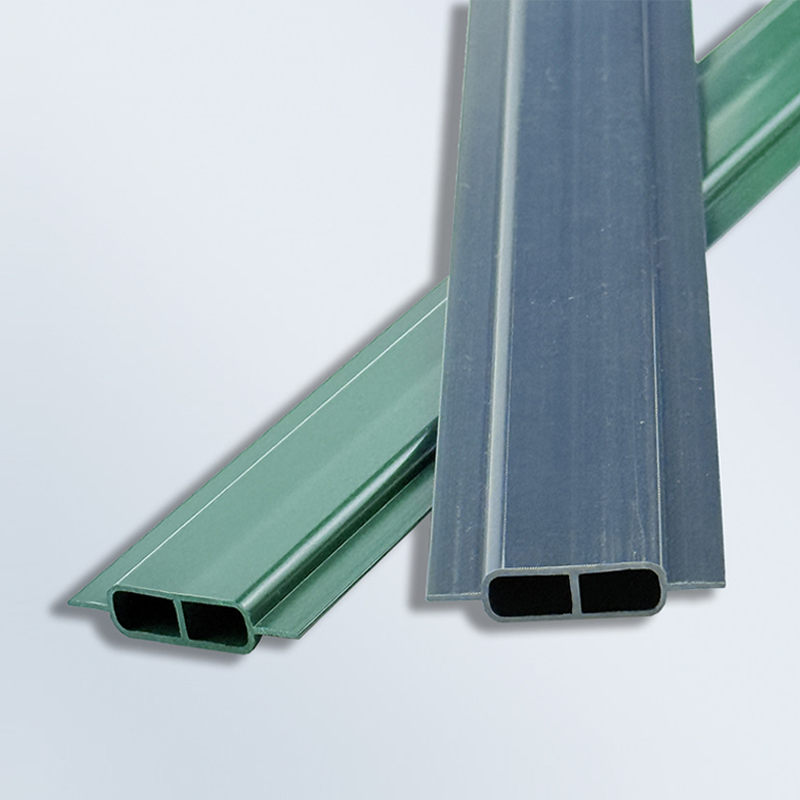
| 50 mm (2 in) | Winged slat | 45-60 mm wing span | Folds through the diamond, springs open behind the wire |
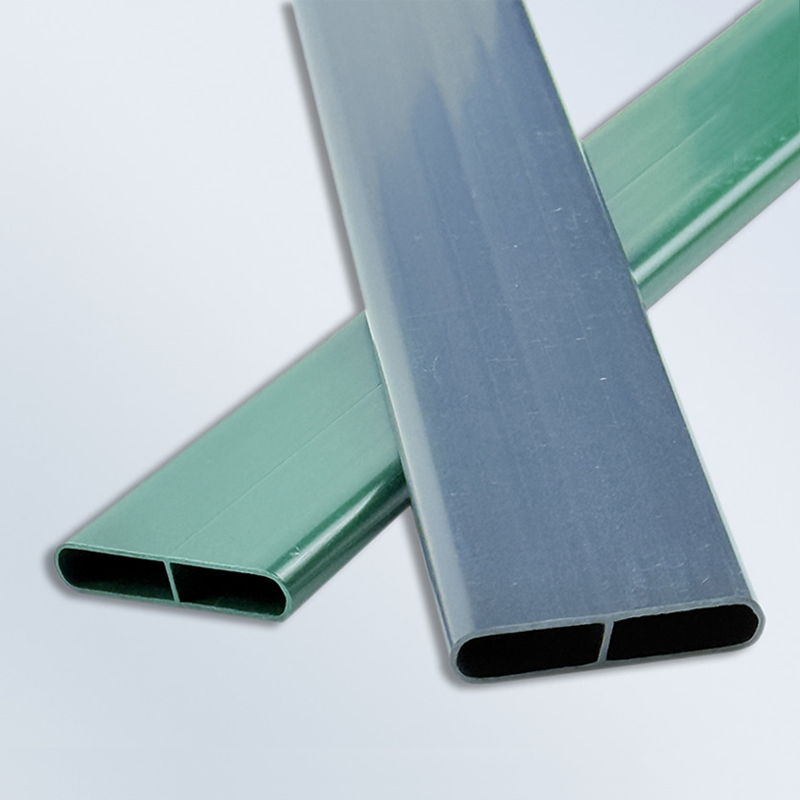
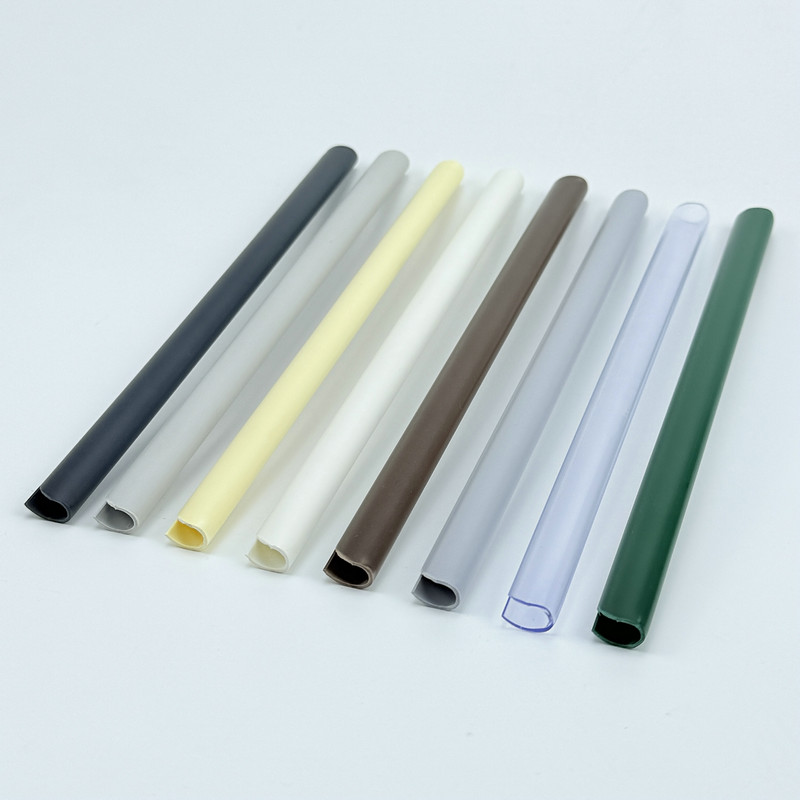
| 57 mm (2-1/4 in) | Tube slat | 38-50 mm tube | Round wall, 0.4-1.0 mm, sheds water and wind |
| 60 mm (2-3/8 in) | Ridged slat | 50-65 mm | Serrations grip both wire faces, no fixing clips needed |
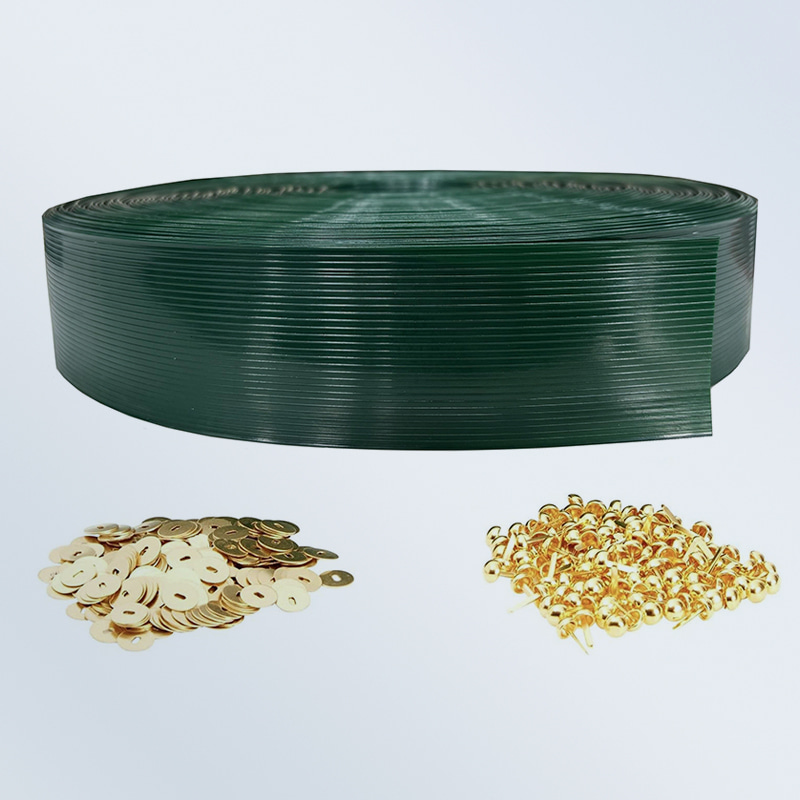
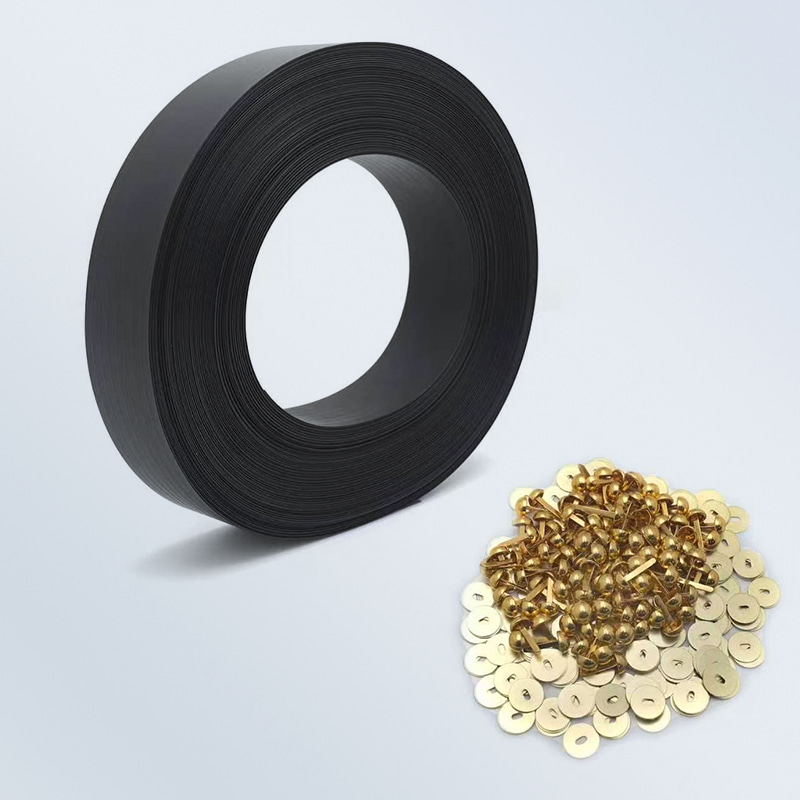
| 63 mm (2-1/2 in) | Privacy tape, PVC or PE | 190 mm coil | Horizontal weave, no tooling for the installer |
| 76 mm (3 in) | Soft PVC strip | 190 mm at 450 or 630 GSM | Heavy drape, confirm wind load before ordering |
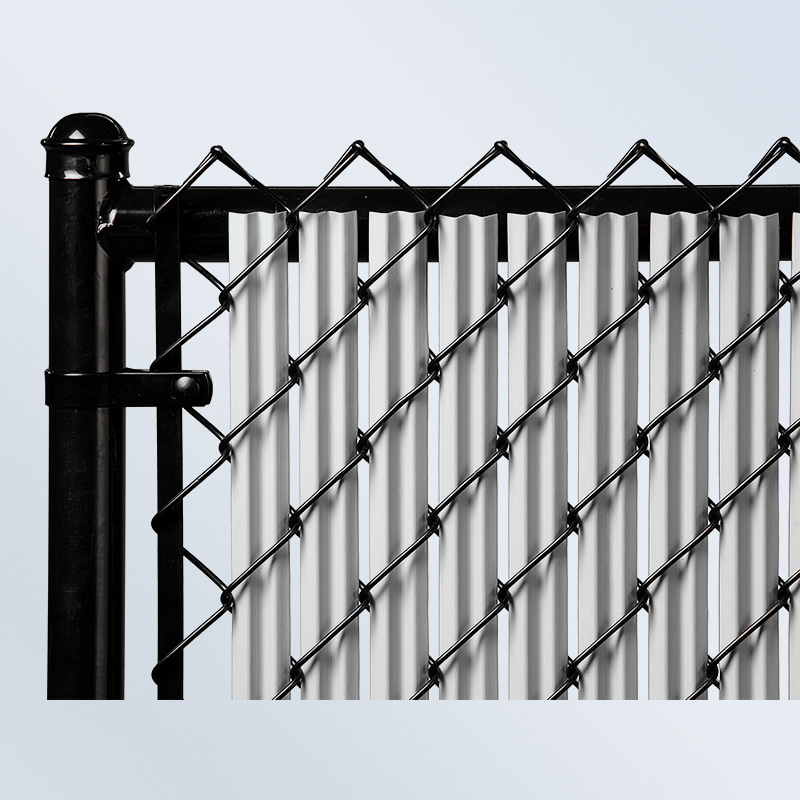 DAYOU Privacy Ridged Slats for Chain Link FencesPVC ridged slats in multiple heights and fence dimensions; check fit against mesh opening before comparing colour or ordering a trial panel.View Product →
A trial fit on a 1,200 mm sample panel takes ten minutes and settles questions a datasheet cannot. Pull-through force, wire bow and the final coverage photograph belong in the same report. For a wider comparison of material behaviour, this chain link fence slats guide covers the trade-offs between slat types and privacy levels.
Polypropylene wins on cost per square metre and on chemical resistance; rigid PVC wins on stiffness, colour depth and surface finish. Neither wins on UV once the stabiliser package is specified to the same level.
Soft PVC strip sits outside that comparison. It is graded by weight, 450 GSM and 630 GSM at 190 mm width, hangs like fabric, and is the one insert family that will not crack when a crew folds it into a truck bed at 0 C.
Weathering data is the tiebreaker. Ask for an ISO 4892-2 xenon-arc or ASTM G154 fluorescent UV report that states irradiance, cycle and test hours. A report missing those three numbers is a colour brochure, not a test.
On the same 2,400 mm panel over 50 mm mesh, privacy tape reaches about 95% coverage, ridged slats about 85%, winged slats 55% to 75%, and tube slats 40% to 55%.
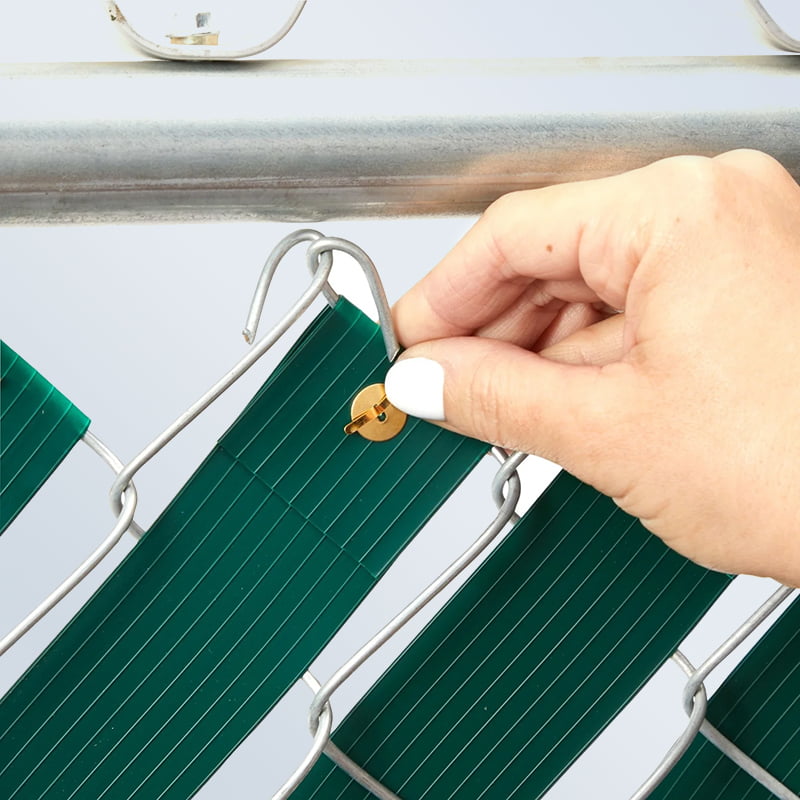 DAYOU Privacy PVC Tape for Chain Link FencePVC privacy tape in several widths and roll lengths; useful when comparing coverage against slat options and reviewing custom-order production stages.View Product →
A custom insert order moves through five controlled stages, and a supplier that cannot name them is a trading desk rather than an extruder.
The profile is checked against a physical panel sample for pull-through force, wire distortion and visible coverage before any tooling is cut.
Colour is matched to RAL or Pantone, the HALS and UV package is dosed by weight, and the batch is recorded against the retained standard.
Die, cooling and haul-off are set, then wall thickness is measured at the start, middle and end of the run rather than once at the beginning.
Punching, slitting, coiling or cutting to panel height happens here, with coils typically supplied between 50 m and 500 m depending on profile weight.
A coverage trial panel, a colour check against the retained chip and a loading plan for a 20GP or 40HQ close the order.
Site integration matters more than most buyers expect. Zhejiang Huzhou Dayou Plastic Technology Co., Ltd., based in Huzhou, Zhejiang, runs extrusion, punching and clip moulding on one site, so inserts, fixing clips and cutters can leave in a single container instead of three shipments arriving on three dates.
Five checks separate a factory from a reseller, and each one can be answered in a single email.
 DAYOU Plastic Mounting Clips for Fence StripsSnap-fit PVC clips secure flexible fence tape without drilling and can be detached for adjustment; check fixing hardware before planning installation.View Product →
Fixing hardware decides whether the crew finishes on schedule. A clip that needs pliers instead of a press-fit adds handling time on every strip, and a cutter that scores instead of cutting cleanly leaves a frayed edge that shows through the mesh.
Tooling, not volume. A flat tape die amortises across a few thousand metres, while a winged slat die with a forming shoe and puller set needs several times that before the piece price settles. Ask for the break-even quantity in writing, with tooling cost stated separately from unit price.
Both PP and PVC hold up when the compound carries a hindered amine light stabiliser at 0.3% to 0.8% and is backed by an ISO 4892-2 or ASTM G154 report. PP retains more tensile strength after exposure, PVC retains more colour, so choose by which failure your customer will notice first.
Build a trial panel on the buyer's own fabric. A 190 mm tape at 200 mm vertical pitch measures 95% blocked area; a backlit photograph plus the measured pitch is enough evidence for most buyers, and it removes the argument at the site gate.
On a controlled extrusion line, plus or minus 0.05 mm on a 0.8 mm wall is achievable, and plus or minus 0.1 mm is the normal commercial tolerance. Anything quoted looser than that will show up as a visible weight difference between two coils of the same colour.

 +86-18267317201
 +86-572-2373931
 [email protected]
 1411 Building 1,No.1969 Chuangye Avenue, Huzhou City ,Zhejiang Province, China.
 | Login


 Español
 Deutsch